Jijé
Topics :
- Classical
- Adventure
- Western
- Air force
- Crime novel
- Humor
- Children's literature
- Historical
- Sailing
- Spirou Universe
Jijé, the jack-of-all trades of the Belgian Golden Age
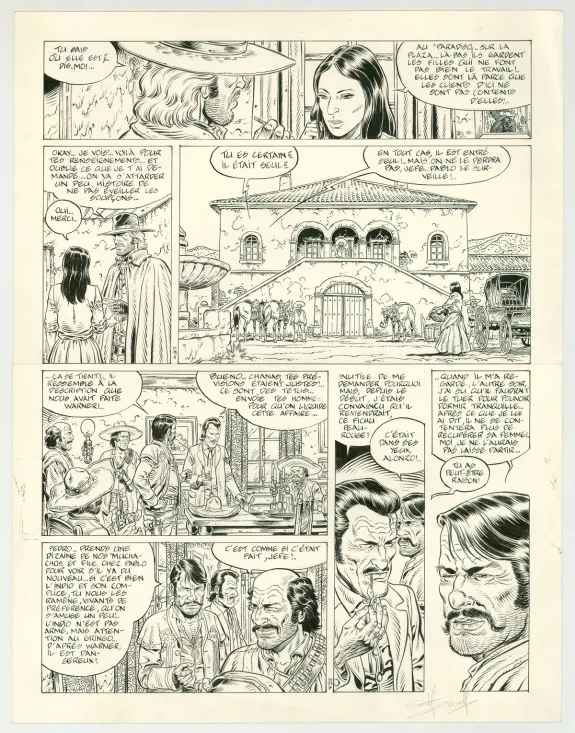
Along with contemporary Hergé, Joseph Gillain—alias Jijé—was one of the pillars of the Golden Age of Belgian comics. After early years spent closely observing Hergé—who was seven years his senior and was beginning to build a serious reputation with Tintin—Jijé truly launched his career with Blondin and Cirage in Petits Belges (1939), a publication of the Abbey of Averbode. He then moved to Le Journal de Spirou, where he quickly became indispensable by drawing Trinet and Trinette (1939), and then taking over the title character of the fledgling magazine, Spirou (1940), when its creator, Rob-Vel, had to leave for the front. The war turned him into the jack-of-all-trades of the lighthearted weekly. He had long since broken free from the influence of the master of the Brussels School, giving his artwork—thanks to skillful brush-and- ink work—a devilishly effective, playful “swing.” Did he get caught up in the trend toward realistic drawing when he sketched Superman and Red Ryder on the fly following the occupying forces’ ban on American comics? It’s quite possible. His first realistic masterpieces were biographies: Don Bosco (1941) and Christopher Columbus (1941). Don Bosco, distributed primarily through Christian schools, even saved the Dupuis publishing house from bankruptcy. While their magazines were banned by German propaganda, over 100,000 copies were sold—in the midst of the war! In the wake of this success, Jijé created the Jean Valhardi series based on a script by Jean Doisy, (1941), introducing a humorous character who became increasingly realistic.
After the Liberation, Jijé took a group of young artists under his wing who would soon make a name for themselves (Franquin, Morris, and Will). They formed the core group of the Marcinelle School, a rival to the Brussels School. But Jijé was a whimsical creator who let his instincts guide him. He entrusted Spirou to the novice André Franquin, Blondin and Cirage to Victor Hubinon, and Jean Valhardi to Eddy Paape, while he embarked on a biography of Jesus (Emmanuel, 1947), on which Franquin, Will and Paape would work. He redrew Don Bosco and began the biography of the founder of the Scout Movement, Baden Powell (1948)—comic strips in which his talent as a realist artist truly shines. Meanwhile, he took Franquin and Morris to Mexico and then to the United States, settled for a time in the state of Connecticut, and then returned to Belgium. Franquin had left a few months earlier, but Morris remained in New York from 1948 to 1954. Jijé, however, had the opportunity to introduce him to a French expatriate: a certain Goscinny…
In 1954, Jijé—with American landscapes still fresh in his mind—began work on what would become his masterpiece, the Western Jerry Spring. At the same time, he revived Blondin et Cirage and Valhardi, working on all three series simultaneously. He even allowed himself the luxury of taking over other major titles: in 1966, he continued the Tanguy et Laverdure series created by Uderzo in Pilote, and in 1972, he collaborated on Victor Hubinon's Barbe Rouge. Sometimes overwhelmed by his workload, he enlisted the help of assistants, notably Lorg, Mouminoux, and a certain Jean Giraud. Others benefited from his advice: Jean-Claude Mézières, Derib, Pat Mallet, Patrice Serres, Daniel Chauvin, André Juillard, Christian Rossi… He also never hesitated to help his colleagues, drawing a panel of Lucky Luke for Morris here, or a cover for Hubinon’s Buck Danny there… His work ethic and the immense breadth of his artistic skills left a deep mark on the history of Franco-Belgian comics. His influence extends to the present day. In the 1980s, Ever Meulen, Yves Chaland and Serge Clerc drew on his legacy, establishing him as one of the pioneers of the “Atom Style”—or “contemporary Art Deco,” as Joost Swarte called it.
Didier Pasamonik
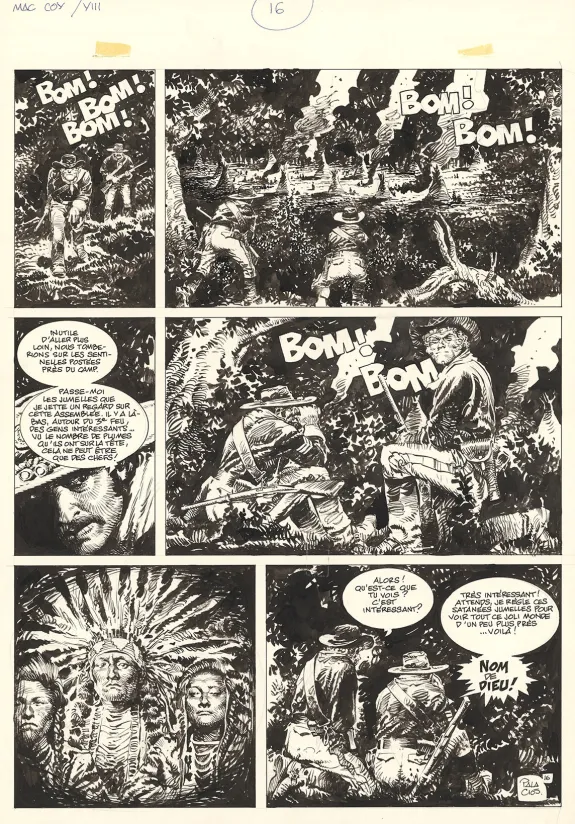
What strikes you most about Jijé is, first and foremost, the quality of his inking – a combination of pen and brush – which is swift, vigorous, effective and generous with the blacks. Then there’s the framing: an alternation of close-ups and wide shots, an inner monologue that dispenses with any background, and a final cliffhanger…! The composition is perfect.
Didier Pasamonik
Credits :
©Jijé (banner)
Pages and artworks from Jijé See all


You will also like...
-
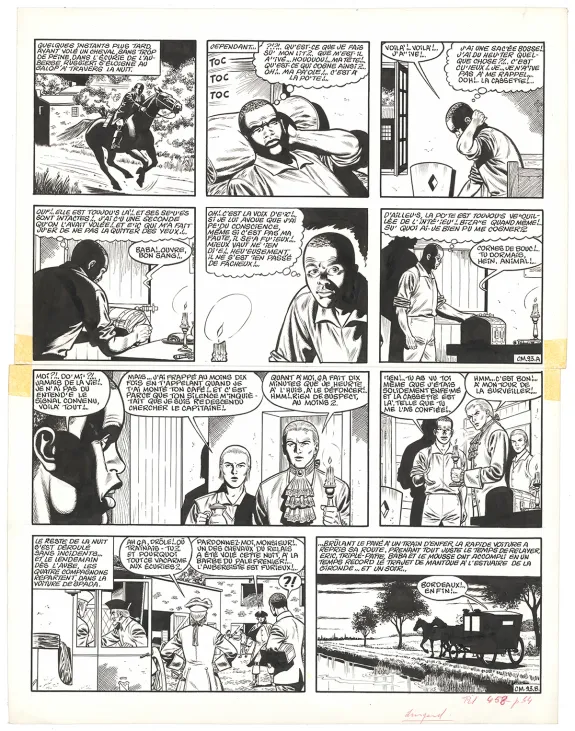
Planche originale n°23, publiée dans Pilote n°458
3 500 € -
-
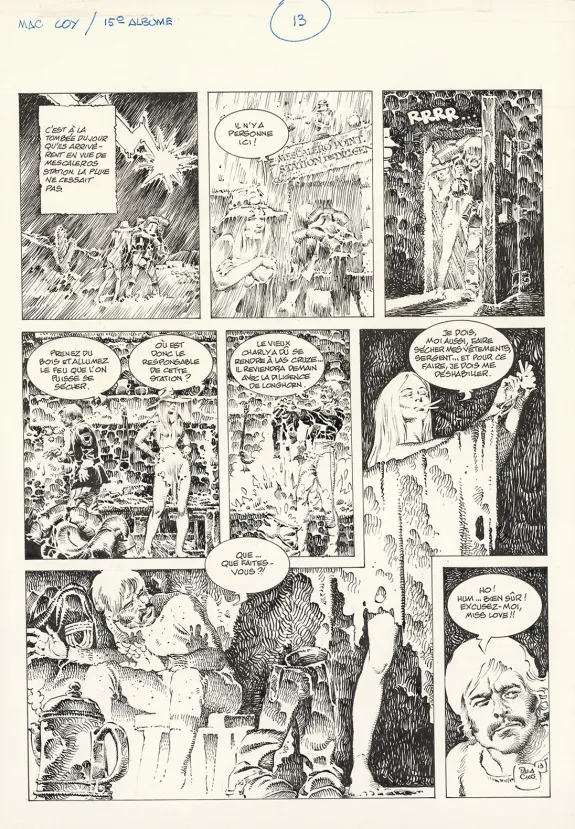
Original page 13
2 500 € -
-
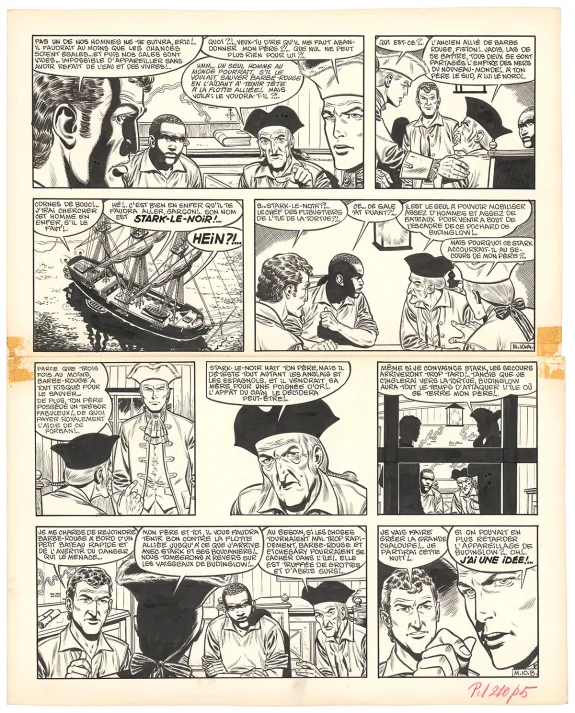
Planche originale n°10, publiée dans Pilote n°210
5 000 € -
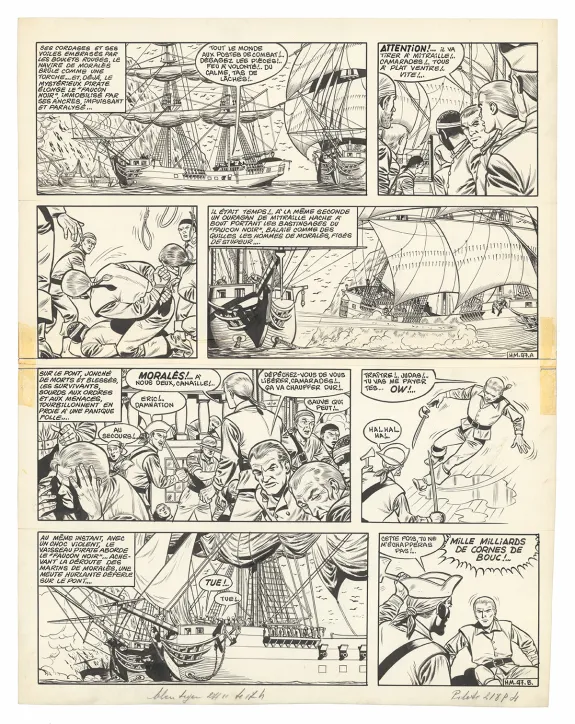
Original page n°47, published in Pilote n°218
8 000 € -
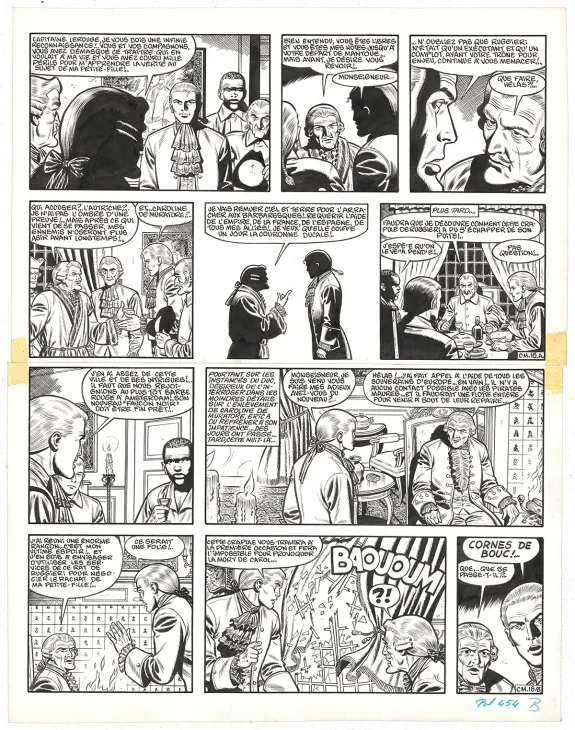
Planche originale n°16, publiée dans Pilote n°454
3 000 € -

-
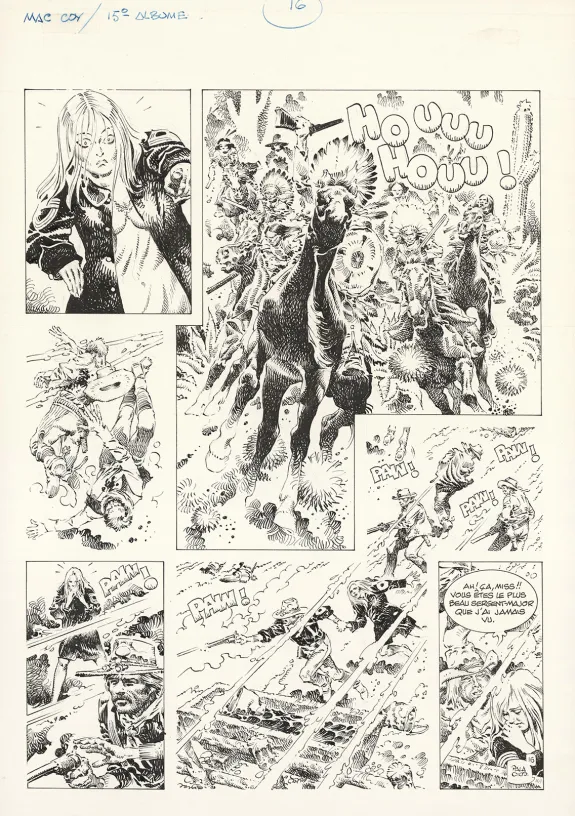
Original page n°16
2 500 € -
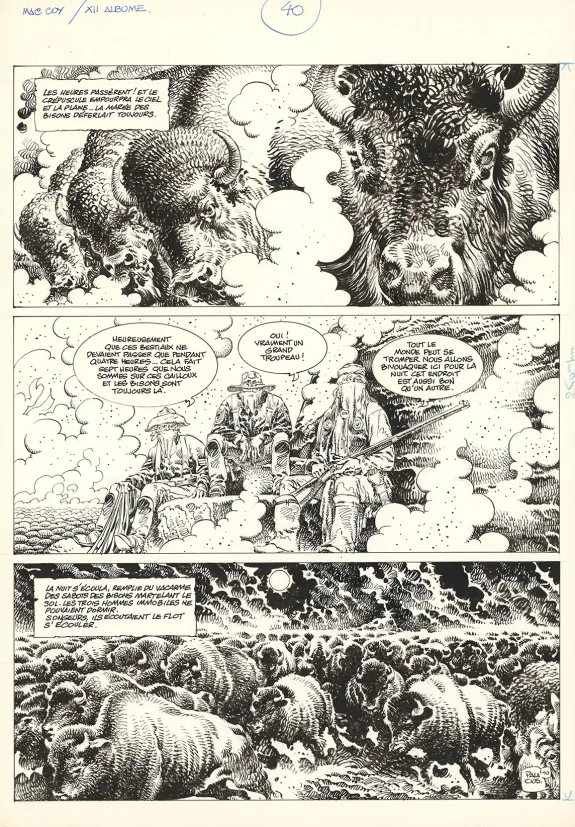
Original page 40 with text overlay
2 500 € -
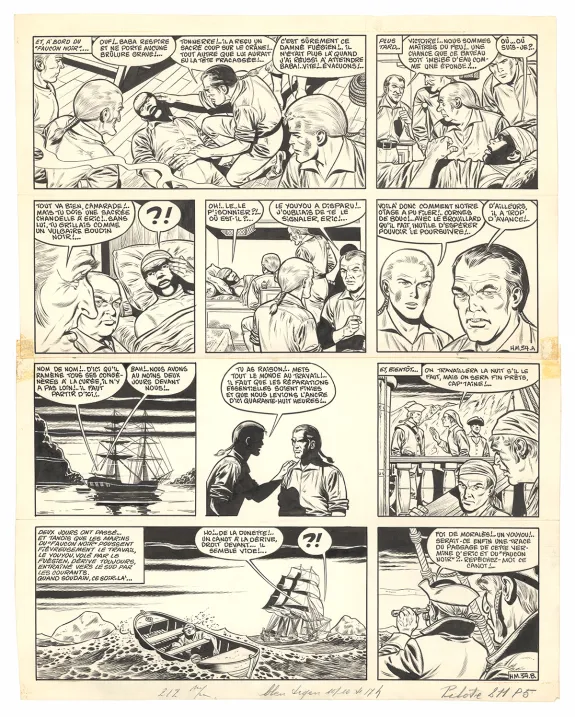
Original page 34, published in Pilote n°211
6 000 € -