

Jean-Claude Mézières
Topics :
- Classical
- Children's literature
- Science fiction
- Historical
- Adventure
- Fantasy
The Iconic Artist behind Valérian
Jean-Claude Mézières was born in Paris in 1938. In 1944, he met Pierre Christin, with whom he formed a strong friendship. The two boys discovered a shared passion for science fiction and comic books. More drawn to illustration than traditional academics, Jean-Claude Mézières enrolled in 1954 at the School of Applied Arts for Industry and Commerce, nicknamed “Les Arts Appliqués.” Admitted to the “Fabrics and Wallpaper” program, he befriended the only two students who shared his interest in what was still known as the “Ninth Art”: Patrick “Pat” Mallet and a certain Jean Giraud. In October 1955, he published his first comic strip, Bill the Sheriff, in the magazine Cœurs vaillants.
But Mézières dreamed of America—a dream he had to put on hold until he completed his military service. Returning to civilian life in January 1961, he responded to a classified ad in the daily newspaper Le Figaro and worked as a layout artist and then an illustrator on the Histoire des civilisations series. In 1963, he became an assistant photographer at the advertising studio of Benoît Gillain, one of the sons of Jijé. In June 1965, he finally set off for the United States, where he traveled before returning to comic art through his longtime friend Christin, who wrote a script for him. Together they created two short stories, Le Rhum du Punch (The Punch Rum) and Comment réussir en affaires en se donnant un mal fou ! (How to Succeed in Business by busting your butt!), published in the weekly magazine Pilote in March and July 1966 thanks to Jean Giraud’s intervention.
In September 1966, Jean-Claude Mézières returned to France. After meeting René Goscinny and Jean-Michel Charlier, the co-editors-in-chief of Pilote, he illustrated a third story written by Christin, Le chemin de l'enfer est pave de bonnes intentions (The Road to Hell Is Paved with Good Intentions), as well as a script by Fred, the creator of Philémon. He then proposed to Pierre Christin that they co-create an ongoing, long-term series. On November 9, 1967, Valérien et Laureline, space-time agents from Galaxity, made their debut in Pilote with a 30-page adventure, Les Mauvais Rêves Valérian (Against the Bad Dreams). The series was a massive success and now comprises 25 albums translated into some twenty languages, and was adapted for the big screen in 2017 by Luc Besson.
Alongside his flagship series, Mézières continued to publish other comic strips in specialized magazines such as Métal Hurlant, Fluide glacial, and (A SUIVRE), while also creating illustrations in the general press, posters for festivals, and silkscreen prints. In addition to comic art, Jean-Claude Mézières ventured into cinema, designing sets and costumes for Un dieu rebelle (Hard to Be a God) by Peter Fleischmann and Le Cinquième Elément (The Fifth Element) by Luc Besson, to whom he suggested the idea of flying taxis.
He won numerous awards, including the Grand Prix de la Ville d'Angoulême in 1984, an Inkpot Award at San Diego Comic-Con in 2006, and the Max-und-Moritz Prize at the Erlangen Comic Salon in 2018.
Mézières’ artwork and inking, which consistently displayed a modern sensibility, influenced their era, starting with George Lucas, who studied this work very closely whilst creating his "Star Wars".
Didier Pasamonik
Mézières aux enchères

JEAN-CLAUDE MÉZIÈRES
VALÉRIAN
Le Pays sans étoile (T.3), Dargaud 1972
Original artwork no. 6, first published in the magazine "Pilote" no. 574 on 22 October 1970
Indian ink on paper
39.4 × 47.5 cm
Sold in 2023 : 24 120€
Credits :
Mezières © Dargaud Benelux (Dargaud-Le Lombard, s.a), 2026 (banner)
Pages and artworks from Jean-Claude Mézières See all
-
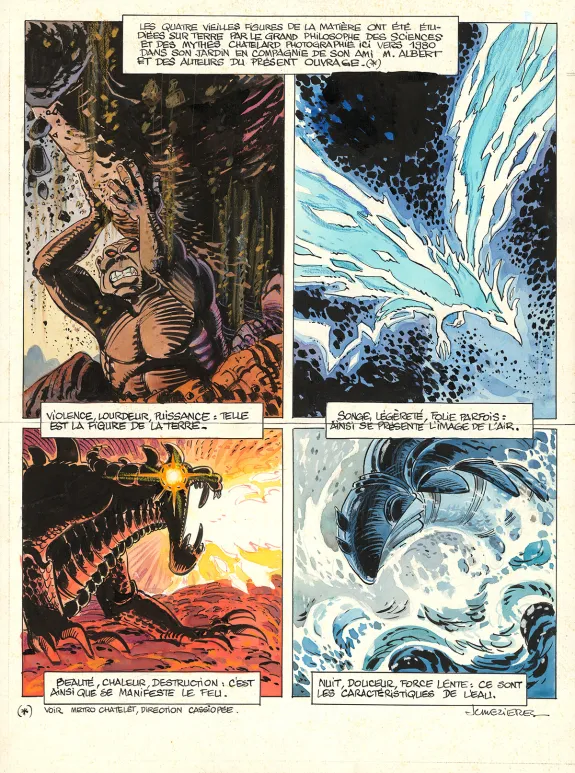
Jean-Claude Mézières
Valérian
Original page, unedited introduction to the episode Métro Châtelet Terminus Cosmos (1981)
5 000 € -

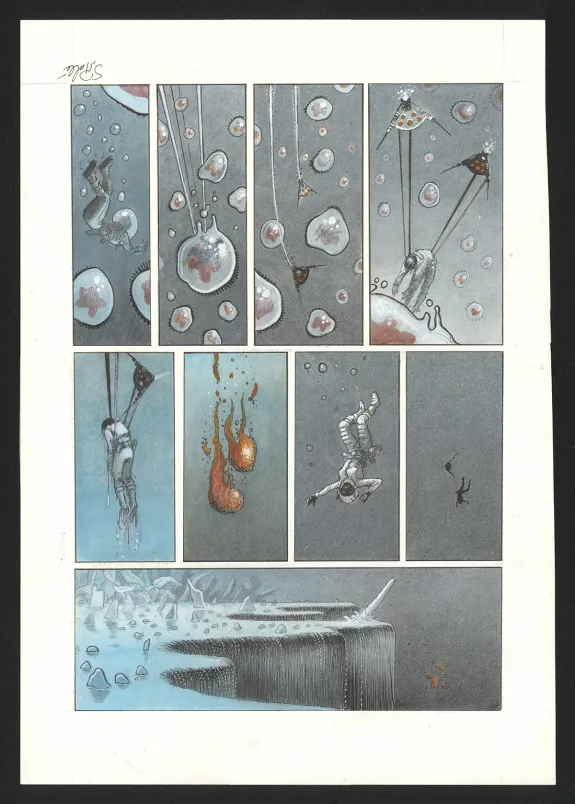
Original page n° 38, firstly published in Pilote Mensuel n° 73 of June 1980
6 500 €


You will also like...
-

-
-
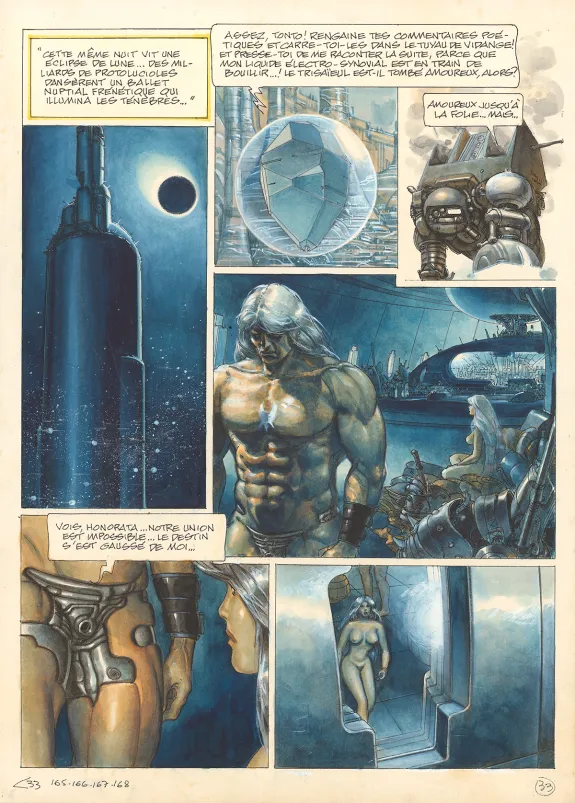
Original page 33 with its first step
7 500 €


