

Hergé
Topics :
- Classical
- Humor
- Adventure
- Tintin Universe
- Children's literature
Hergé, the creator of Tintin and founder of the Brussels School
Georges Remi, known as Hergé (a phonetic inversion of his initials, R.G.), was born in Etterbeek, near Brussels, on 22 May 1907. A self-taught artist, he grew up in a modest family and discovered his passion for drawing at an early age through the Scout movement, which would have a lasting influence on his imagination and values. In 1925, he joined the Catholic newspaper Le Vingtième Siècle, run by Father Norbert Wallez, who in 1928 entrusted him with creating a youth supplement, Le Petit Vingtième. It was there that, on 10 January 1929, Tintin in the Land of the Soviets was first published, the first instalment of The Adventures of Tintin. The character enjoyed rapid and enduring success. As the comic books progressed, Hergé developed the ‘ligne claire’ – a minimalist graphic style based on clean lines, flat areas of colour and a highly rigorous composition – which would become the hallmark of the Brussels School. Committed to realism and thorough research, he surrounded himself with collaborators and specialists to enrich his stories, particularly after meeting the young Tchang Tchong-jen, who inspired The Blue Lotus (1936). The post-war period saw the founding of Studios Hergé (1950), which enabled him to professionalise the production of the albums with a dedicated team, including Edgar P. Jacobs, Bob De Moor and Jacques Martin. A perfectionist, Hergé constantly reworked his artwork, and certain albums such as Tintin in the Congo or Tintin in America were redrawn to iron out the rough edges of his early work. The twenty-four albums of The Adventures of Tintin., translated into around a hundred languages, established Hergé as one of the leading figures in the world of comics. He died in Brussels on 3 March 1983, leaving Tintin and Alph-Art unfinished. His work continues to exert a considerable influence on generations of authors, from Jijé to Jacobs, including Jacques Martin and many others.
The artist sketches the various images that make up the sequence, playing with different shots and occasionally—but always to good effect—daring to use a particular angle. He builds up the lines, searching for the most explicit, the most expressive pose. He seeks the clearest, truest, and most expressive form. He erases, redraws, and layers on details. He treats the expressions on the faces with equal care, striving to make the emotions he depicts as evident as possible, highlighting every clue to those emotions on the faces.
Philippe Goddin in Hergé et Tintin, reporters, Le Lombard, 1986
Credits :
©Hergé, Tintinimaginatio (banner)
Pages and artworks from Hergé See all


You will also like...
-
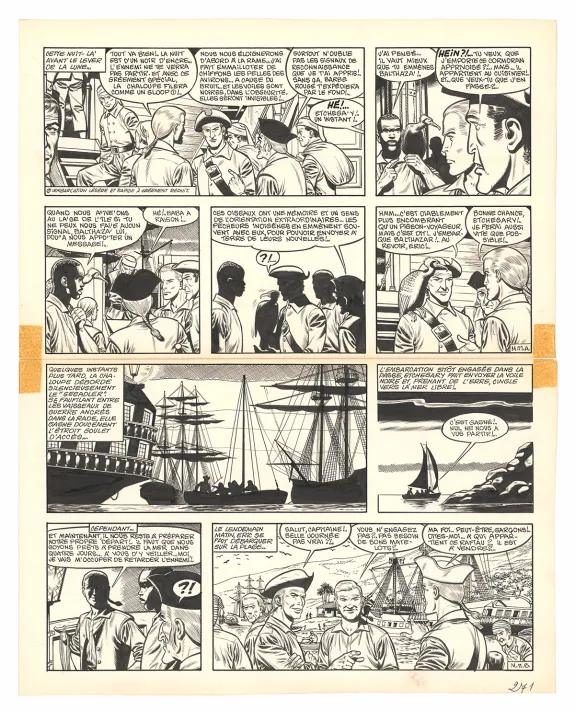
-
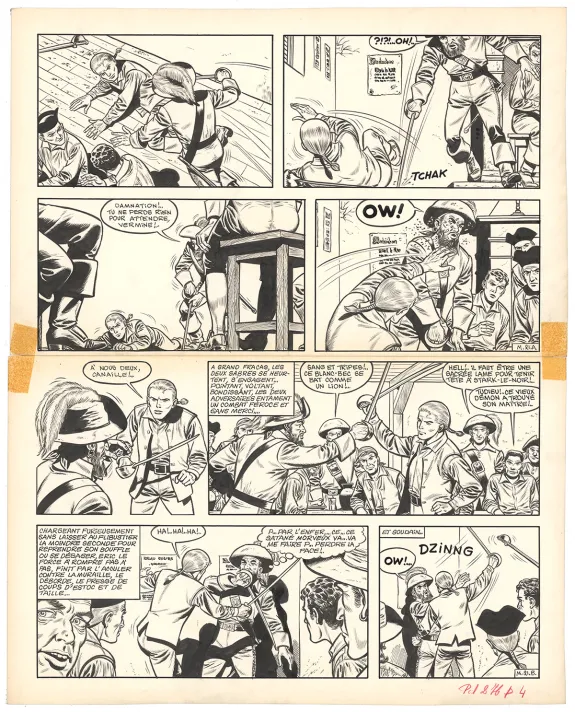
Planche originale n°21, publiée dans Pilote n°276
4 000 € -
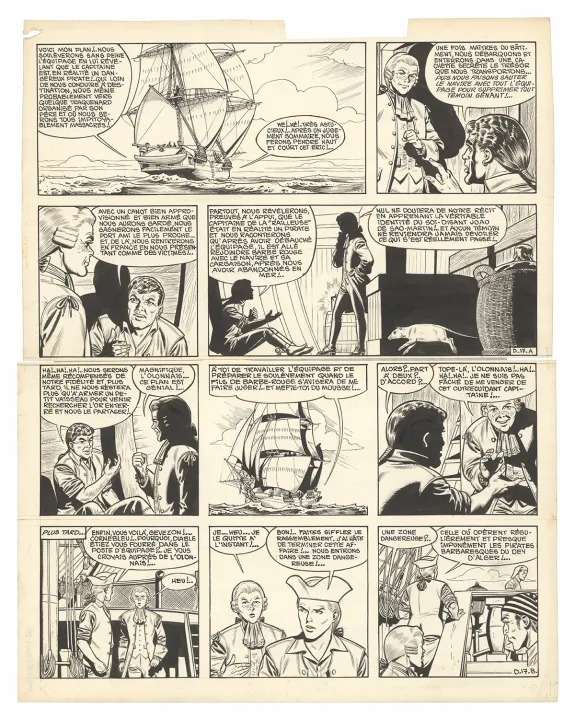
-
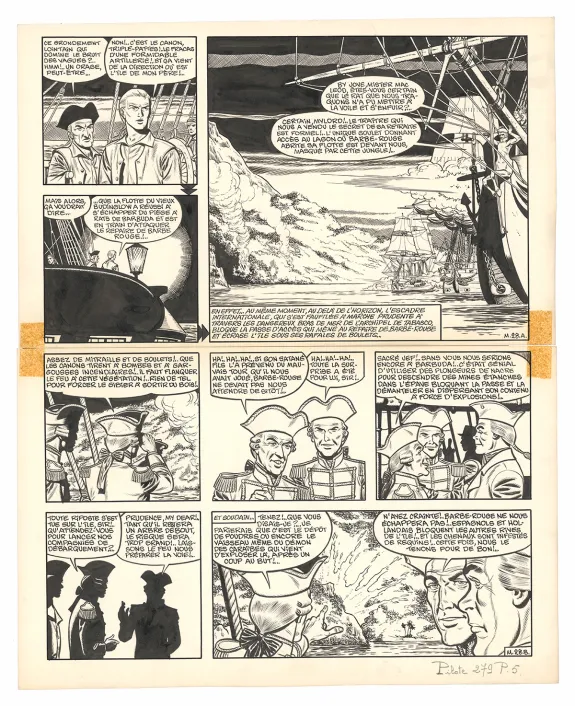
Original page n°28, published in Pilote n°279
7 500 € -
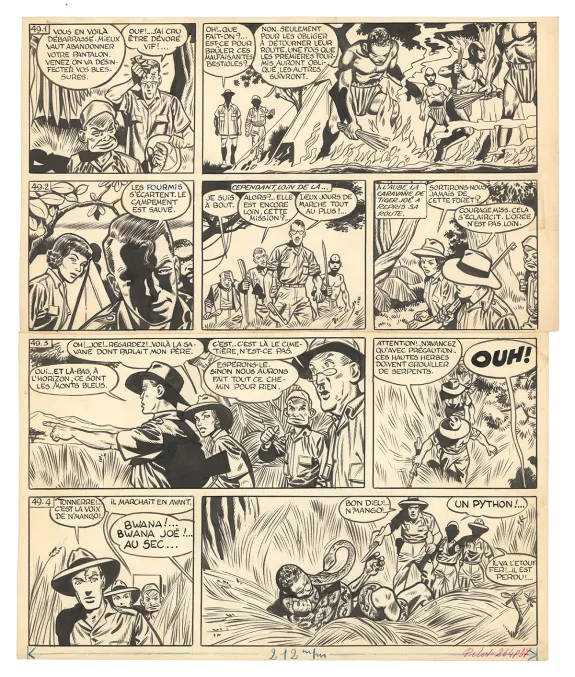
Original page n°49, published in Pilote n°264
3 000 € -
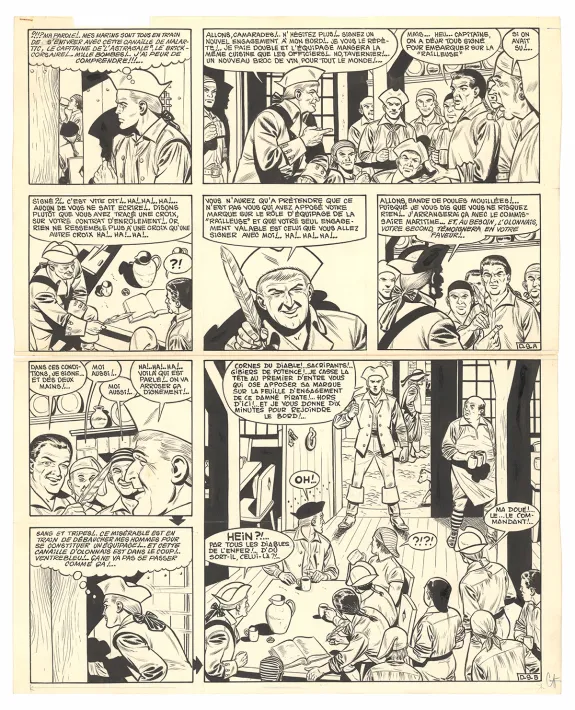
Original page 9, Speech bubble drawing patch in panel 1
5 000 € -
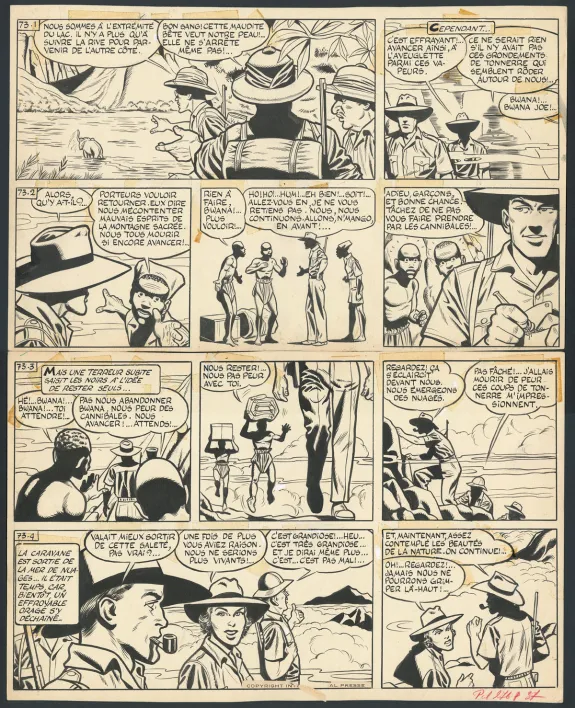
Original page, numbered 73, firstly published in La Libre Junior in 1958
3 000 € -
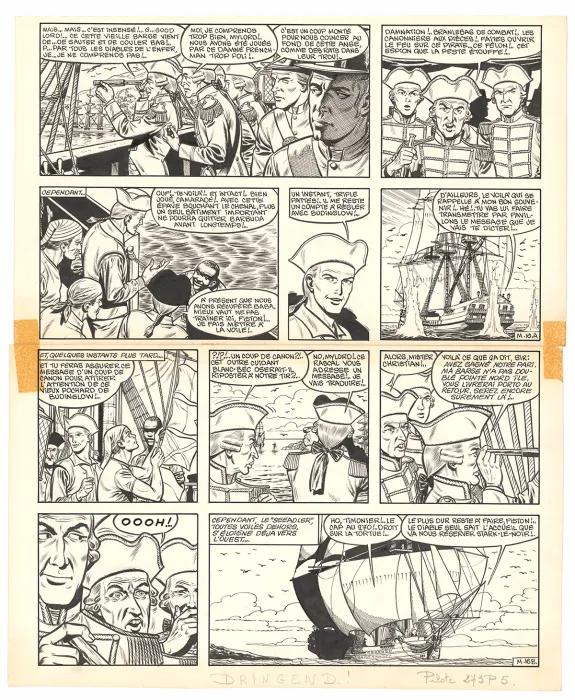
Original page n°16, published in Pilote n°273
6 000 € -
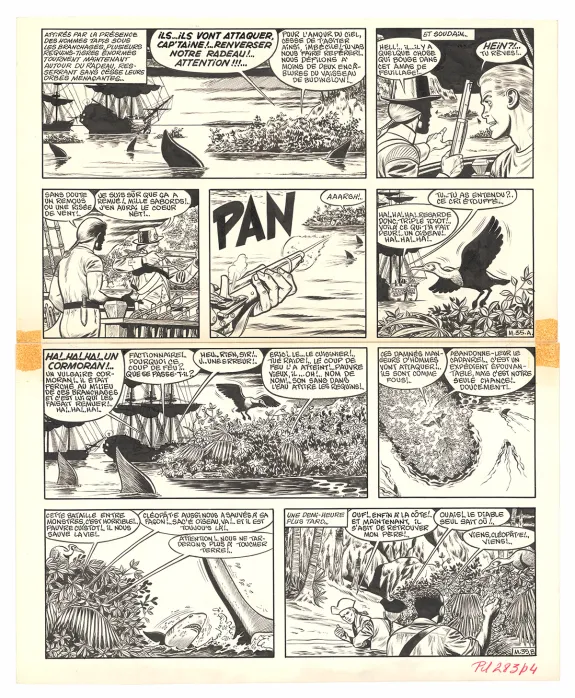
Original page n°35, published in Pilote n°283
6 000 € -
-
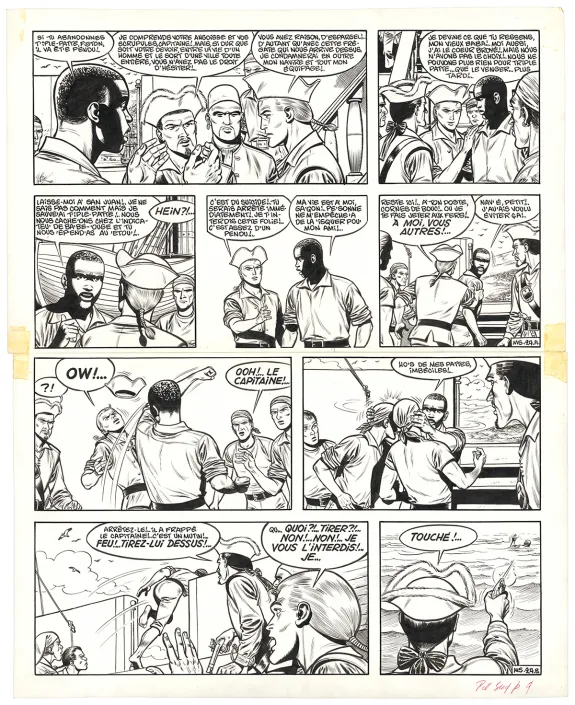
Original page 24, published in Pilote Sud
3 500 € -
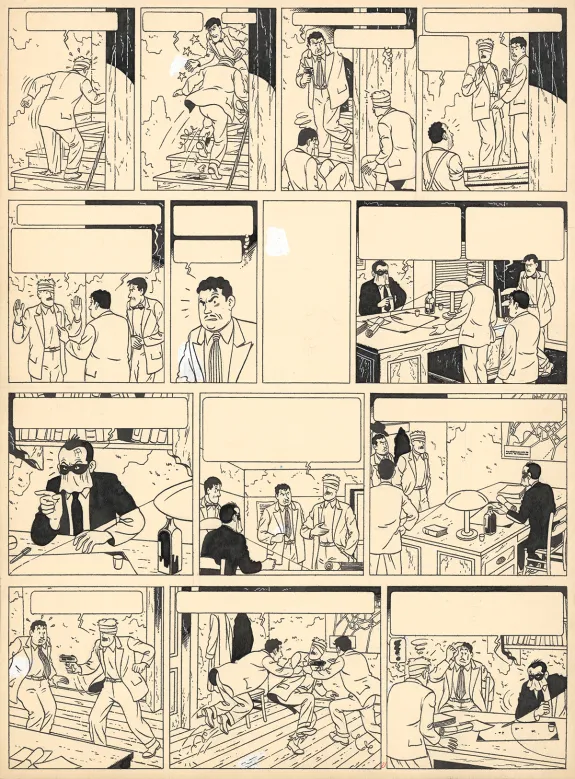
Planche originale n°21, prépubliée dans Le Journal de Tintin Belge n°50 du 14 décembre 1950
1 200 €


