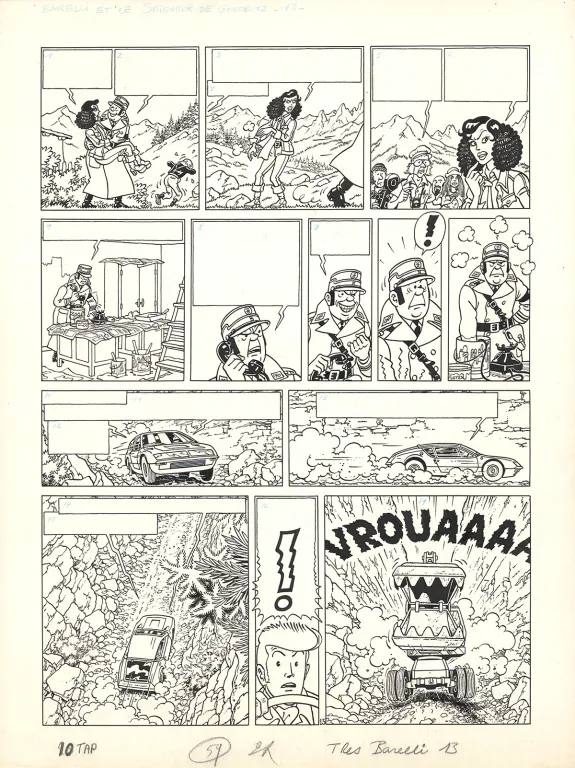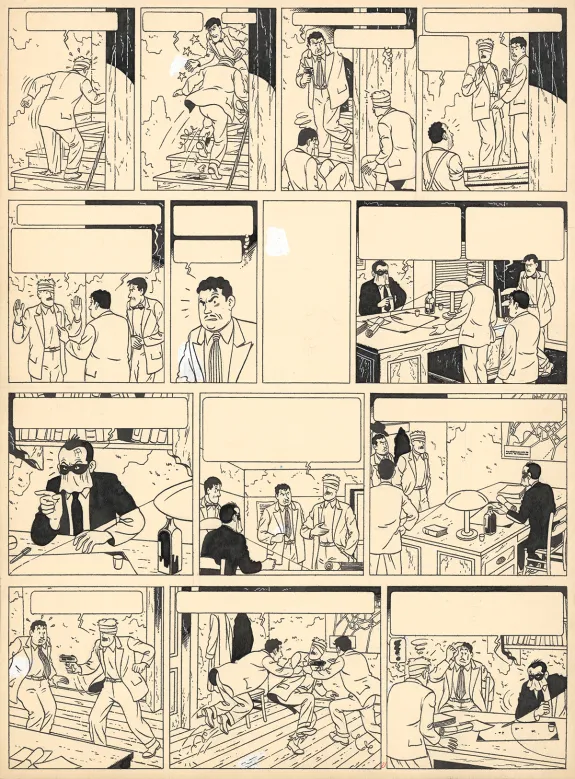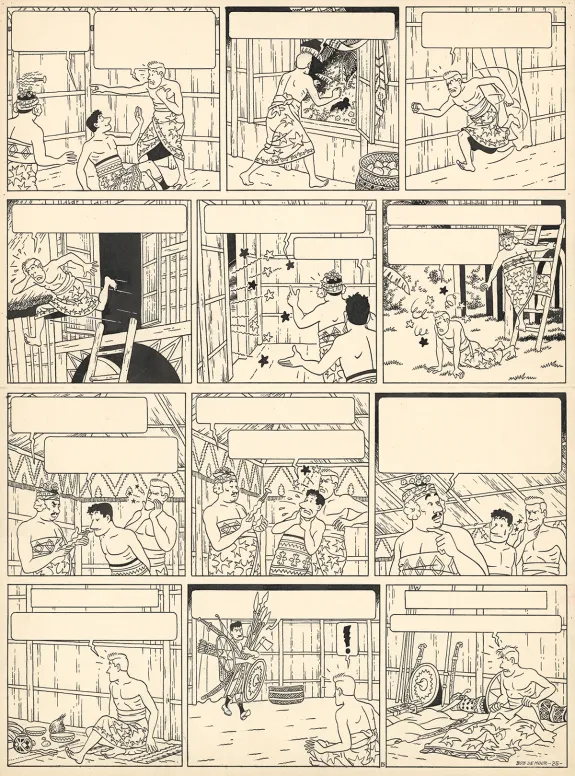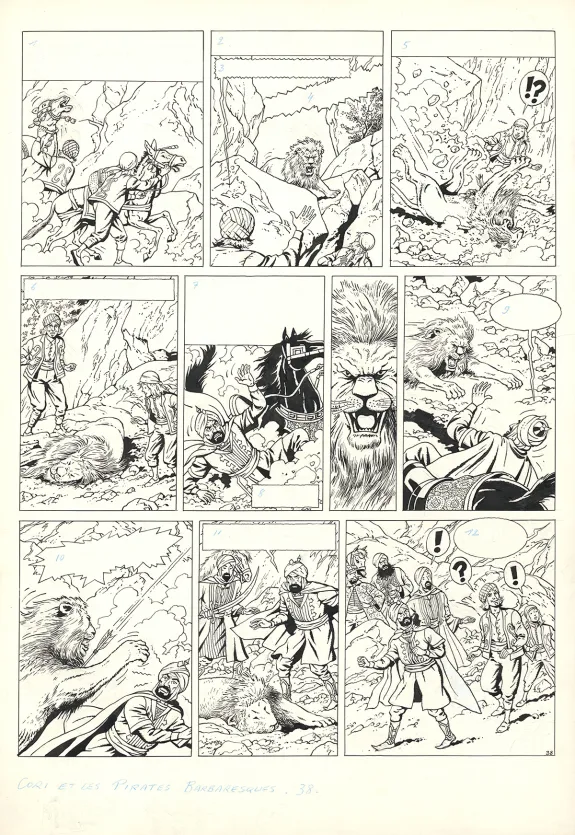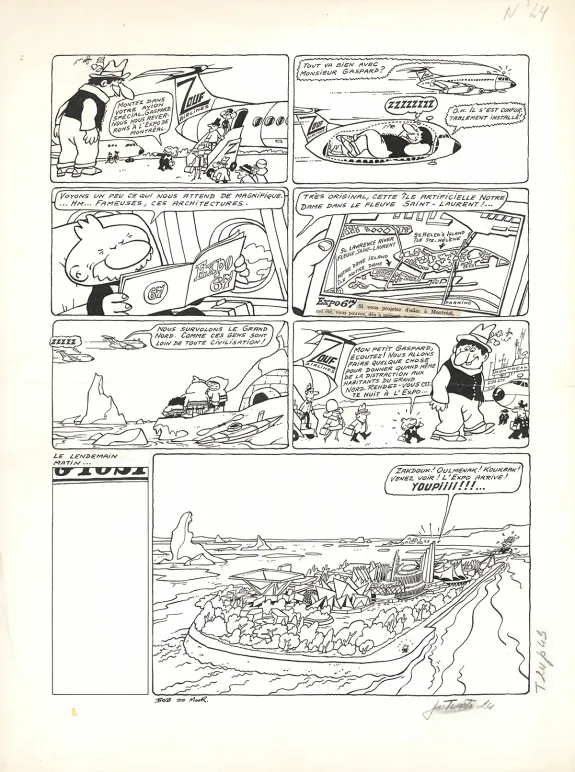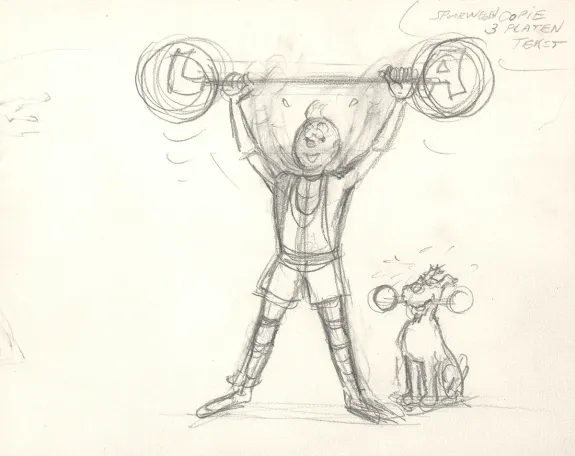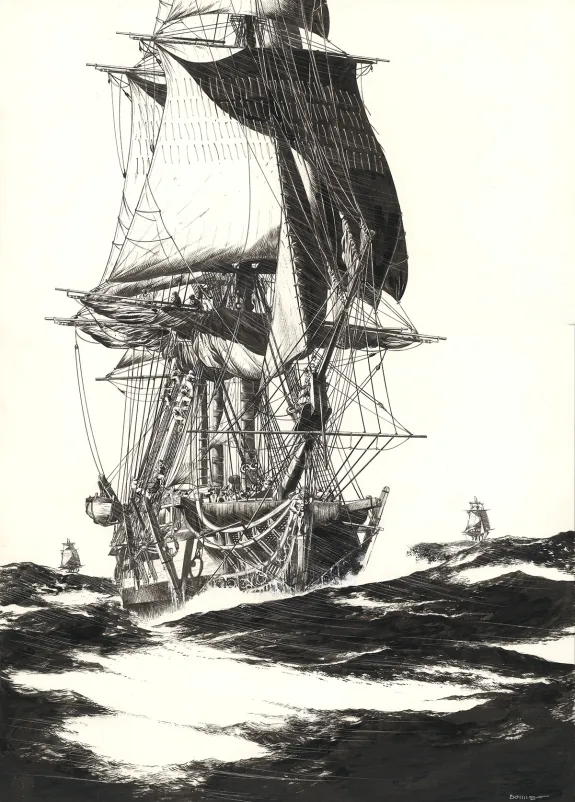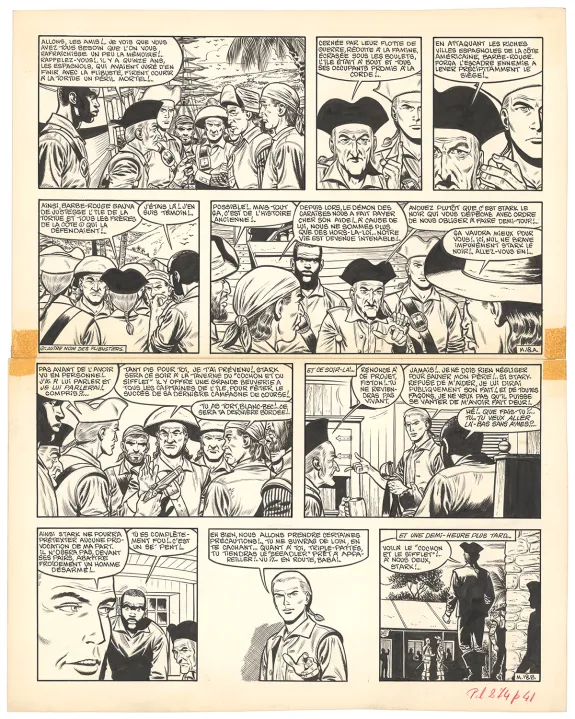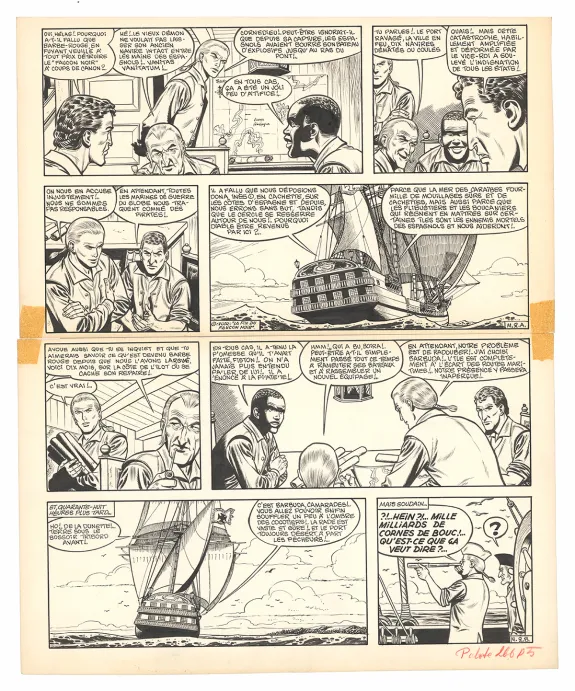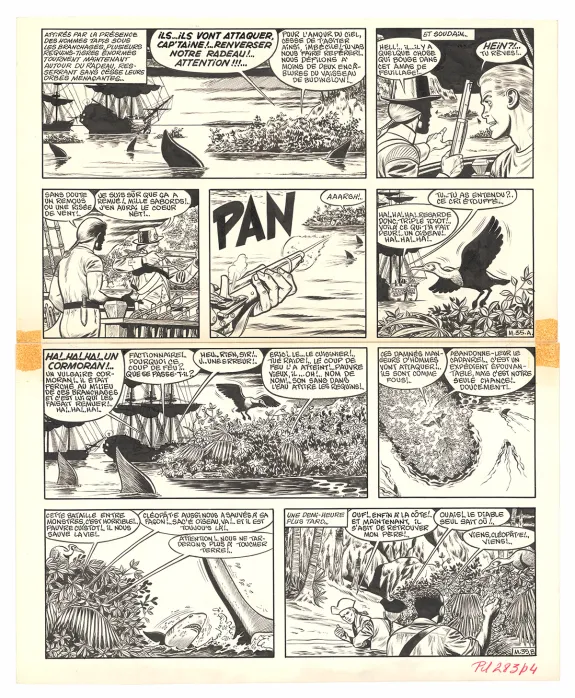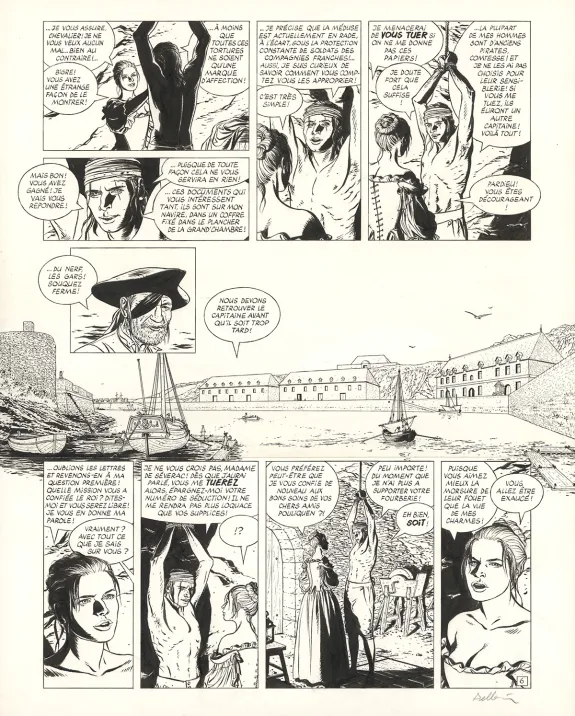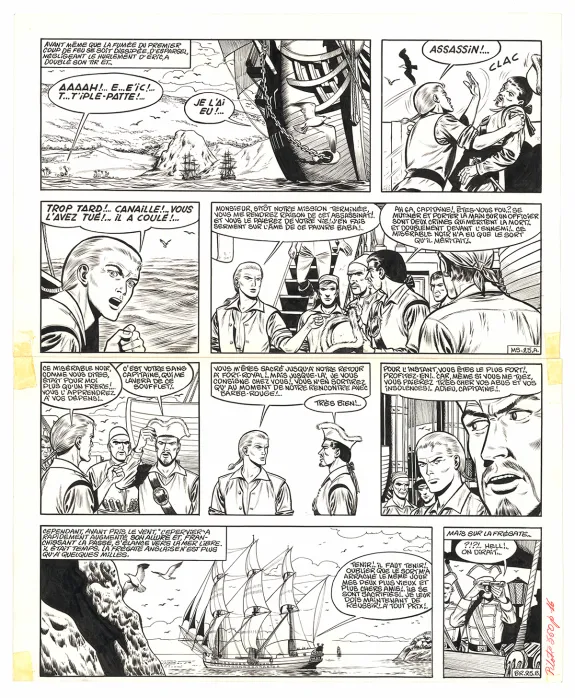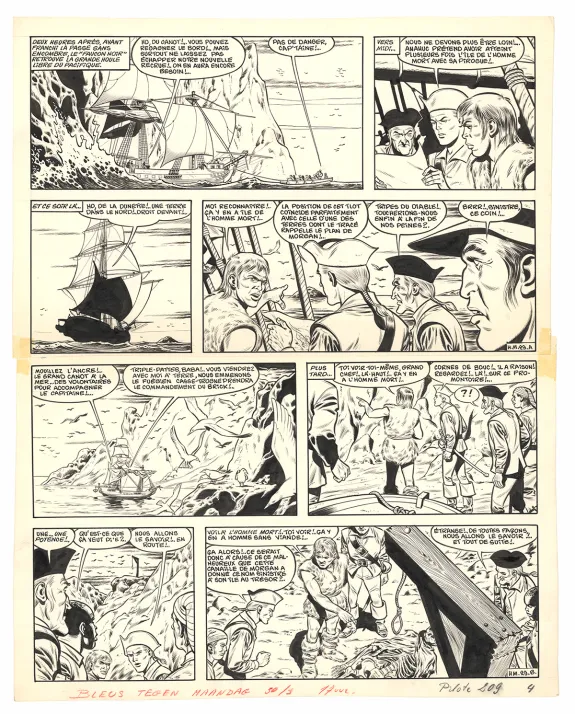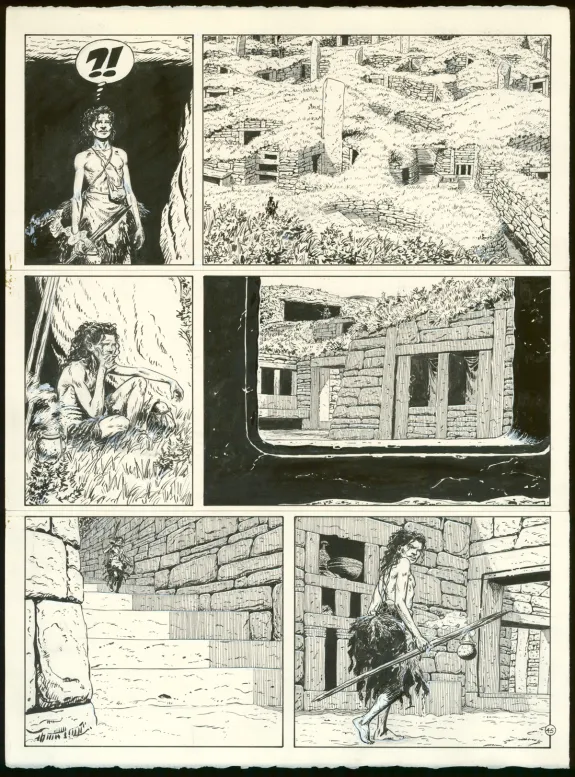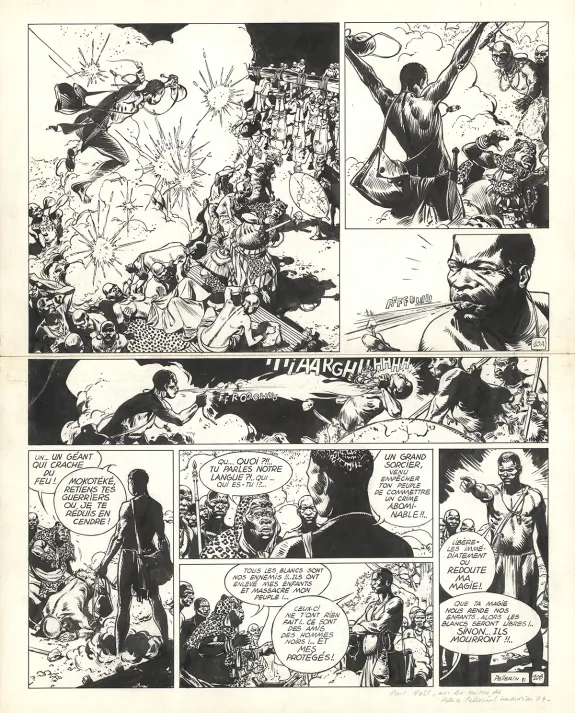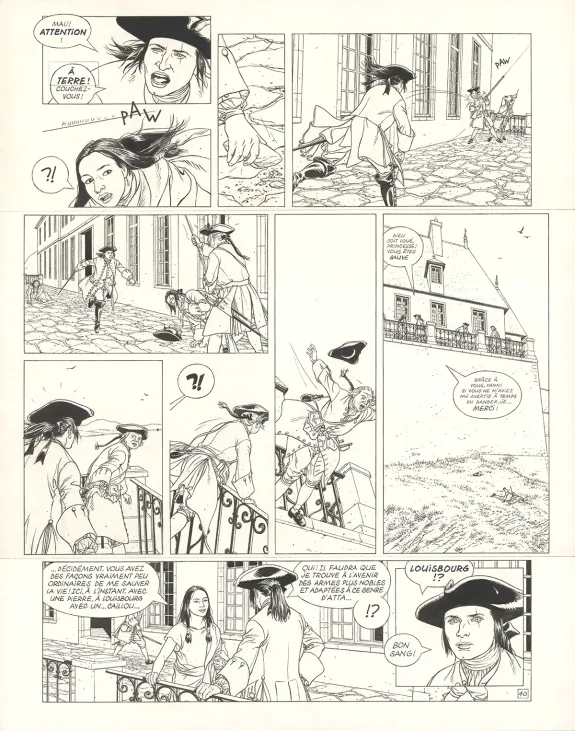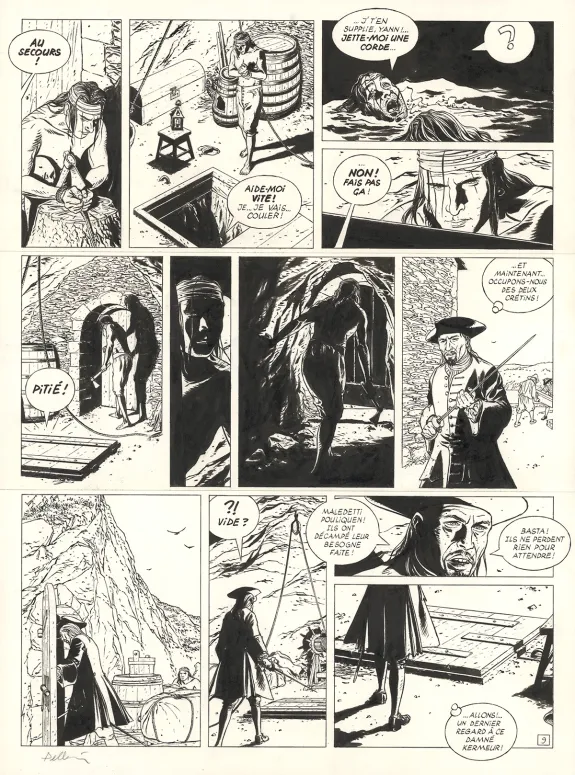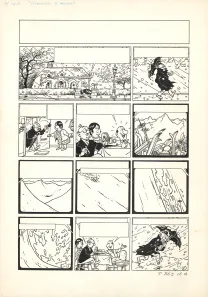
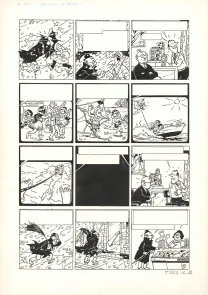
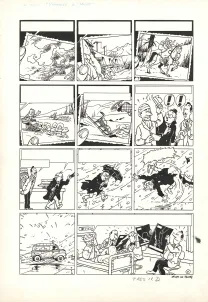
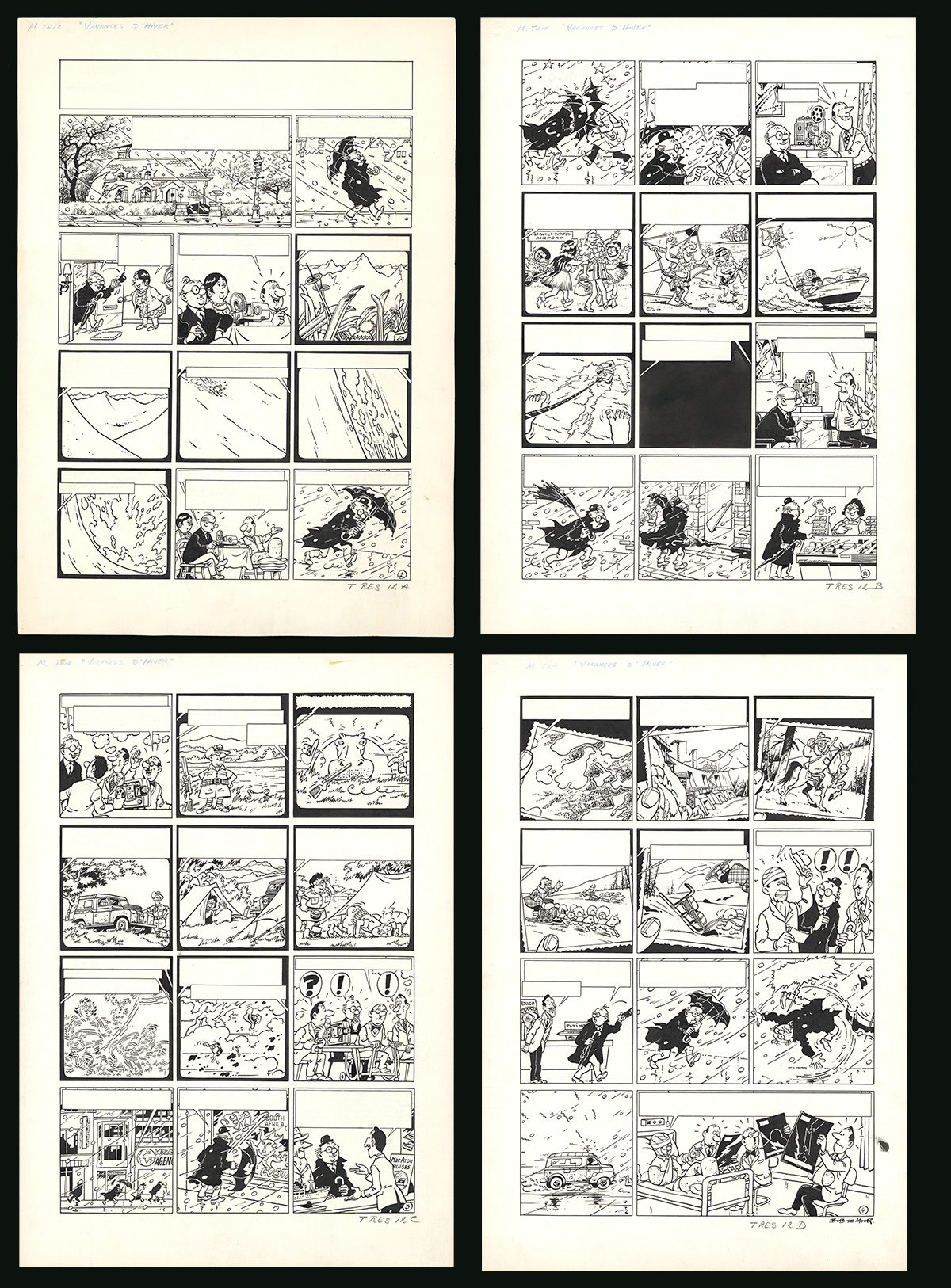
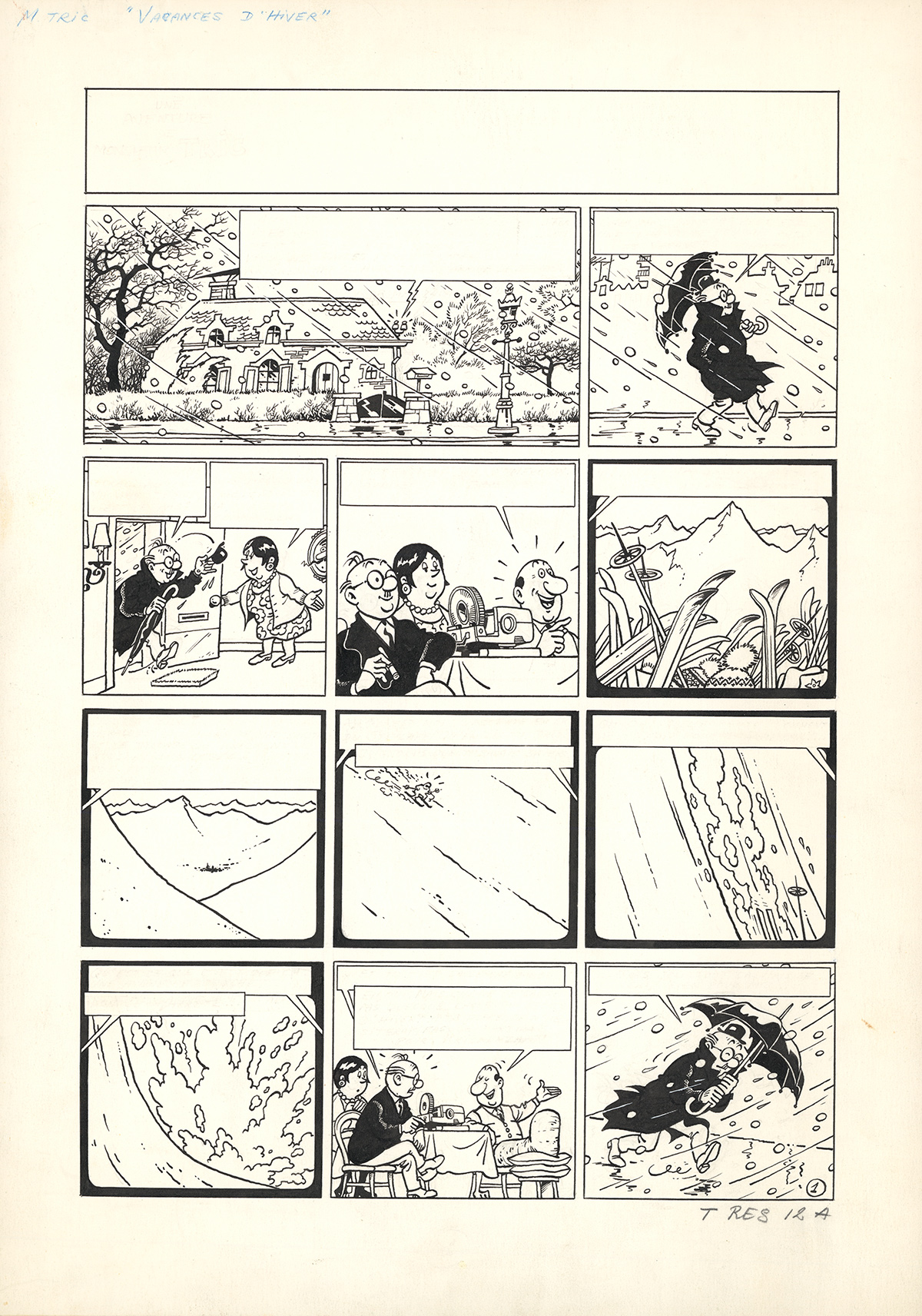
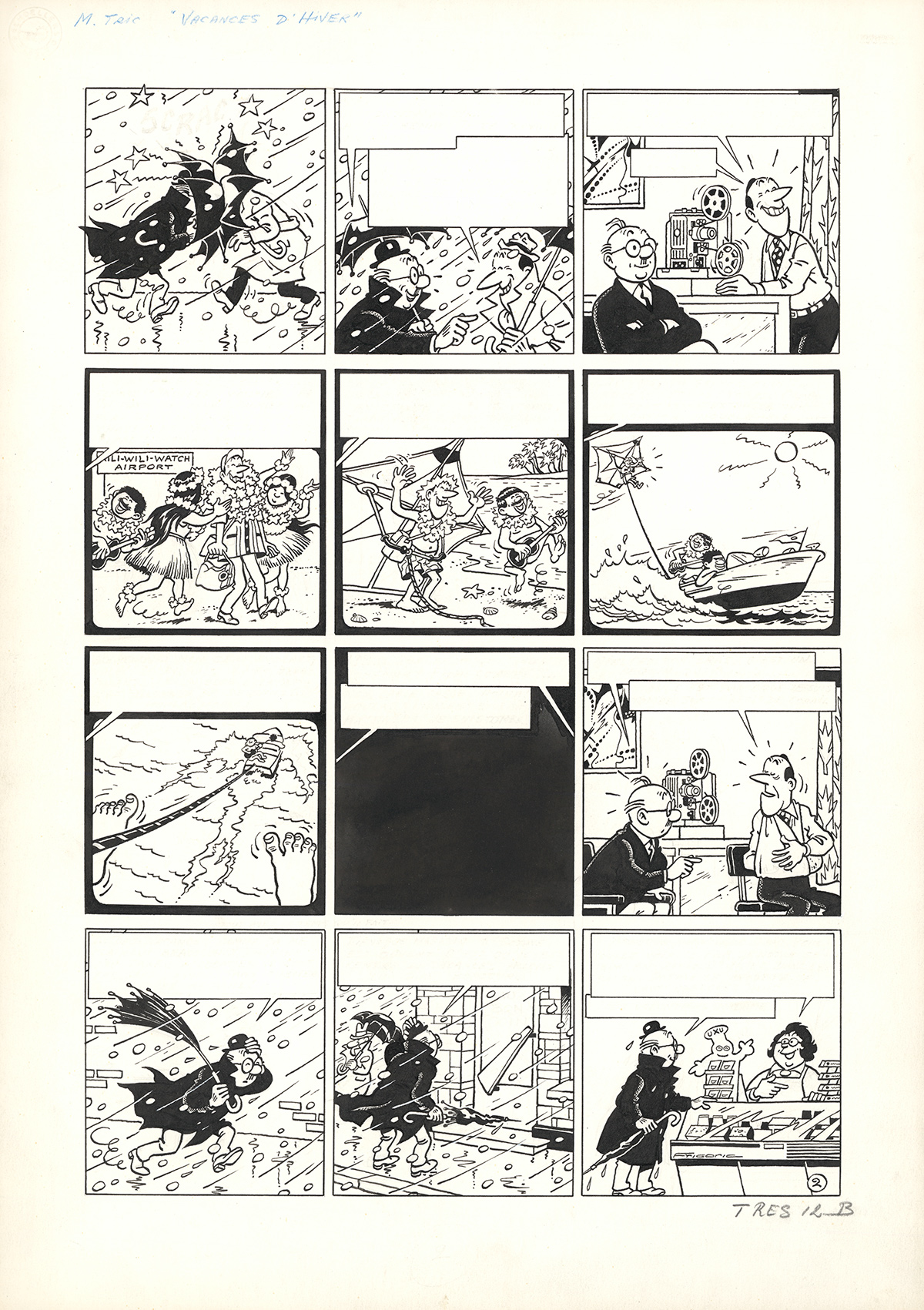
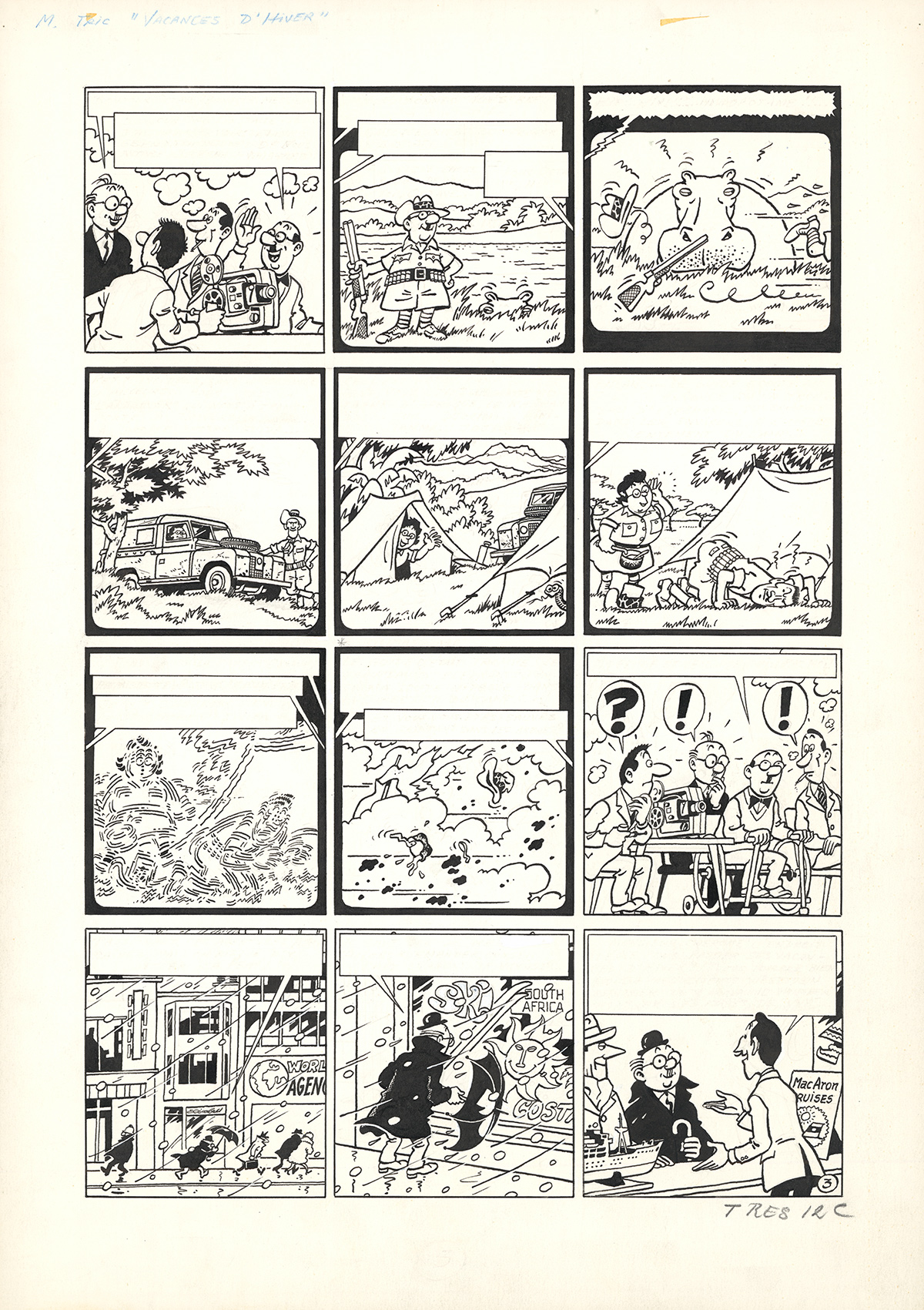
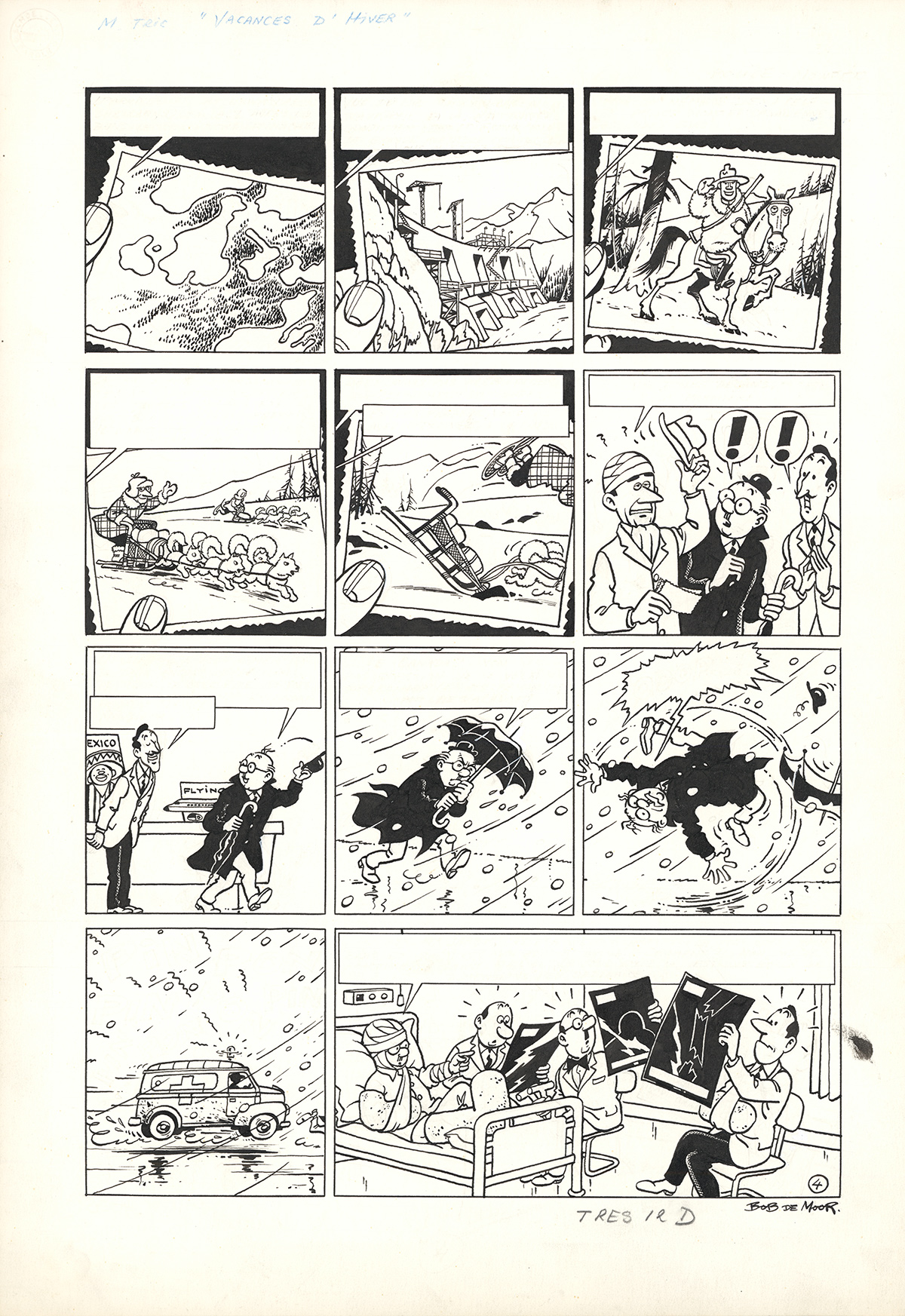
Deeply rooted in the ligne claire (clear line) style inherited from Hergé, with whom he worked for more than 35 years, Bob De Moor employs a meticulous graphic language, using fine lines that he softens with rounded curves in Barelli without ever straying from the canons of the Brussels School. With extreme attention to detail, he embraces a more pronounced realism in Cori le Moussaillon (Cori the Cabin Boy), where his linework draws inspiration from eighteenth- and nineteenth-century Flemish and Dutch engravers. Straddling the line between the ligne claire style and documentary realism, Bob De Moor is a versatile artist who always maintained the rigor and clarity characteristic of the Brussels School.
Having assisted Hergé for thirty-five years and helped make Le Journal de Tintin the institution it is today, Bob De Moor is a key figure in the ligne claire movement. For fans of the genre, he is a timeless classic and far more accessible than leading figures such as Hergé and Edgar P. Jacobs. His personal artwork on the Barelli and Cori le Mousaillon (Cori the Cabin Boy) series remains very affordable and offers a wonderful glimpse into the diversity of his work outside of the Hergé Studio. In contrast, his pieces related to Tintin and his adventures are among the most expensive: the world record for the artist stands at €13,400 for an original cover of the Belgian edition of LeJournal de Tintin No. 43 (Daniel Maghen Auction, 2023).
To ensure that your pages are kept in good condition, we recommend that you never expose them to direct light, as UV rays can damage the media used to produce them. Although Indian ink is a perennial material, the paper support may change when exposed to UV light. Note that watercolor plates require special attention, as this medium is particularly sensitive to light. Pieces containing pastel or charcoal require special care to avoid rubbing.
We advise you to display them away from windows, and to use frames made of pH-neutral conservation materials and “Museum” glass with anti-UV and anti-reflective treatment. If you prefer to keep your works unframed, we recommend storing them flat, in drawing cartons, with sheets of pH-neutral permanent paper in between. Keep them away from light and humidity
Bob De Moor (1925–1992) was one of the most essential—and least recognized—figures in Franco-Belgian comics. After studying at the Royal Academy of Fine Arts in Antwerp, he published his first comic strips as early as 1944 before joining the Hergé Studio in 1950, where he became Hergé’s chief assistant. For more than 35 years, he redrew the older adventures of Tintin and created backgrounds of unparalleled detail, all while pursuing his own career with Barelli (1954), Oncle Zigomar (Uncle Zigomar) and Cori le Moussaillon (Cori the Cabin Boy), which won the Best Album Award at the Angoulême International Comics Festival, in 1988. From 1989 until his death, he served as president of the Belgian Comic Strip Center and was the artistic director at Éditions du Lombard. A definitive biography by Gilles Ratier, Bob De Moor : La ligne claire d'Hergé (Bob De Moor: Hergé’s Clear Line), was published in late 2025 by BD Must to mark the centennial of his birth. Complete biography.