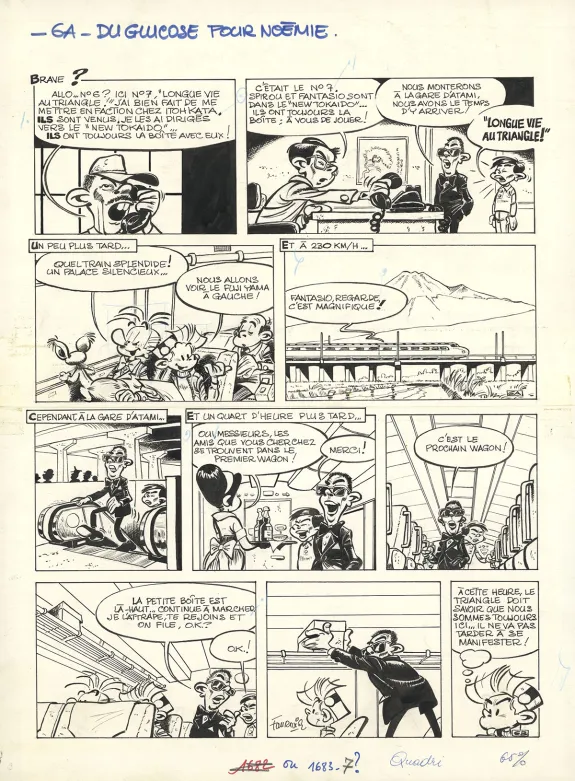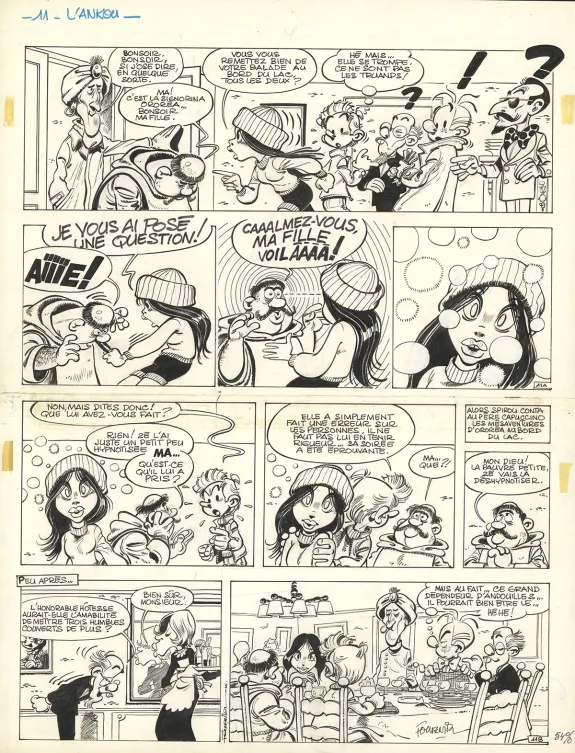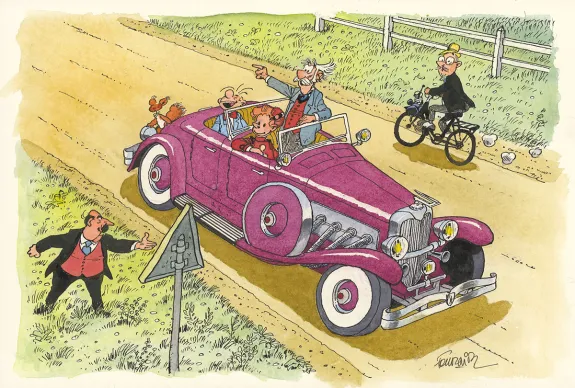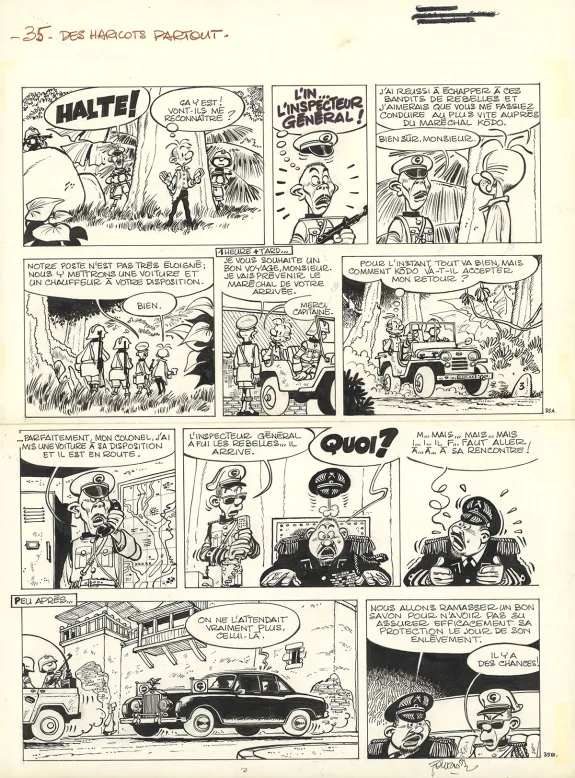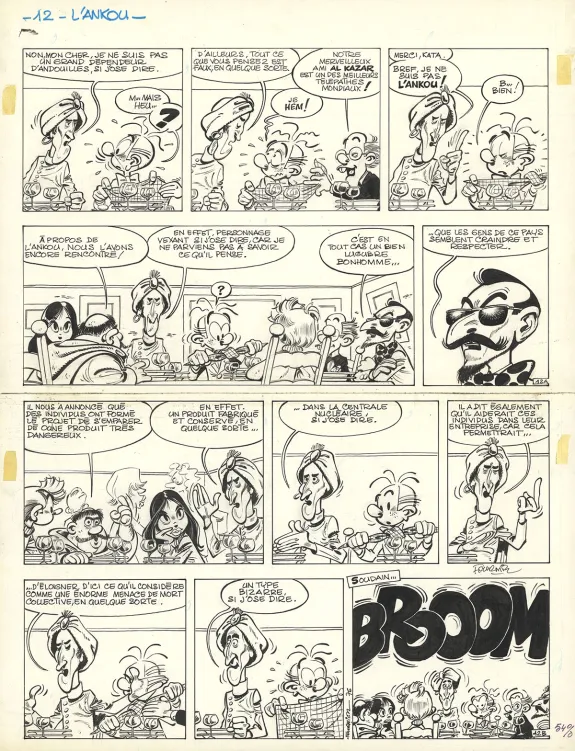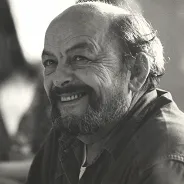
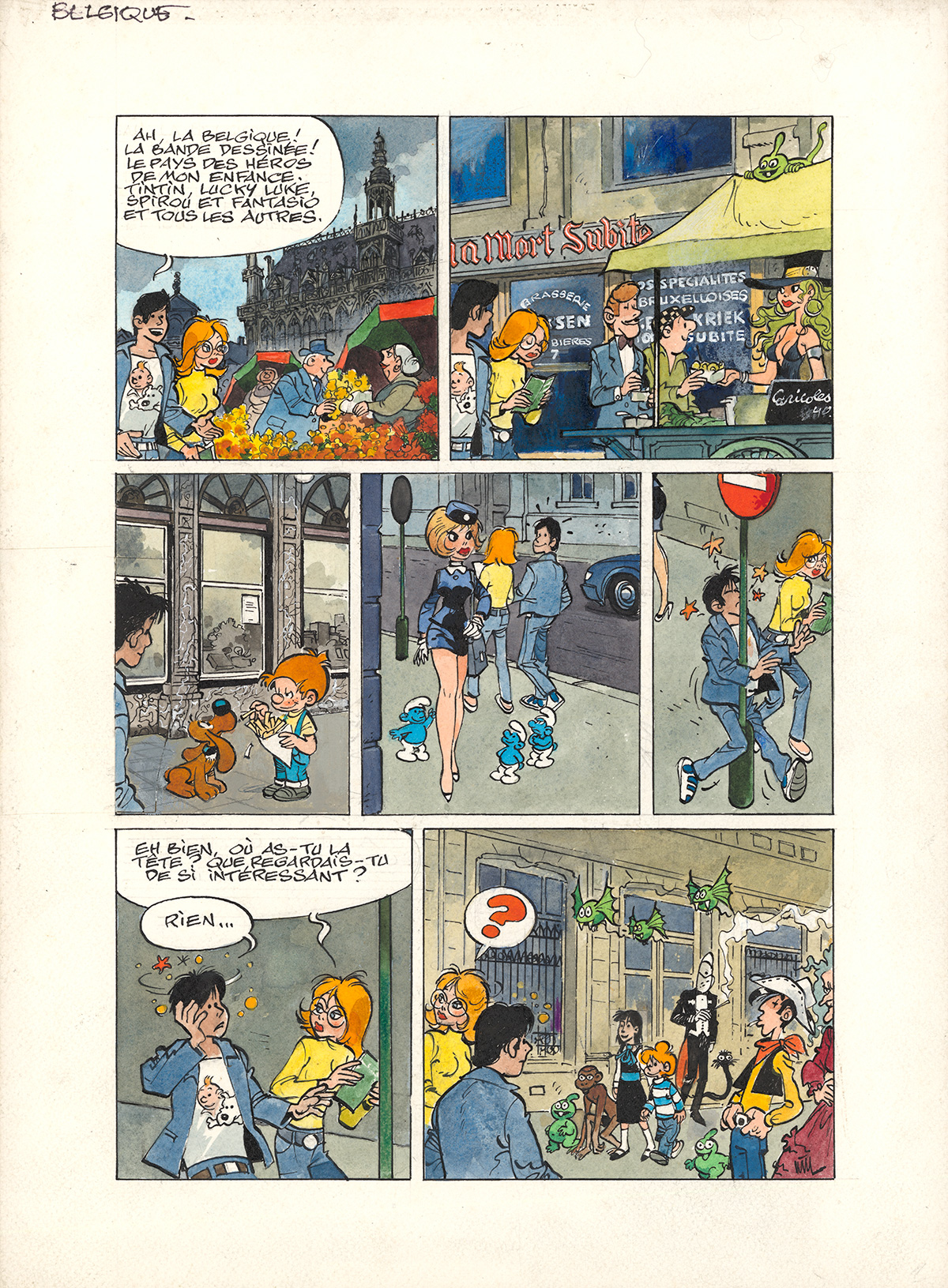
A true pillar of Spirou magazine, Belgian comic artist and scriptwriter Willy Maltaite—better known as Will (1927–2000)—was trained by Jijé and became the defining artist behind iconic series such as Tif et Tondu and Isabelle. He also gave visual form to one of the greatest villains in the history of Franco-Belgian comics: Monsieur Choc.
As a member of the legendary "Gang of Four," alongside Jijé, Morris and André Franquin, Will helped redefine post-war Franco-Belgian comics through a combination of artistic excellence and creative camaraderie. Throughout his career, he collaborated with many of the medium's greatest creators, including André Franquin, Raymond Macherot, Maurice Rosy, Maurice Tillieux and Stephen Desberg. Today, he is rightly regarded as one of the great classics of Franco-Belgian comics.
In November 2025, the auction dedicated to Belgian artist Will, organized by Maison Daniel Maghen Enchères, featured an exceptional collection of 30 artworks from his iconic series, including Tif et Tondu and Isabelle. The session achieved outstanding results, far exceeding its estimates. The top result was the original cover for Tif et Tondu, Volume 18, Le Roc maudit (1972), estimated at €12,000 and sold for €47,475 (including buyer's premium). The artist's auction record remains the cover of Tif et Tondu, Volume 4, La Main blanche, which achieved €60,000 (including buyer's premium) in 2014, against a pre-sale estimate of €27,000.
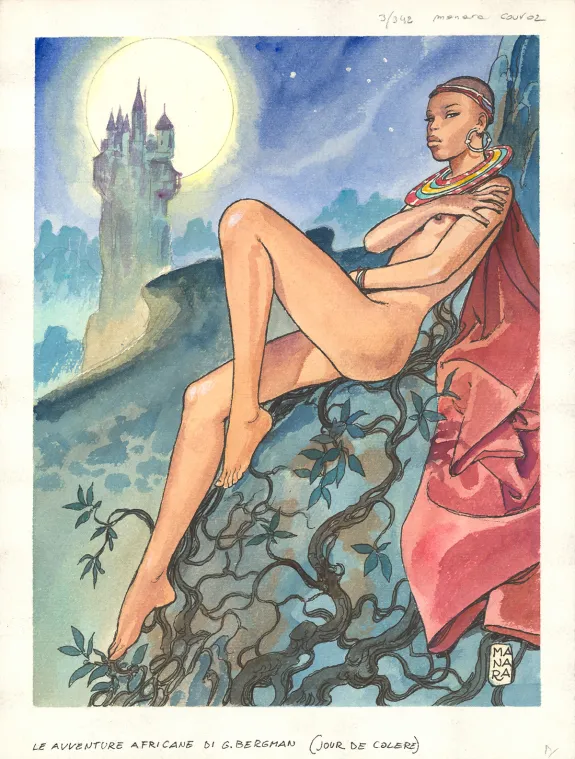
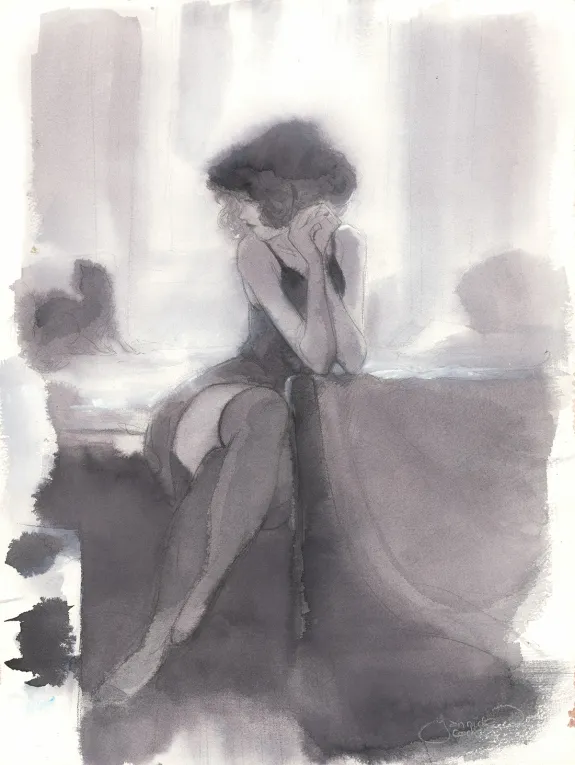
To ensure that your pages are kept in good condition, we recommend that you never expose them to direct light, as UV rays can damage the media used to produce them. Although Indian ink is a perennial material, the paper support may change when exposed to UV light. Note that watercolor plates require special attention, as this medium is particularly sensitive to light. Pieces containing pastel or charcoal require special care to avoid rubbing.
We advise you to display them away from windows, and to use frames made of pH-neutral conservation materials and “Museum” glass with anti-UV and anti-reflective treatment. If you prefer to keep your works unframed, we recommend storing them flat, in drawing cartons, with sheets of pH-neutral permanent paper in between. Keep them away from light and humidity.