

Tibet
Topics :
- Classical
- Adventure
- Crime novel
- Children's literature
- Humor
- Western
- Scout
The Master of Franco-Belgian Crime Fiction
Born on October 29, 1931, in Marseille, Gilbert Gascard—known as Tibet—emigrated to Belgium with his family at the age of five; he adopted his pen name from an older brother who found it easier to say “ti-bet” instead of “Gilbert.” At just sixteen, he joined the graphic design studio Tenas & Rali as an assistant artist, where he worked on the Belgian edition of Journal de Mickey. It was there that he befriended the young André-Paul Duchâteau, a puzzle enthusiast who would become his regular scriptwriter. In this postwar context, marked by the massive boom of Franco-Belgian comics and the historic rivalry between Spirou and Tintin, Tibet created his first major work, Chick Bill, published in 1953 in the weekly magazine Junior. This humorous Western features a singing cowboy roaming the wild plains. The series was soon picked up by Le Journal de Tintin. Influenced by Les Adventures de Tintin (The Adventures of Tintin) and Hergé’s clear line style, the magazine required Tibet to adapt his artwork. Initially inspired by the world of Walt Disney, Tibet had created a whole cast of characters with animalistic features. Although his protagonists lost their snouts, Tibet kept their original names (Dog Bull, Petit Caniche, etc.).
In 1955, still collaborating with Duchâteau, Tibet created the character that would forever link him to the history of Le Journal de Tintin: Ric Hochet, a young reporter for the daily newspaper La Rafale. Ric's investigations—loosely inspired by Gaston Leroux’s famous character Rouletabille—made the series one of the great classics of Franco-Belgian detective fiction. Remarkably productive, Tibet managed to produce four albums a year – split evenly between Chick Bill and Ric Hochet - a relentless pace he maintained for decades. He surrounded himself with a dedicated team of collaborators to handle the backgrounds (Mittéï, Denayer, Desmit, Brichaud) while personally lettering the entire work, a task in which he took particular pride. In 1972, he introduced a young Belgian scriptwriter, a certain Greg, whom he brought into Le Journal de Tintin and who would write the scripts for Chick Bill for about fifteen years.
Recognized as one of the founding pillars of Tintin magazine alongside Hergé, Edgar P.Jacobs, Cuvelier, and Laudy, Tibet succeeded Bob De Moor in 1992 as the artistic director of Éditions du Lombard. Named an Officer of the Order of Arts and Letters in 2006, he turned his attention to literary pursuits in the 2000s, publishing a delightful autobiography recounting his childhood in Marseille, authoring two novels, and eventually trying his hand at playwriting. He died on January 3, 2010, in Roquebrune-sur-Argens.
The final volume of Ric Hochet was published posthumously, bringing to a close a career spanning more than 160 albums that spanned nearly sixty years of the history of Franco-Belgian comics.
Ric Hochet truly sprang from an act of friendship! Thanks to that, we never grew weary of it! Tibet was my first reader, and I was always curious to know what he thought of a new synopsis. I constantly wanted to impress him, to surprise him. … As far as I could still manage it after 78 albums! That’s why we’ve kept up this steady, tireless pace, publishing an album every eight months.
Comments by André-Paul Duchâteau in an interview with ActuaBD (Nicolas Anspach)
Credits :
©Tibet / Duchâteau, Le Lombard (banner)
Pages and artworks from Tibet See all


You will also like...
-
-
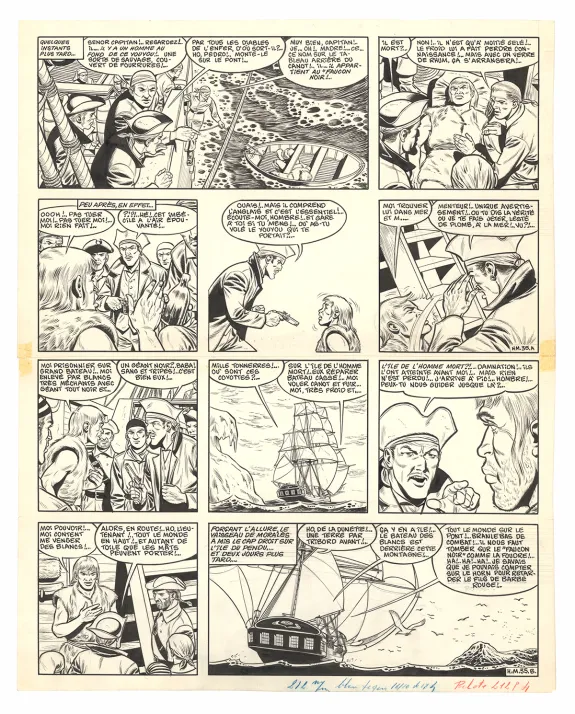
Original page n°35, published in Pilote n°212
6 000 € -
-
-
-
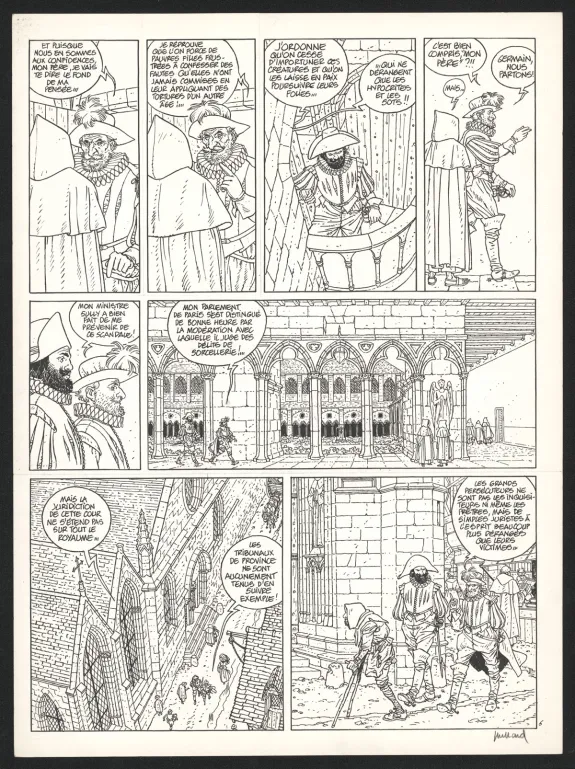
-
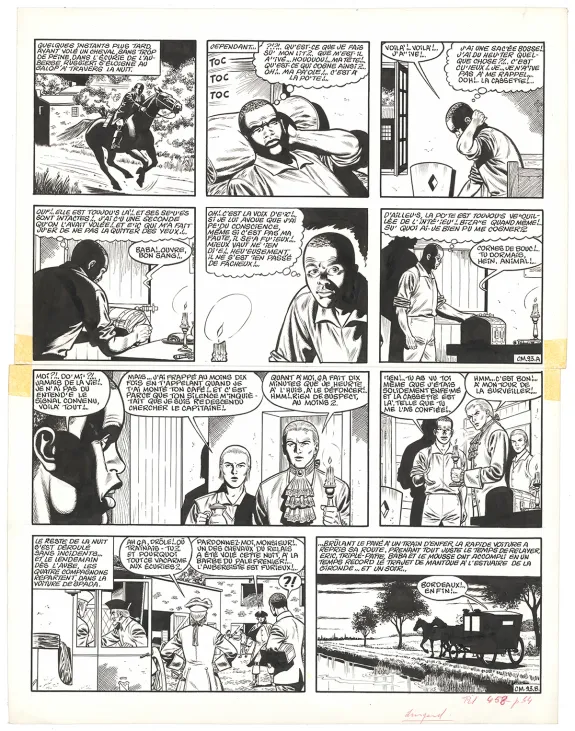
Planche originale n°23, publiée dans Pilote n°458
3 500 € -
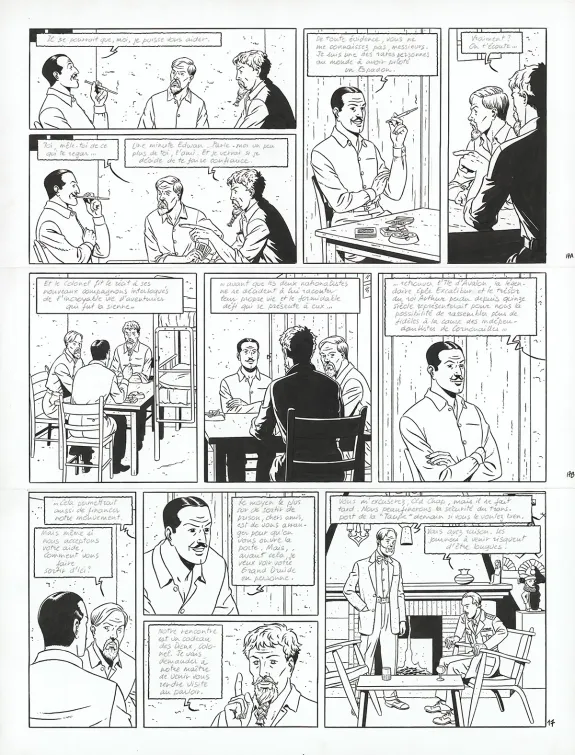
-
-
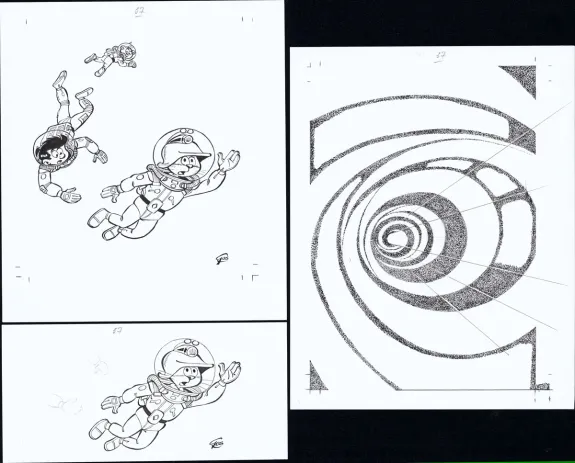
Original cover for the new Glénat edition
2 400 € -

-
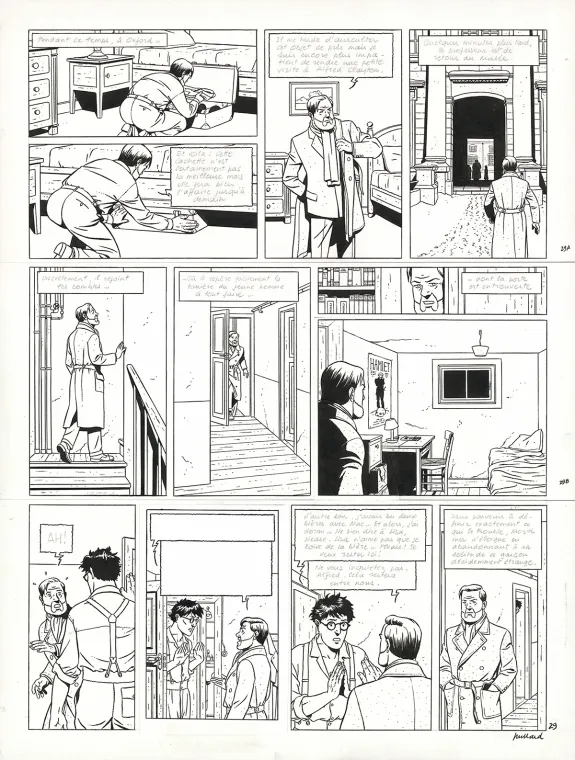
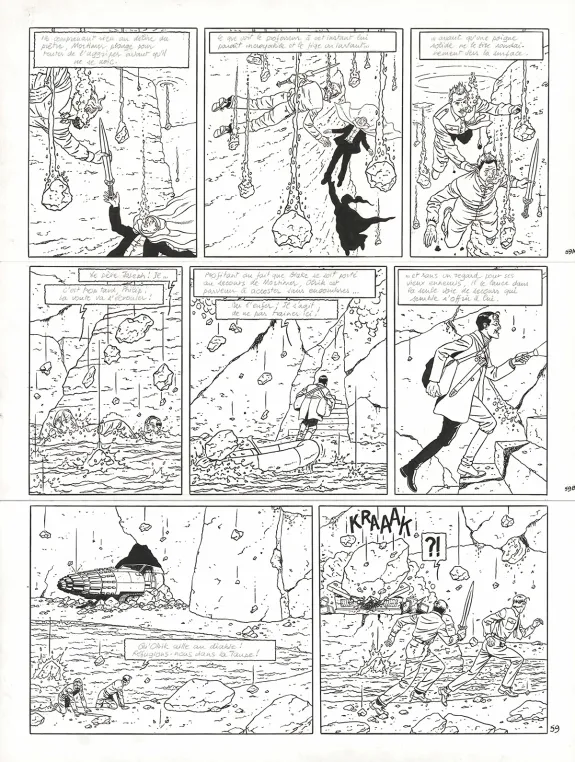
Original page 29, presence of drawing patch
4 000 €


