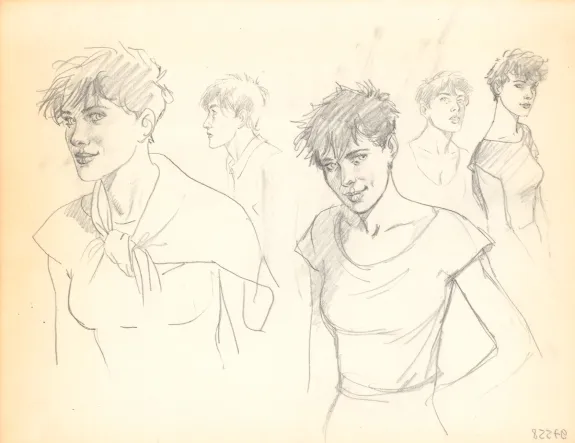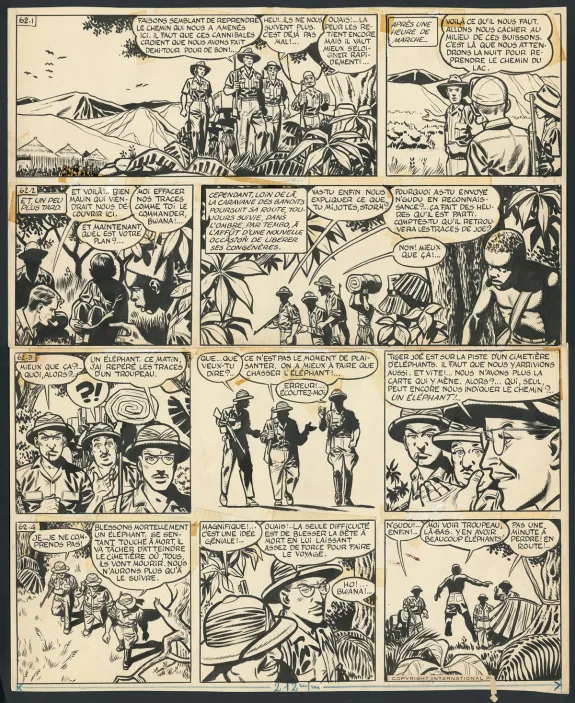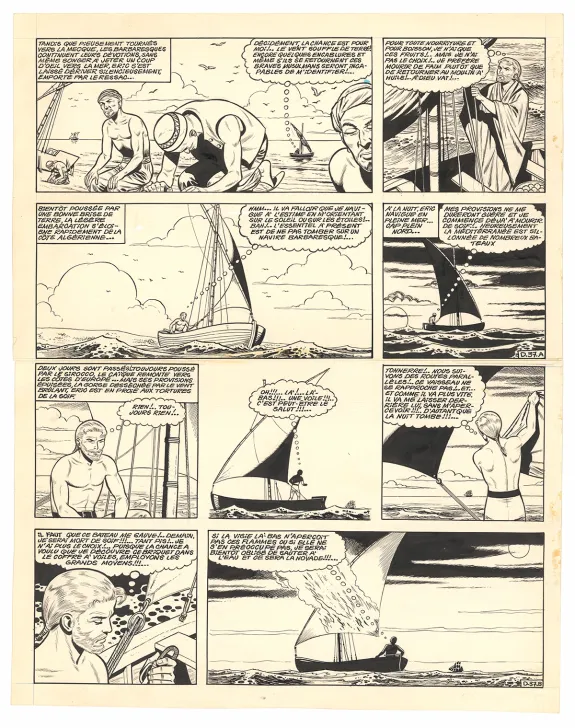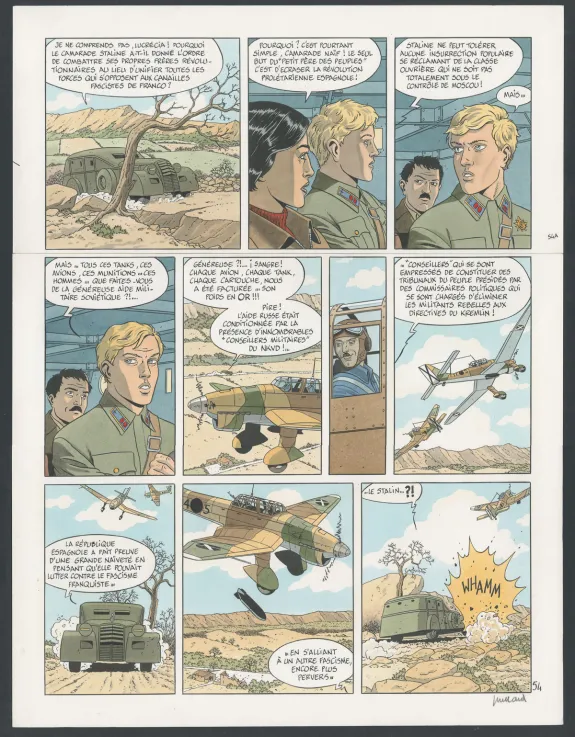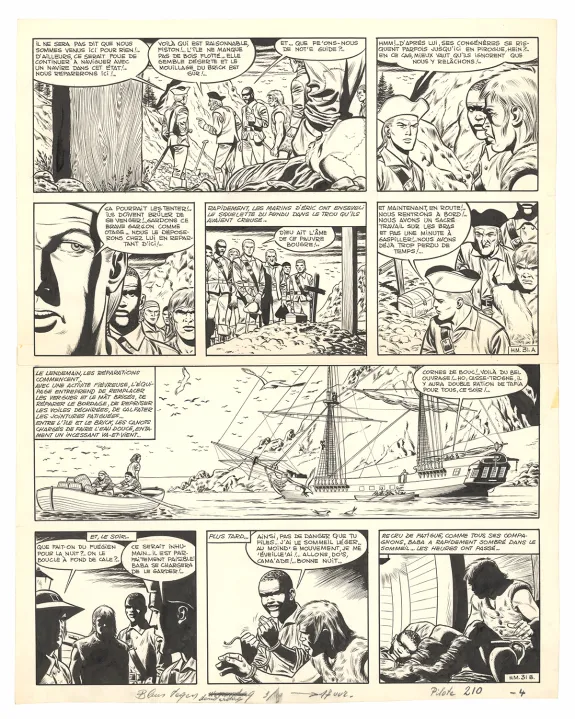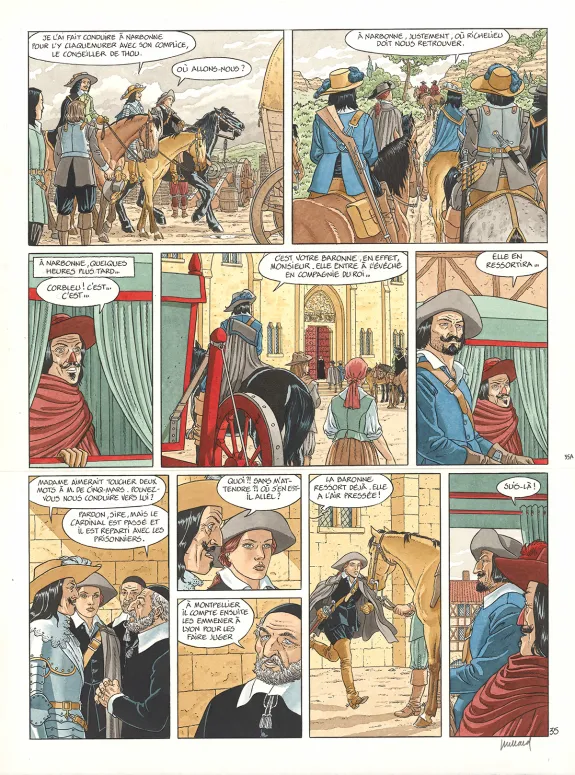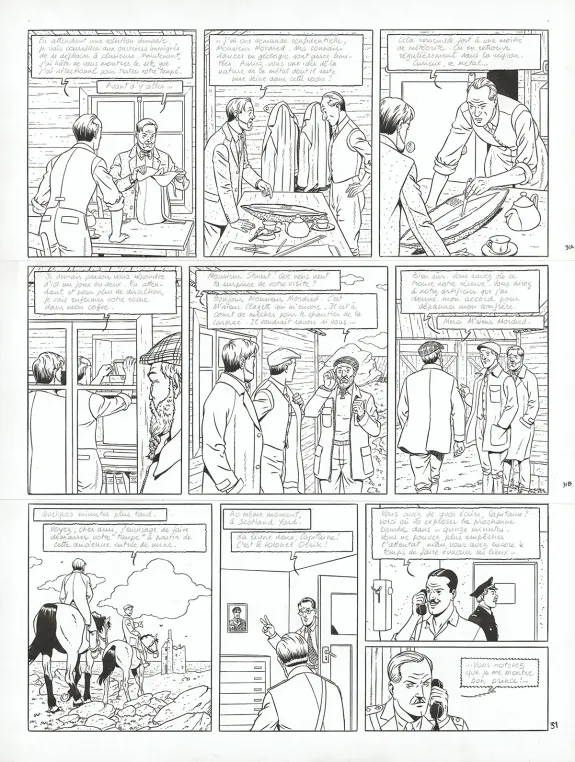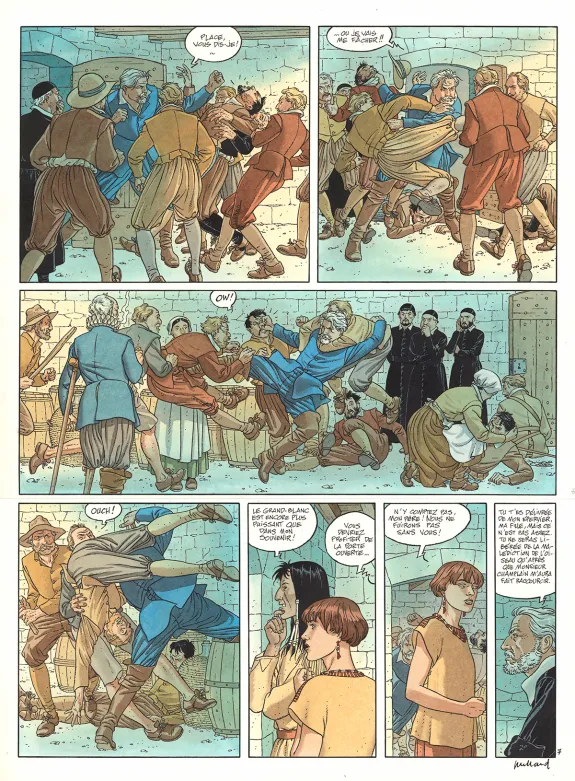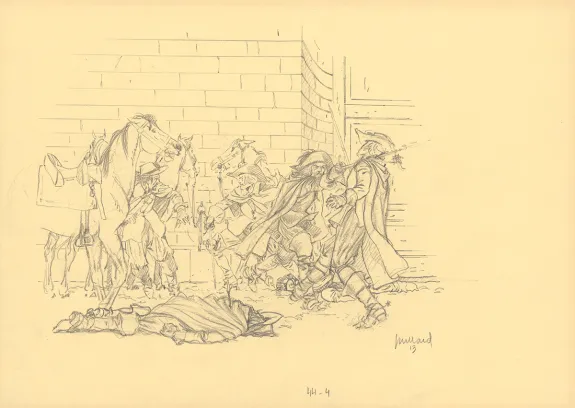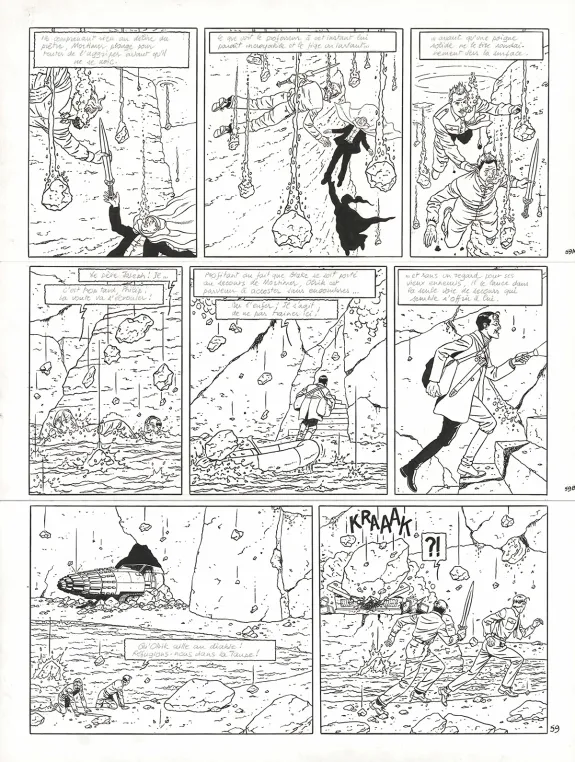
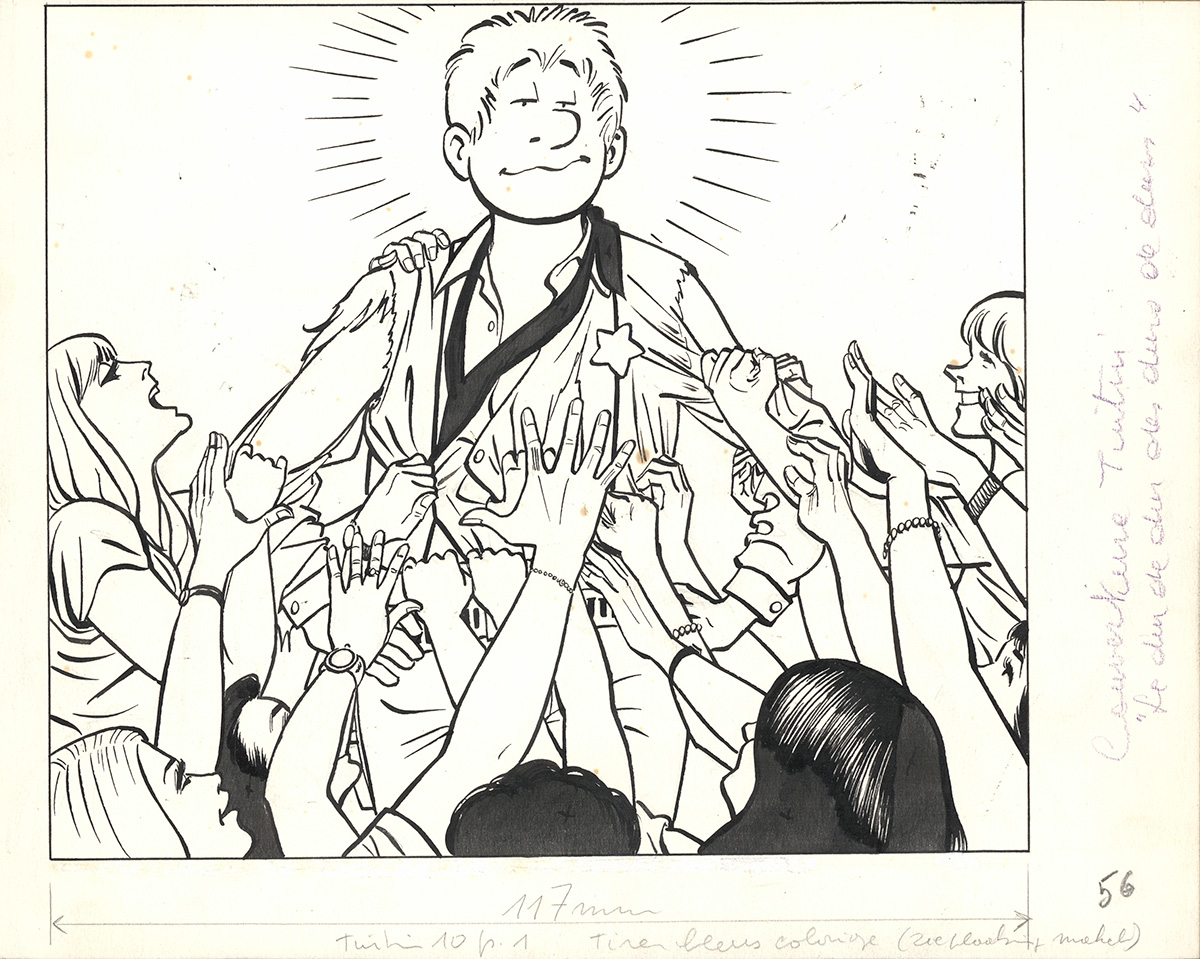
Known for his prolific output (he published four albums a year!), Tibet distinguished himself through his ability to master two distinctly different styles simultaneously. With Chick Bill, he returned to a fluid, cartoonish style inherited from his training at Le Journal de Mickey; while Ric Hochet developed a realistic and bold style, with fast-paced storytelling. His meticulous brush-ink work displays remarkable precision when depicting vehicles, particularly Ric Hochet’s famous Porsche 911. This distinctive style earned him commissions to create numerous illustrations for events and festivals associated with the brand.
Tibet’s prolific output makes his work highly accessible to any collector who appreciates a classic realistic style and the detective genre. Among his most sought-after works are the panels featuring vehicles, in which Tibet showcased his full talent and meticulous attention to detail.
To preserve your works on paper, we recommend that you never expose them to direct light, as UV rays can damage the mediums used. Paintings made with pastel or charcoal require special care to avoid rubbing.
We advise you to display them away from windows, and to use frames made from pH-neutral conservation materials and “Museum” glass with anti-UV and anti-reflective treatment. If you prefer to keep your works unframed, we recommend storing them flat, in drawing cartons, with sheets of pH-neutral permanent paper in between. Keep them away from light and humidity.
Born on October 29, 1931, in Marseille, Gilbert Gascard—known as Tibet—emigrated to Belgium with his family at the age of five; he adopted his pen name from an older brother who found it easier to say “ti-bet” instead of “Gilbert.” At just sixteen, he joined the graphic design studio Tenas & Rali as an assistant artist, where he worked on the Belgian edition of Journal de Mickey. It was there that he befriended the young André-Paul Duchâteau, a puzzle enthusiast who would become his regular scriptwriter. In this postwar context, marked by the massive boom of Franco-Belgian comics and the historic rivalry between Spirou and Tintin, Tibet created his first major work, Chick Bill, published in 1953 in the weekly magazine Junior. This humorous Western features a singing cowboy roaming the wild plains. The series was soon picked up by Le Journal de Tintin. Influenced by Les Adventures de Tintin (The Adventures of Tintin) and Hergé’s clear line style, the magazine required Tibet to adapt his artwork. Initially inspired by the world of Walt Disney, Tibet had created a whole cast of characters with animalistic features. Although his protagonists lost their snouts, Tibet kept their original names (Dog Bull, Petit Caniche, etc.). Complete biography.