

Albert Uderzo
Topics :
- Classical
- Historical
- Humor
- Sailing
- Adventure
- Trip
- Children's literature
- Crime novel
- Western
- Air force
Asterix, or the Indomitable Success That Continues to Defy Oblivion
Albert Uderzo belonged to the same generation as Franquin, Morris, and Peyo, all of whom were captivated by Walt Disney. After a brief stint in animation, he published his first album in 1946 and worked for various newspapers, including France-Soir.
Recruited by the Belgian agency International Press, run by Yvan Cheron, he met the team at an affiliated agency, World Press, run by Georges Troisfontaines. There, Uderzo met Jean-Michel Charlier, Victor Hubinon, and Eddy Paape, all three seasoned professionals. Charlier revived for Uderzo a character the young artist had created for OK Magazine: Belloy the Invulnerable (1948), whose new adventures would be published in the Belgian daily La Wallonie starting in 1951, before being reprinted in Pistolin and Pilote. That same year, Uderzo met another young newcomer, René Goscinny. The two men became inseparable and went on to create a string of works together, notably for the Belgian daily La Libre Belgique: Jehan Pistolet (1951), Luc Junior (1954), and later Oumpah-Pah for Le Journal de Tintin (1958).
The following year, the three friends (Charlier, Goscinny, and Uderzo) launched Pilote, a magazine that forever changed the face of comic art. In its very first issue, Albert Uderzo created Asterix with Goscinny, as well as Tanguy and Laverdure with Charlier.
Asterix became THE phenomenon of French-language comics, even though Dargaud had little faith in it initially. It would be two years before the first album was published, with a print run of just 6,000 copies. But the clever world-building, its subtle critique of history, and its gentle anarchy were a hit with readers. Asterix was the first French character to sell over a million copies upon the release of an album
« All of a sudden, people started talking about Asterix,” Goscinny recounts. “In the summer of 1965, I was in Biarritz, and I remember hearing guys on the street say, ‘Those Romans are crazy!’ and other phrases like that. I thought, ‘This is incredible—something’s happening here.’” Indeed, at that time, adults began buying the albums themselves and admitting that they were reading them. There was an Asterix craze: people were talking about it everywhere—in newspapers, on the radio, on TV—and that’s one of the reasons why comic art became fashionable and part of everyday life. »
The phenomenon is global: over 325 million copies of the Asterix albums have been sold worldwide and translated into 117 languages. In Germany, the print run for a new album is almost on par with that in France. People read the series as far away as China. In reality, what makes Asterix universal is that he perfectly embodies the French spirit.
Uderzo’s talent is incredible in the tradition of the Franco-Belgian school; his artwork is documentary-style, precise, and realistic, despite its caricatural style.
« I didn’t feel comfortable [with realistic drawing],” says Uderzo. “I never took any drawing classes or attended art school, and to create a realistic character, you need at least a basic understanding of human anatomy. Even when a character is clothed, it’s important. I’ve always struggled with this lack of training. [...] In humorous cartooning, anatomy is much less important, although the characters still have to stand up straight! »
Yet the artwork in Asterix became increasingly realistic; this is evident both in the fabulous settings of Les Lauriers de César (Caesar’s Laurels) and in the naturalistic landscapes of Astérix en Corse (Asterix in Corsica). Uderzo’s talent for realistic drawing—as seen, for example, in Tanguy and Laverdure—truly forms the foundation of the Asterix artwork, a sort of ideal synthesis between Walt Disney and Hergé.
Uderzo in auctions

ALBERT UDERZO
ASTÉRIX
Astérix en Hispanie (T.14), Albert René 1969
Original page n° 7, prepublished in "Pilote" n° 501 of 12th june 1969.
Signed et inscripted.
Indian ink on paper
43,8 × 53,5 cm
Sold in 2023 : 166 750€
Credits :
©Uderzo / Goscinny, Ed. Albert-René (banner)
Pages and artworks from Albert Uderzo
No artworks are available at this time. Log in or create an account to set up alerts and never miss a new release from your favorite artists or comics !
You will also like...
-
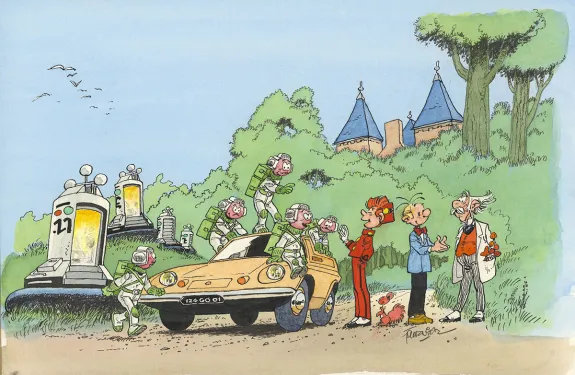
-
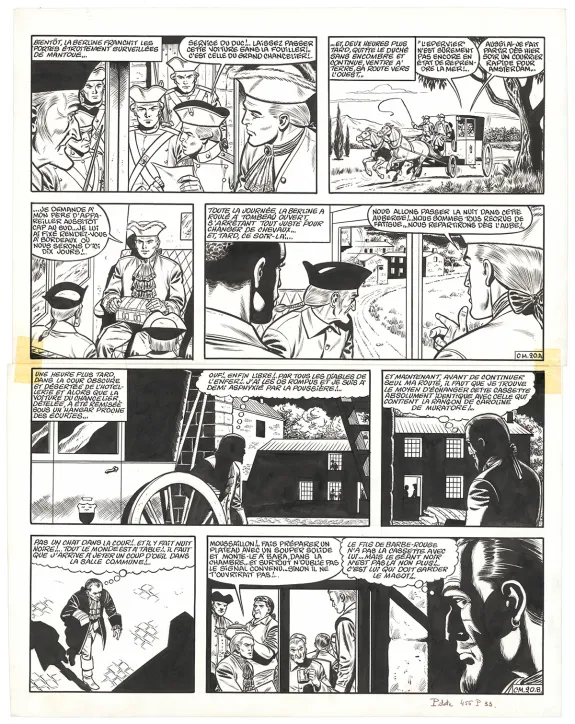
Planche originale n°20, publiée dans Pilote n°456
3 500 € -
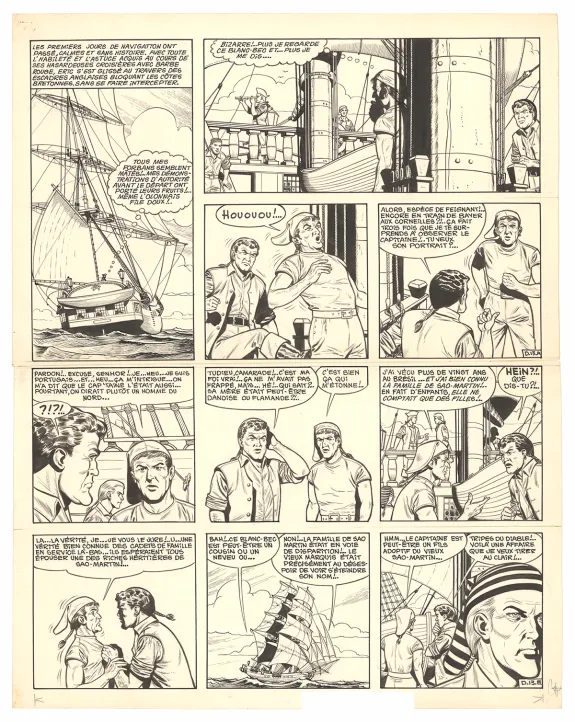
-
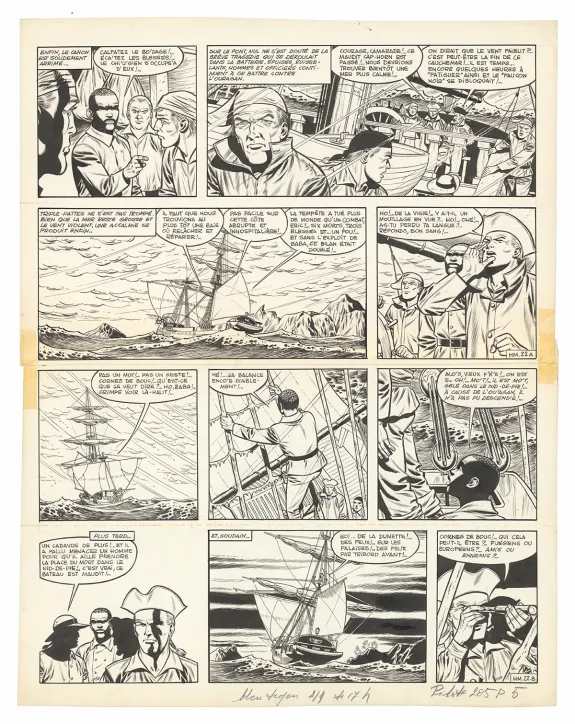
Original page n°22, published in Pilote n°205
9 000 € -
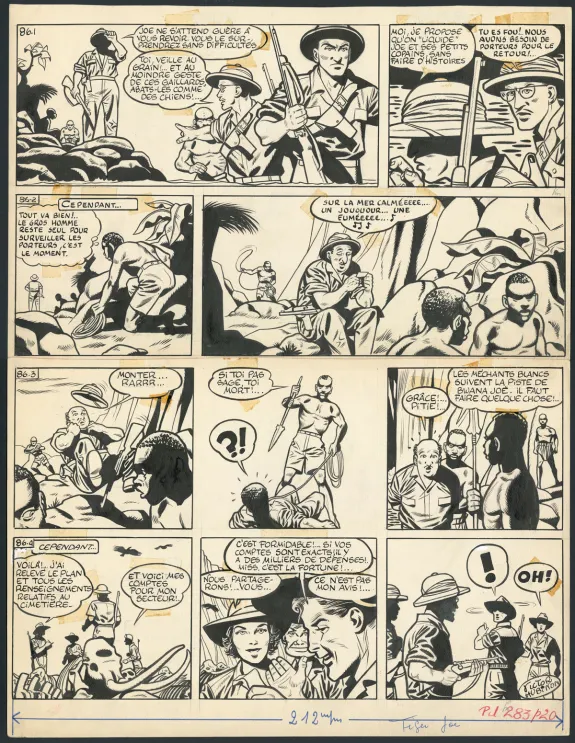
Original page, numbered 86, firstly published in La Libre Junior in 1958
3 000 € -
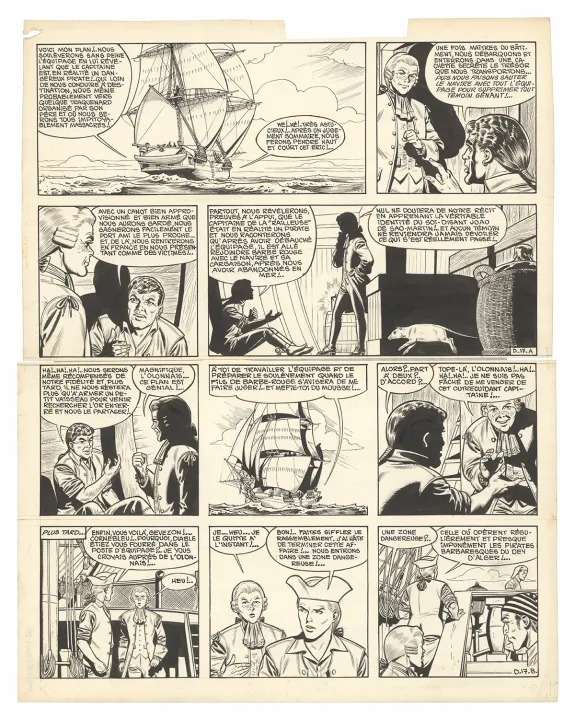
-
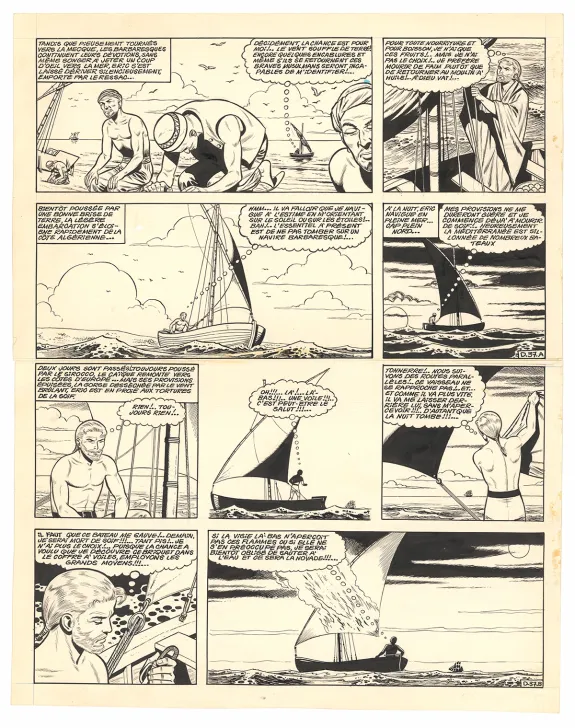
Original page n°37, published in Pilote n°135
6 000 € -
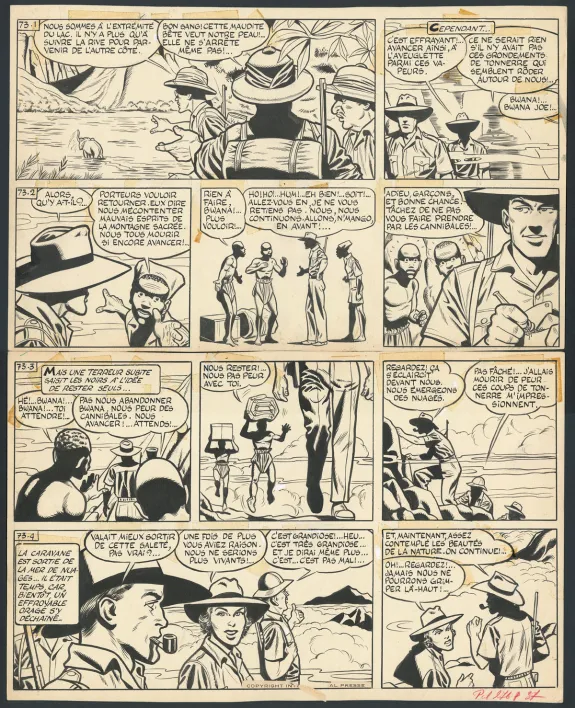
Original page, numbered 73, firstly published in La Libre Junior in 1958
3 000 € -
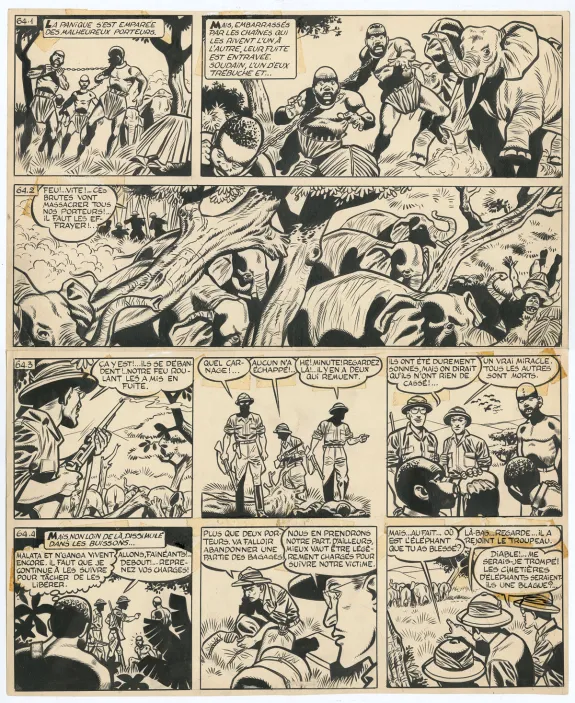
Original page n°64, firstly published in La Libre Junior in 1958
2 300 € -
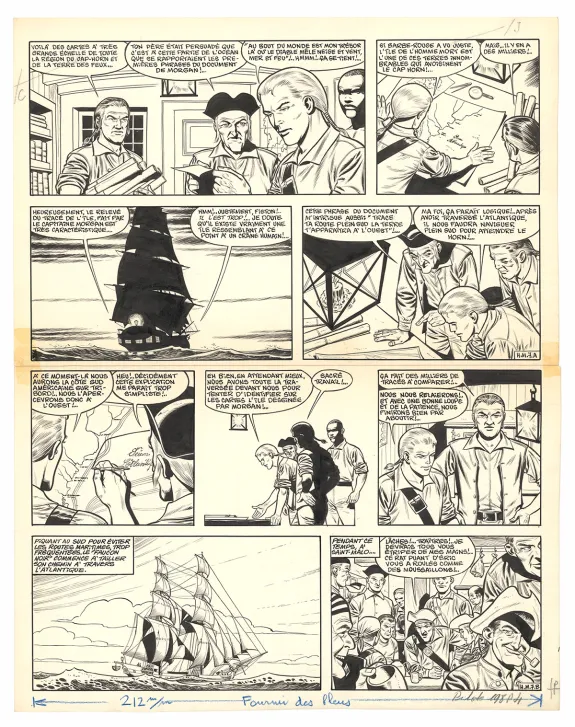
Original page 7, published in Pilote n°198
8 500 € -
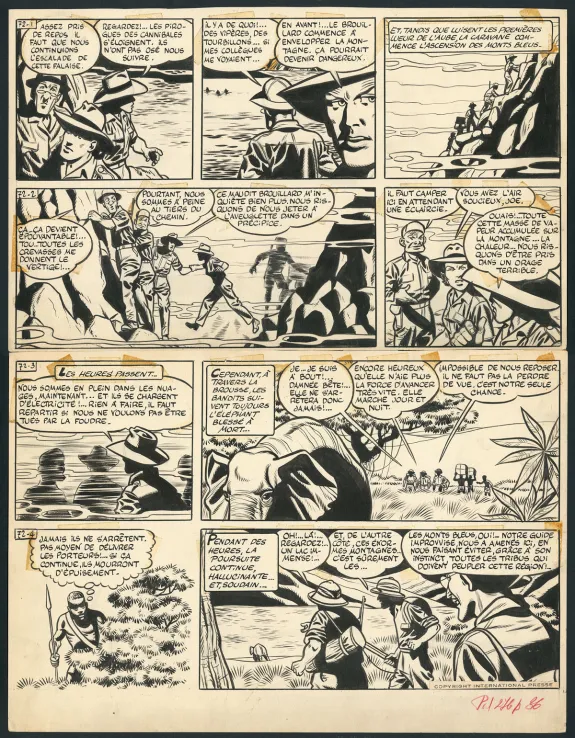
Original page, numbered 72, firstly published in La Libre Junior in 1958
3 200 € -
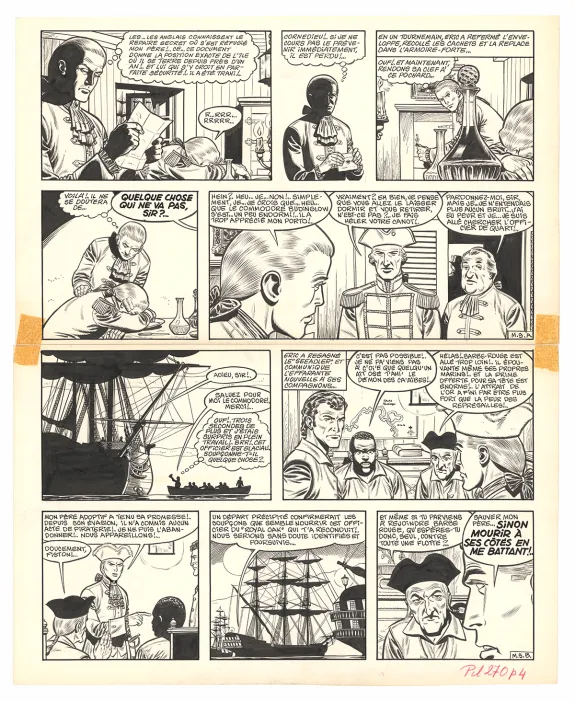
Original page n°9 published in Pilote n°270
6 500 €


