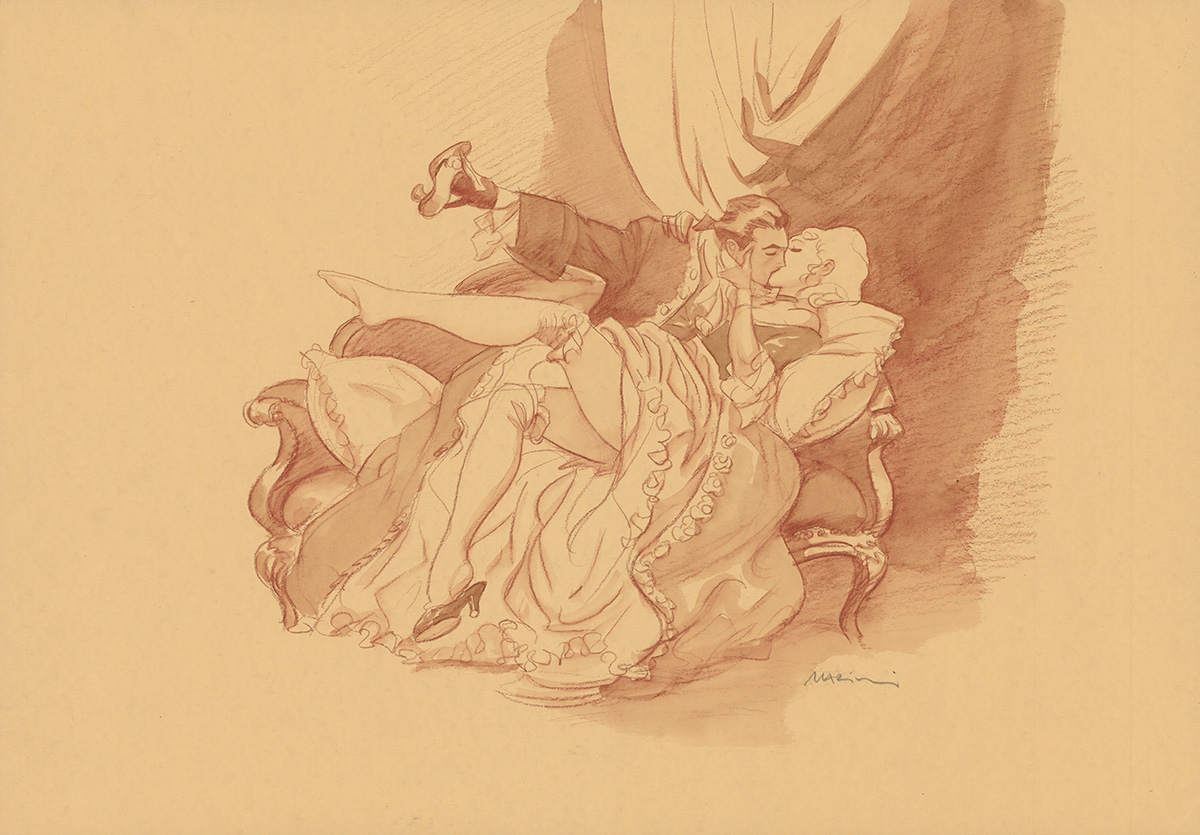
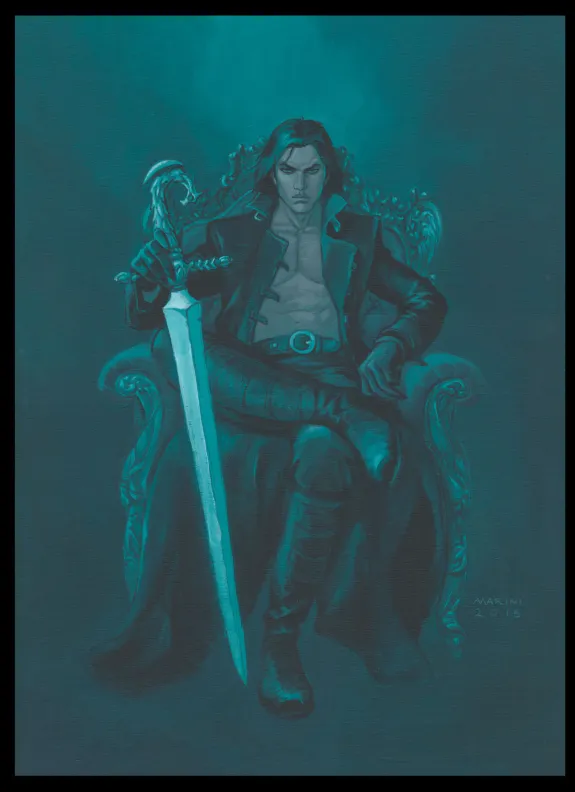
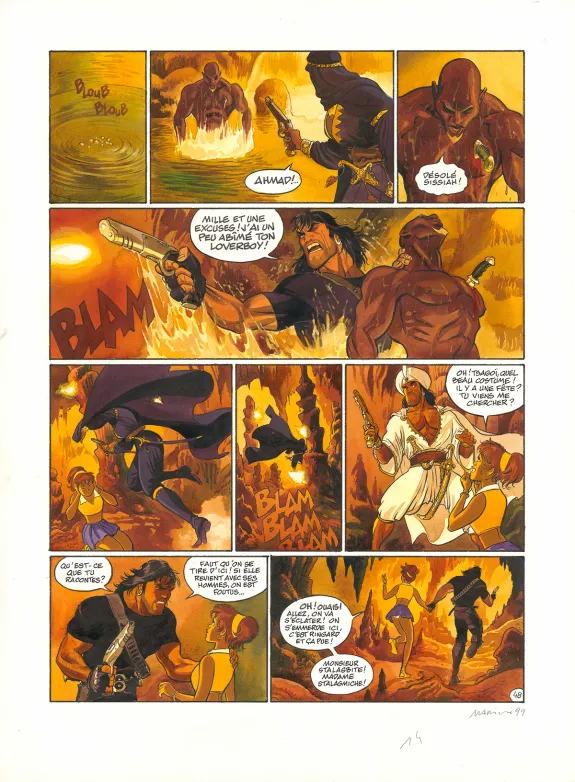
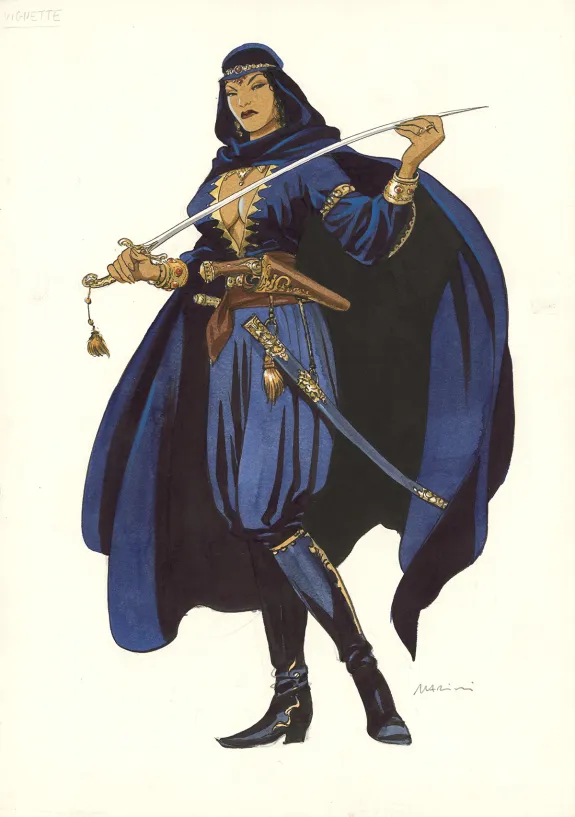
His career began in 1987 at the Sierre Comic Book Festival, where he competed in the new talent category. Quickly noticed, he was entrusted with his first series, Olivier Varèse, based on a script by Thierry Smolderen, published by Alpen Publishers. In 1992, Marini and Smolderen shifted gears and created Gipsy, a true flesh-and-blood hero. Marini then explored the world of vampires alongside Jean Dufaux with Rapaces (Raptors), the first volume of which was published in 1998. With Stephen Desberg, he fulfilled a childhood dream of drawing a Western and published the first volume of L'Etoile du Désert (The Star of the Desert) in 1996. Four years later, this collaboration also gave rise to Le Scorpion, an epic swashbuckling saga. Since 2007, Marini has been bringing antiquity to life with Les Aigles de Rome (The Eagles of Rome). In 2017, he took on a new challenge: giving Batman his first adventure illustrated by a Franco-Belgian comic artist, which was published by Dargaud in collaboration with DC Comics. Complete biography.