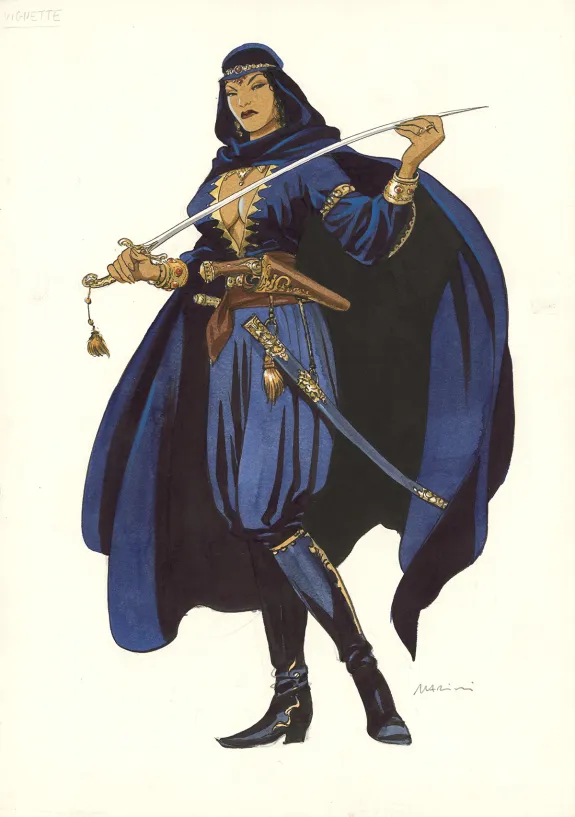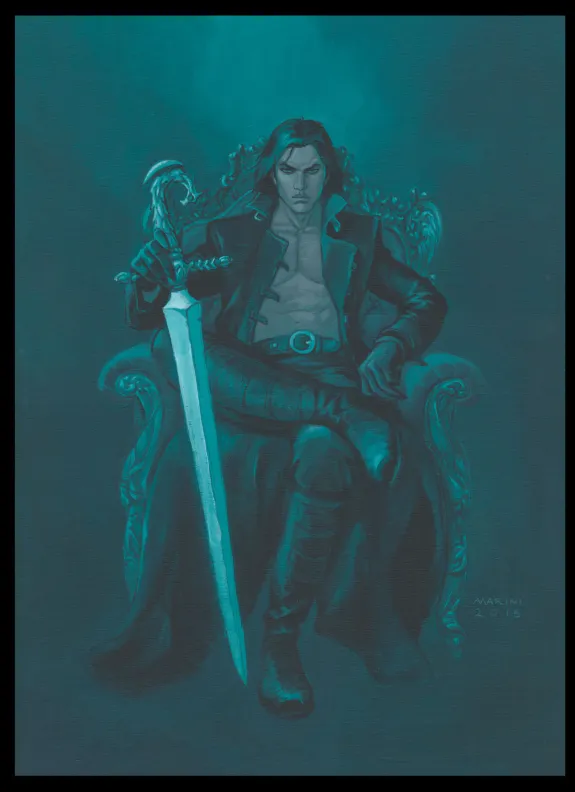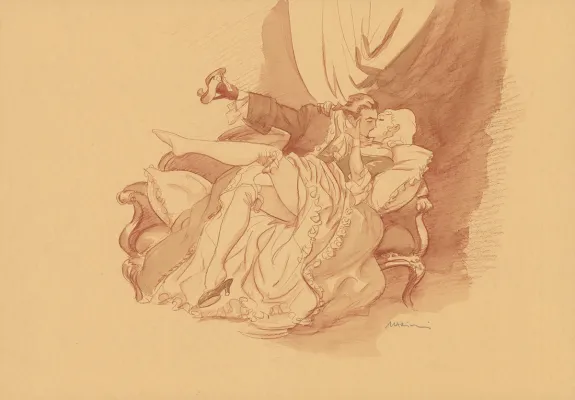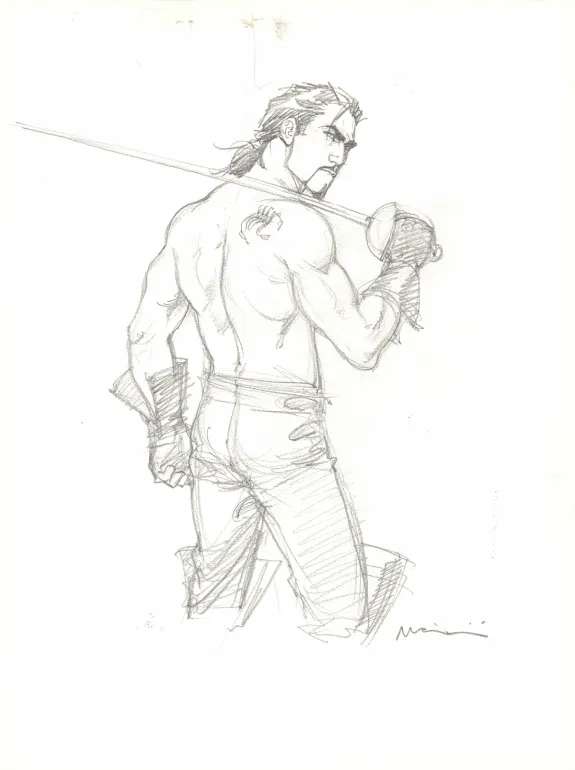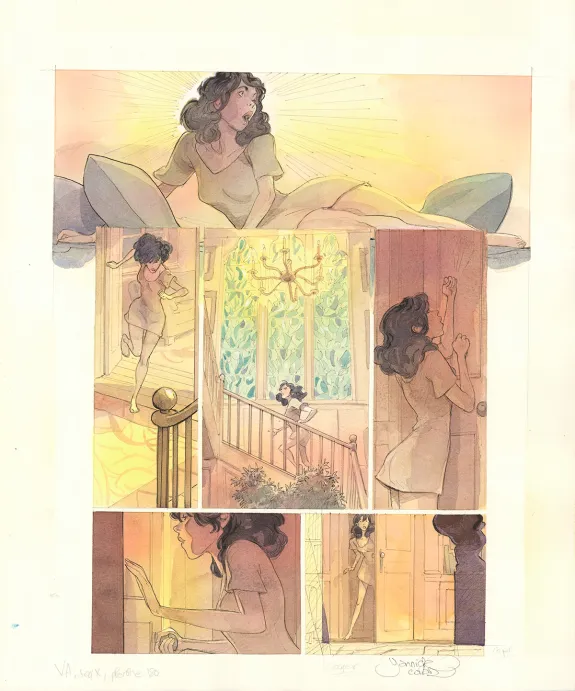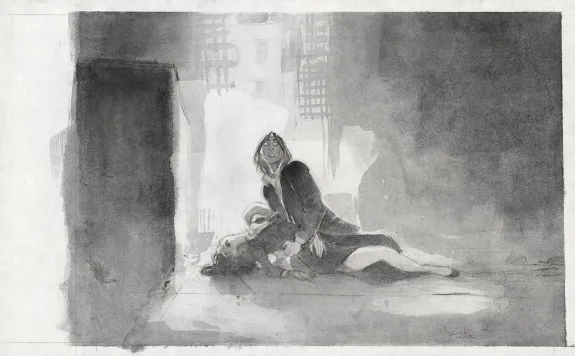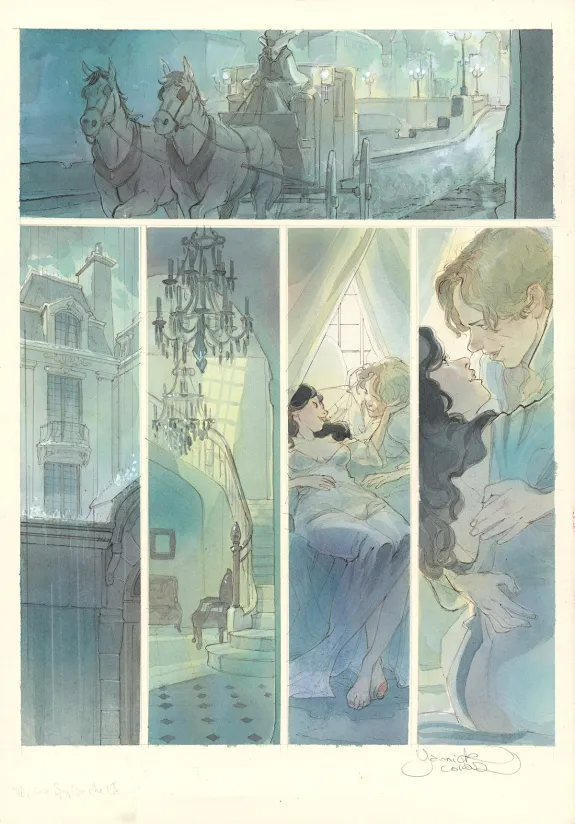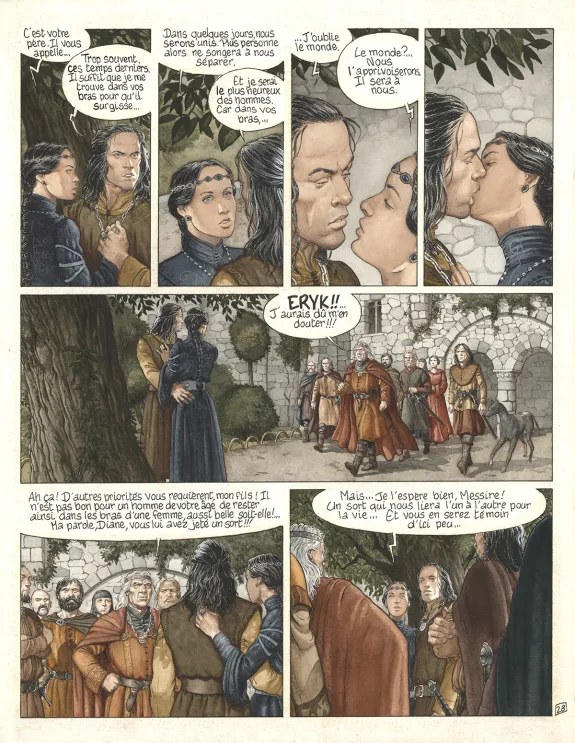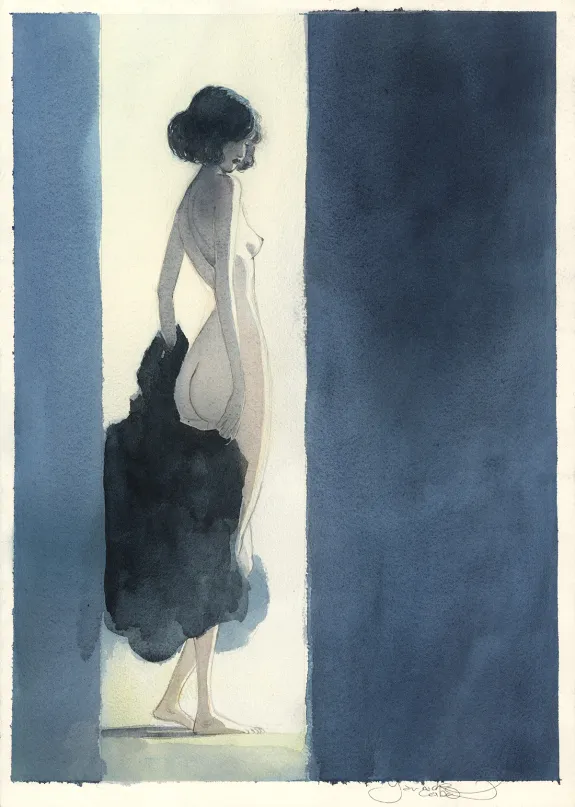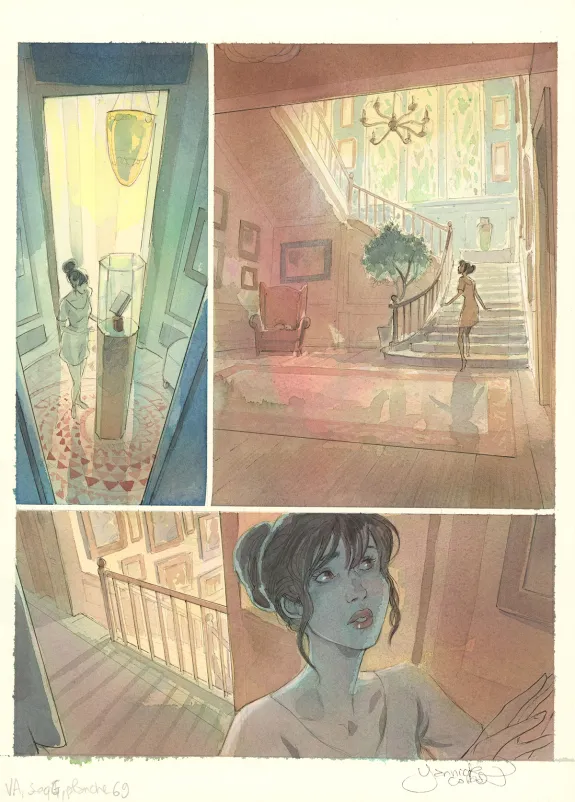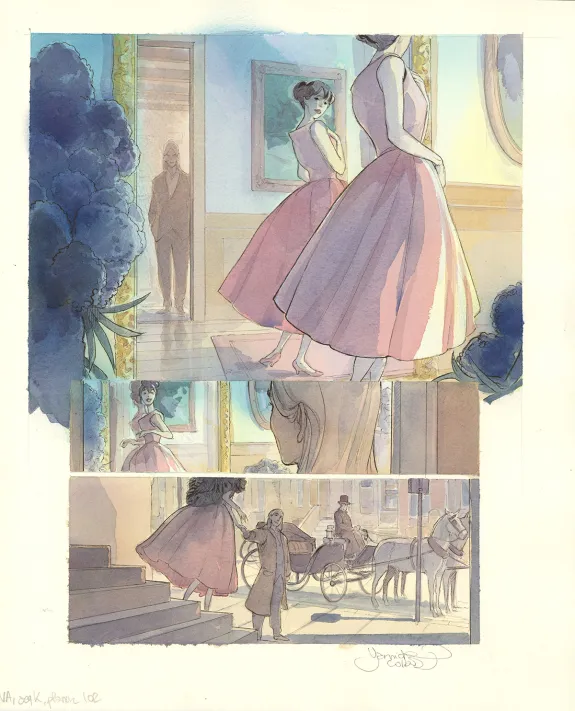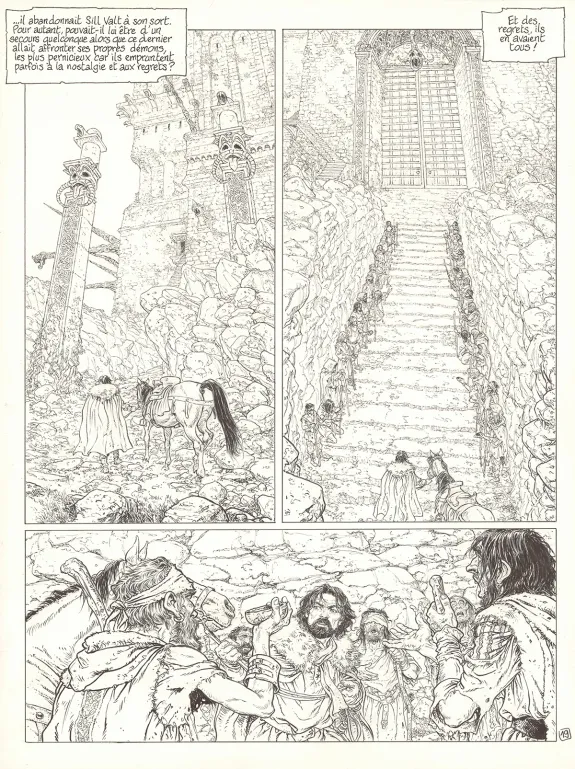
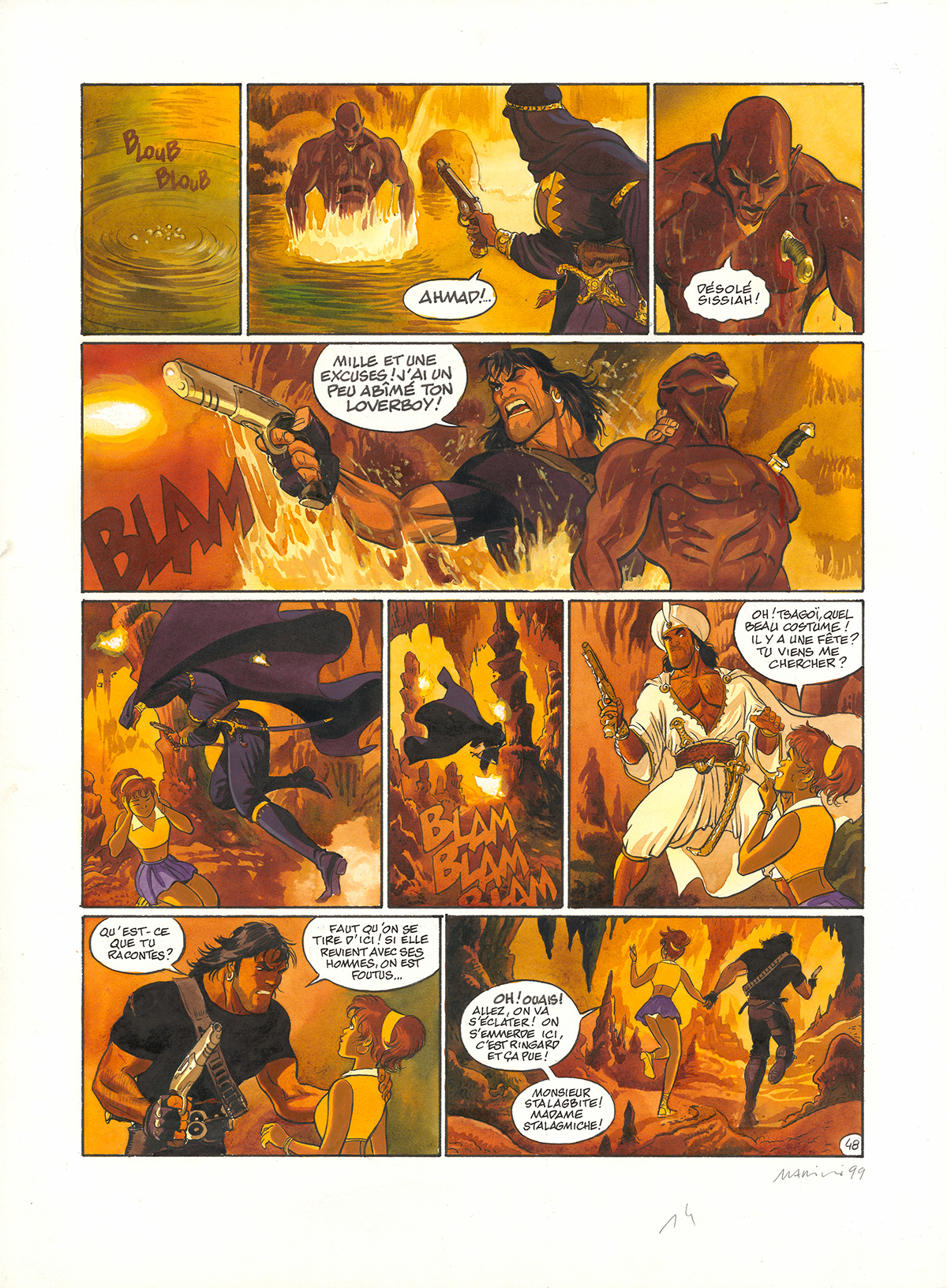
For the past fifteen years or so, Enrico Marini’s market value has been steadily rising. The two prints sold at auction in 2025 set records, fetching €7,473 and €17,663, respectively.
To ensure that your pages are kept in good condition, we recommend that you never expose them to direct light, as UV rays can damage the media used to produce them. Although Indian ink is a perennial material, the paper support may change when exposed to UV light. Note that watercolor plates require special attention, as this medium is particularly sensitive to light. Pieces containing pastel or charcoal require special care to avoid rubbing.
We advise you to display them away from windows, and to use frames made of pH-neutral conservation materials and “Museum” glass with anti-UV and anti-reflective treatment. If you prefer to keep your works unframed, we recommend storing them flat, in drawing cartons, with sheets of pH-neutral permanent paper in between. Keep them away from light and humidity.
His career began in 1987 at the Sierre Comic Book Festival, where he competed in the new talent category. Quickly noticed, he was entrusted with his first series, Olivier Varèse, based on a script by Thierry Smolderen, published by Alpen Publishers. In 1992, Marini and Smolderen shifted gears and created Gipsy, a true flesh-and-blood hero. Marini then explored the world of vampires alongside Jean Dufaux with Rapaces (Raptors), the first volume of which was published in 1998. With Stephen Desberg, he fulfilled a childhood dream of drawing a Western and published the first volume of L'Etoile du Désert (The Star of the Desert) in 1996. Four years later, this collaboration also gave rise to Le Scorpion, an epic swashbuckling saga. Since 2007, Marini has been bringing antiquity to life with Les Aigles de Rome (The Eagles of Rome). In 2017, he took on a new challenge: giving Batman his first adventure illustrated by a Franco-Belgian comic artist, which was published by Dargaud in collaboration with DC Comics. Complete biography.