Enrico Marini
Topics :
- Historical
- Thriller
- Swashbuckling
- Fantasy
- Crime novel
- Adventure
- Futuristic story
- Road Trip
- Western
A Versatile Artist
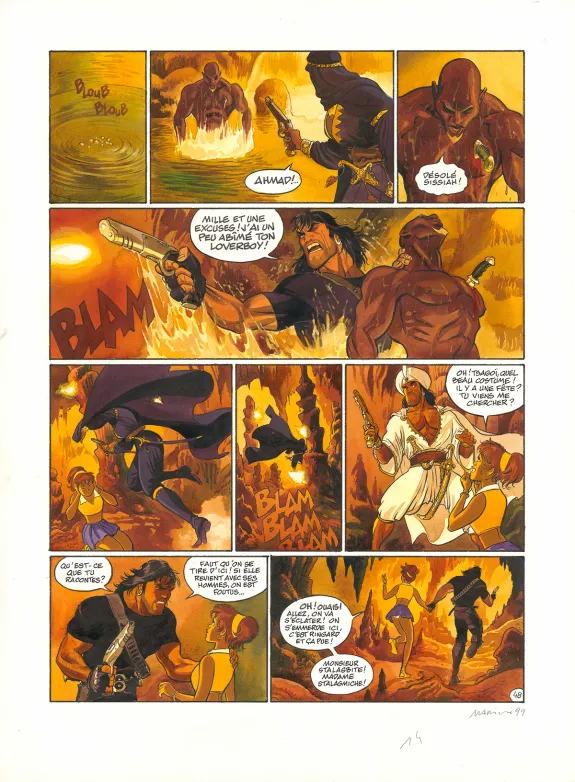
Enrico Marini, an Italian national, was born in Switzerland, where he studied graphic design for four years at the Basel School of Fine Arts. His artistic style was influenced by American comics, fumetti, and manga, and he admired creators such as Hermann, Jordi Bernet, Milton Caniff, Alfonso Font, Giraud, and Otomo. His career began in 1987 at the Sierre Comic Book Festival, where he competed in the new talent category. He quickly caught the attention of the industry and was entrusted with his first series, Olivier Varèse, based on a script by Thierry Smolderen, published by Alpen Publishers. In 1992, Marini and Smolderen shifted gears and created Gipsy, a true flesh-and-blood hero. Marini then ventured into the world of vampires alongside Jean Dufaux with Rapaces (Raptors), the first volume of which was published in 1998. With Stephen Desberg, he fulfilled a childhood dream of drawing a Western and published the first volume of L'Etoile du Désert (The Star of the Desert) in 1996. Four years later, this collaboration also gave rise to Le Scorpion (The Scorpio), an epic swashbuckling saga. Since 2007, Marini has been bringing antiquity to life with Les Aigles de Rome (The Eagles of Rome). In 2017, he took on a new challenge: giving Batman his first adventure illustrated by a Franco-Belgian comic artist. Published by Dargaud in collaboration with DC Comics, the two-part series dedicated to the Dark Knight, titled Batman: The Dark Prince Charming, concluded in June 2018.
©Dargaud
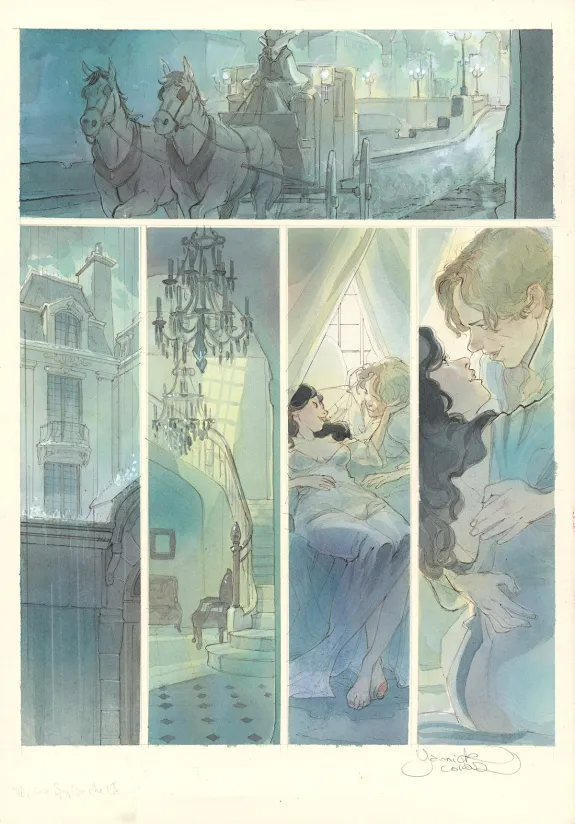
Part a reimagined vampire myth and part critique of contemporary society, the Rapaces (Raptors) series is enriched by the scholarly contributions of the highly cultured Jean Dufaux. Here, he blends—and this is what makes it unique—the standards of Bram Stoker-style fantasy with Enrico Marini’s remarkably clear artistic style, a far cry from the gothic aesthetic typically associated with the world of vampires. Another unique aspect is the way it tells the story—under the guise of a class struggle among predators—of how a policewoman, somewhat overwhelmed by the enormity of what she discovers, comes to grasp the decadence not only of this occult power but also of the society around him, which is easily corruptible, in a blend of desire, brutality, and sensuality.
Didier Passamonik on the Rapaces series—Excerpt from the Daniel Maghen Auction Catalog, 2025.
Credits :
Marini © Dargaud, 2026 (banner) © Dargaud, 2026 (portrait)
Pages and artworks from Enrico Marini See all
-
-
-
-

Original page 19, semi-direct color layout with black and white first step
2 700 € -
-


You will also like...
-

-
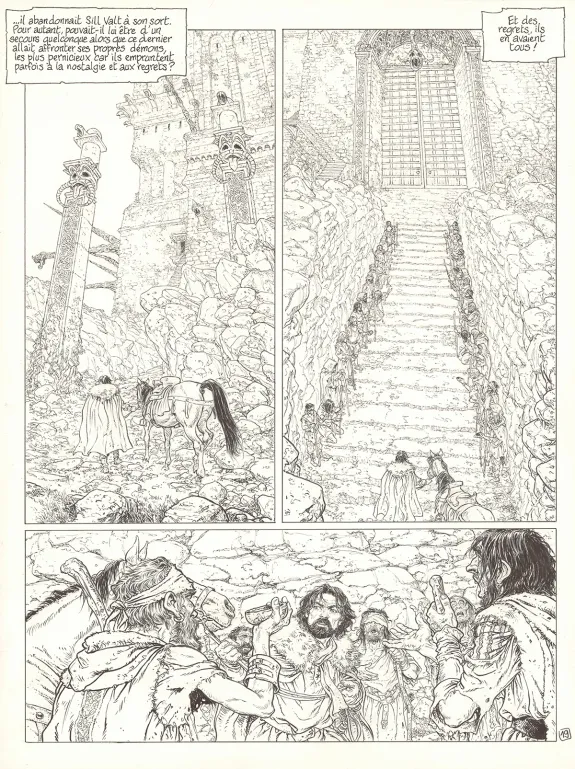
Original page n°19
3 500 € -
-
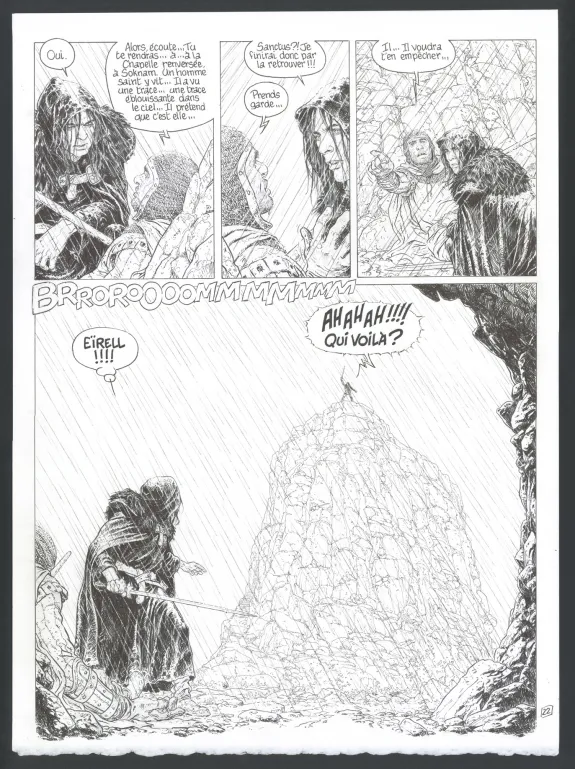
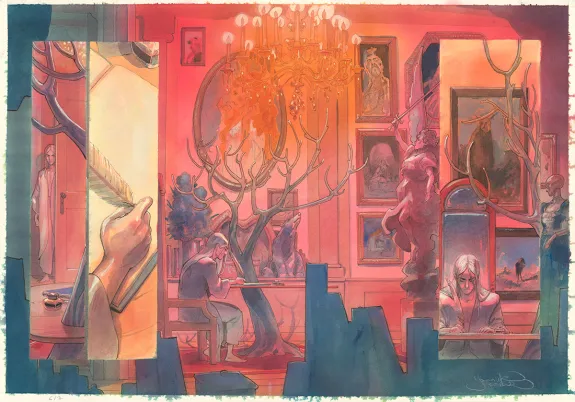
Original page 22. Dufaux universe
3 500 € -