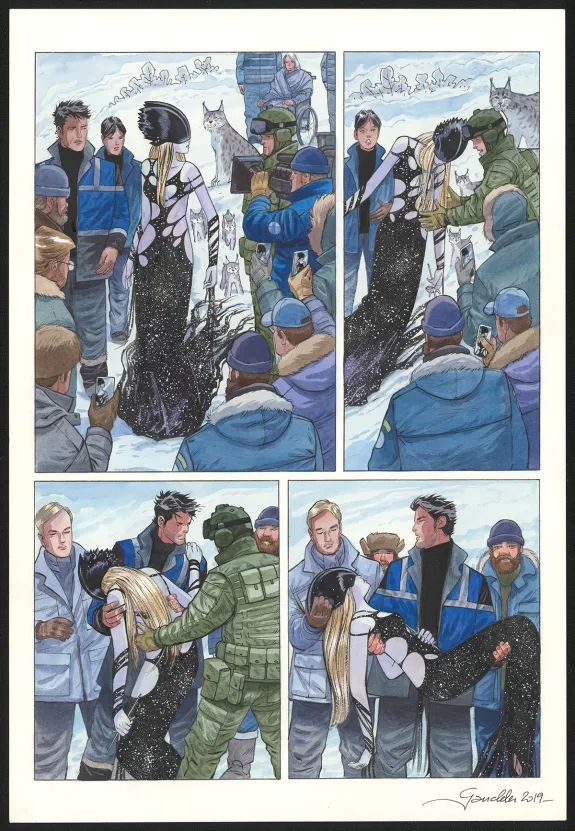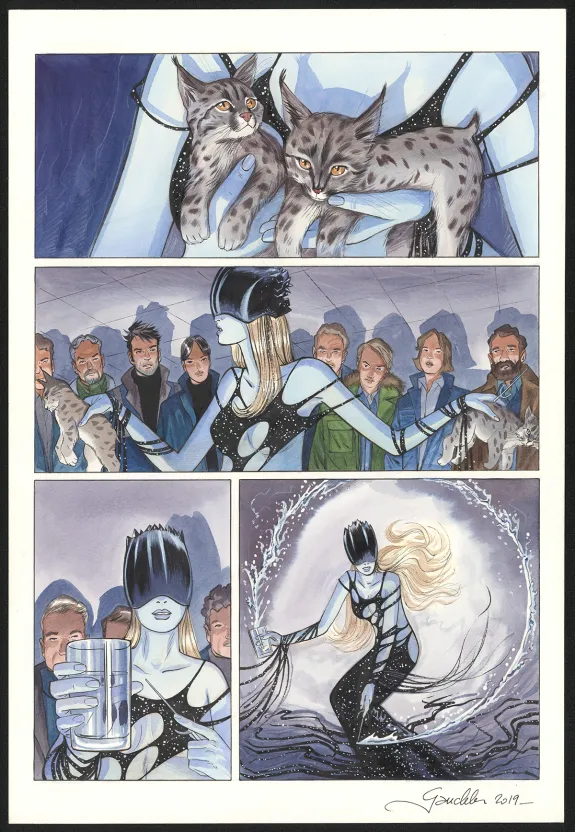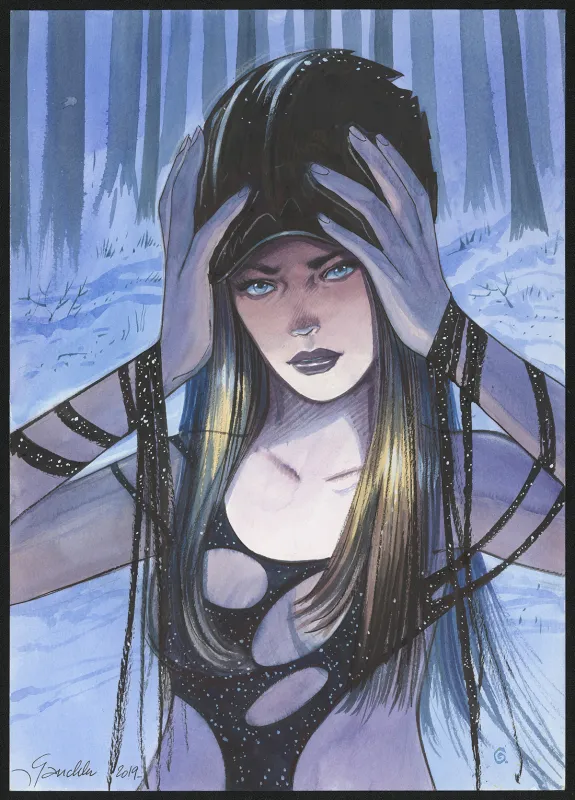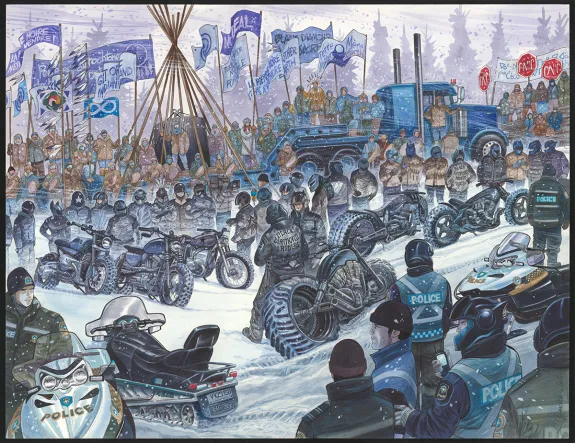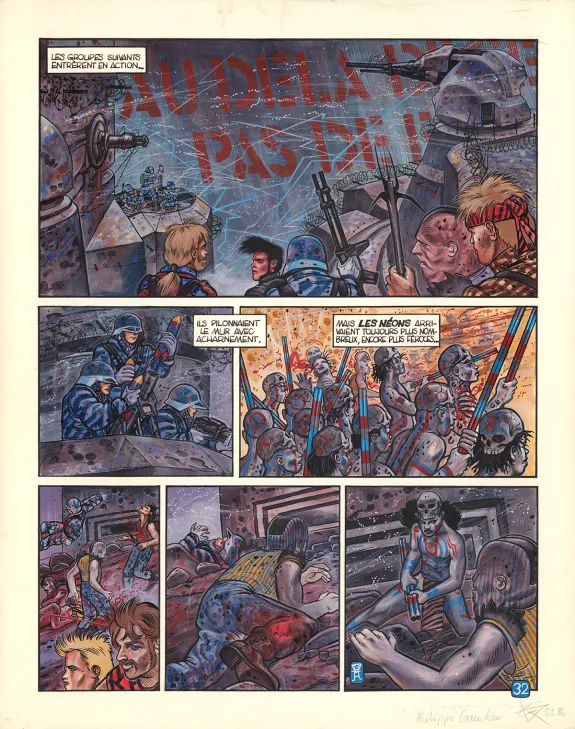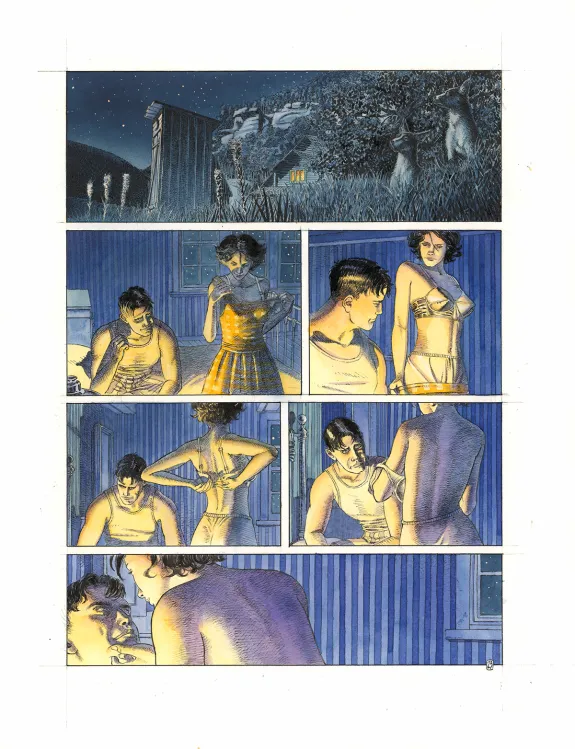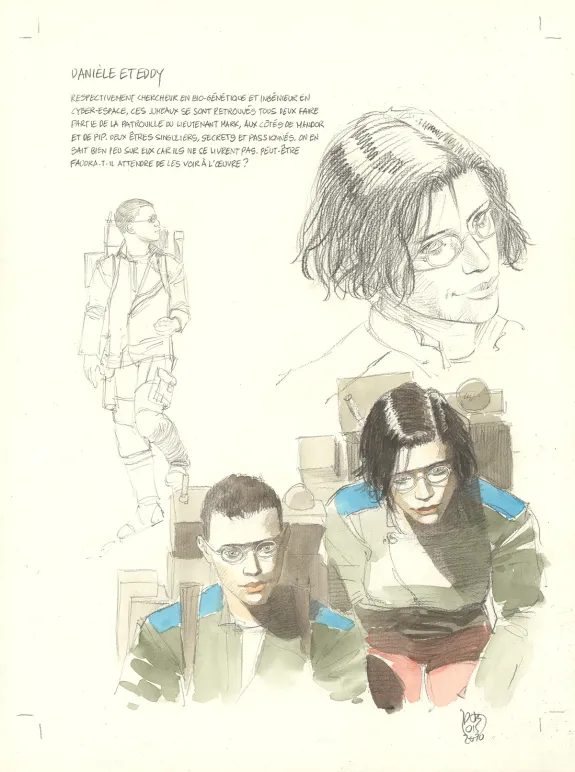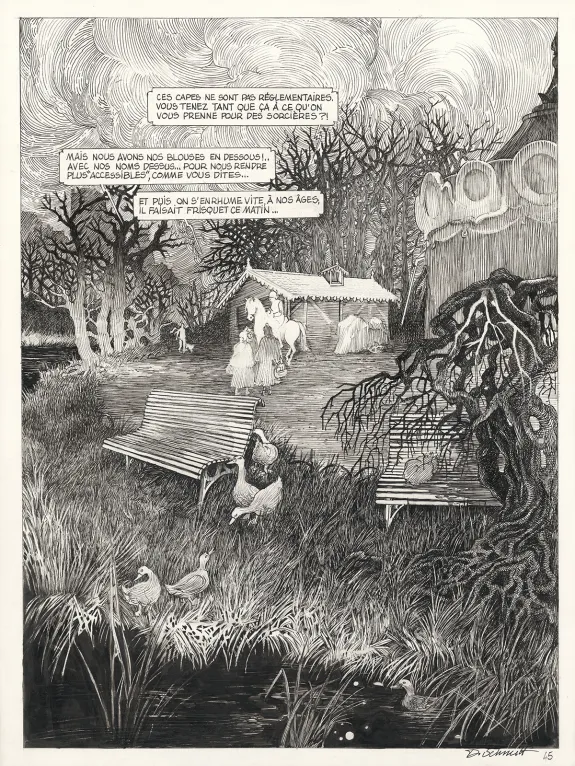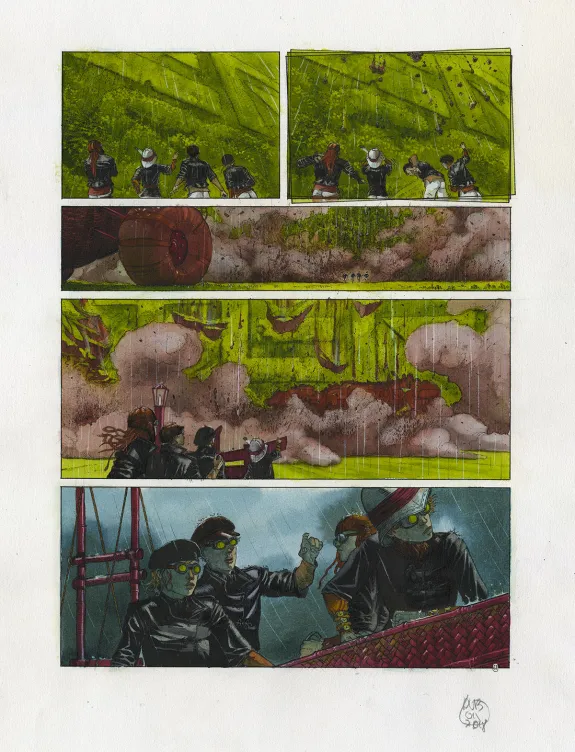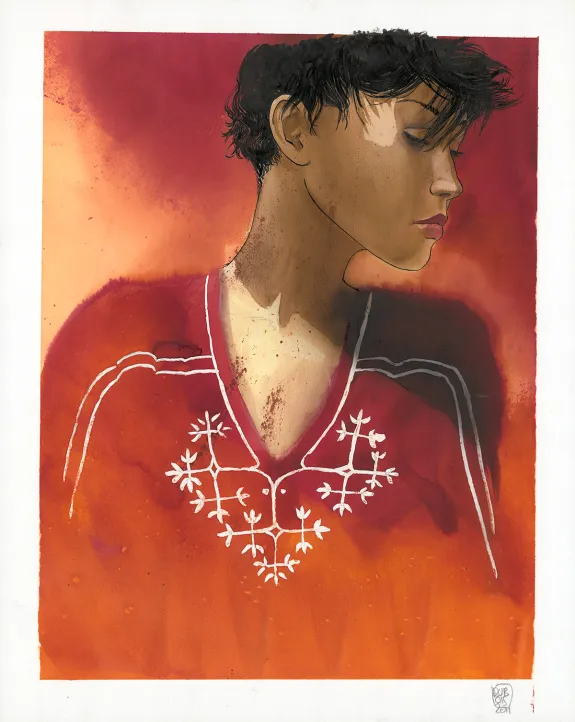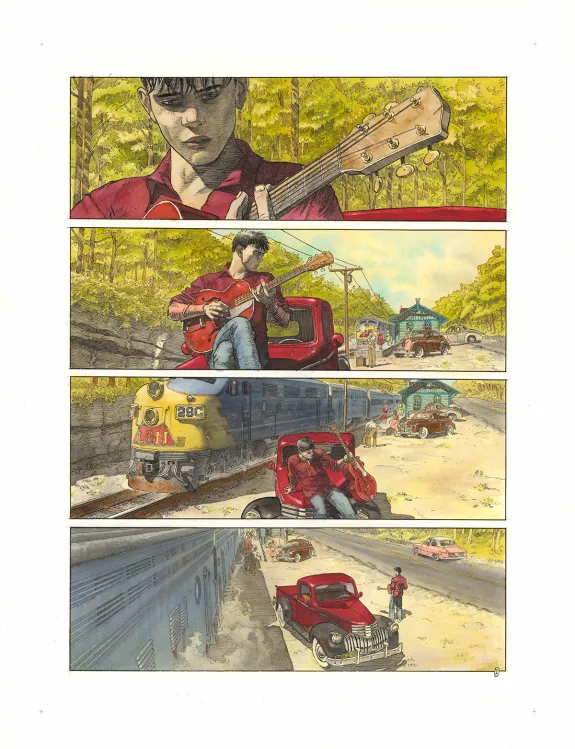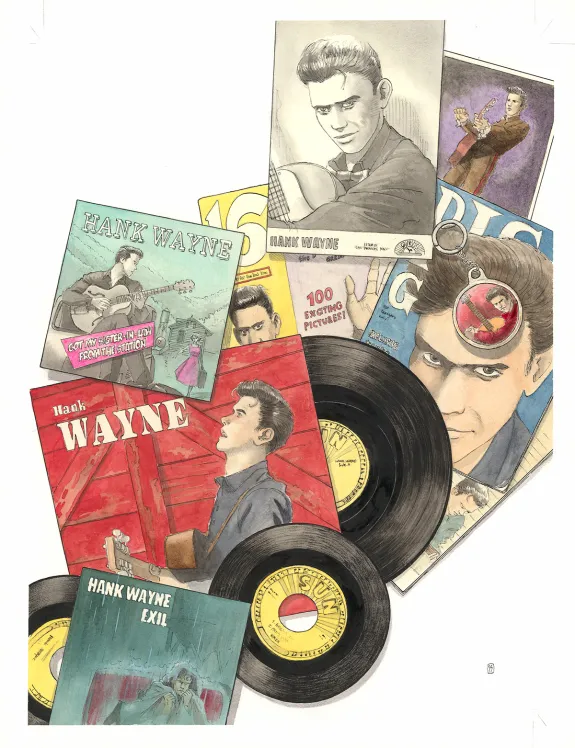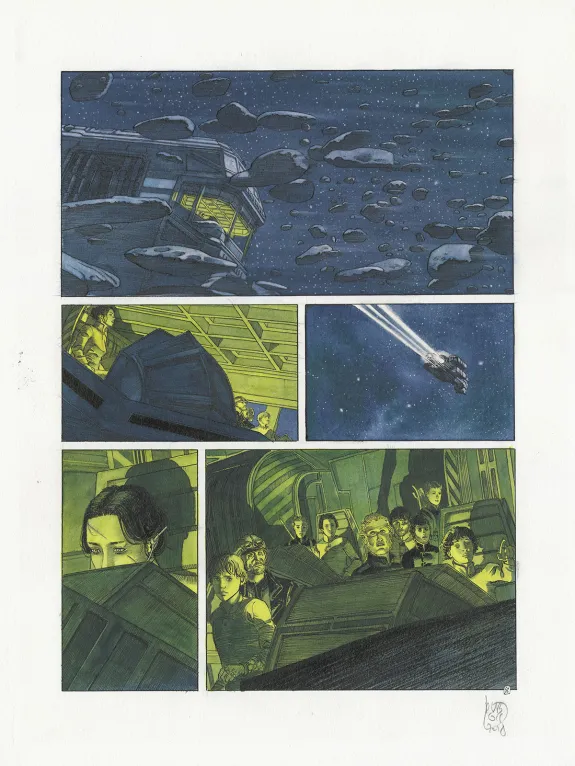
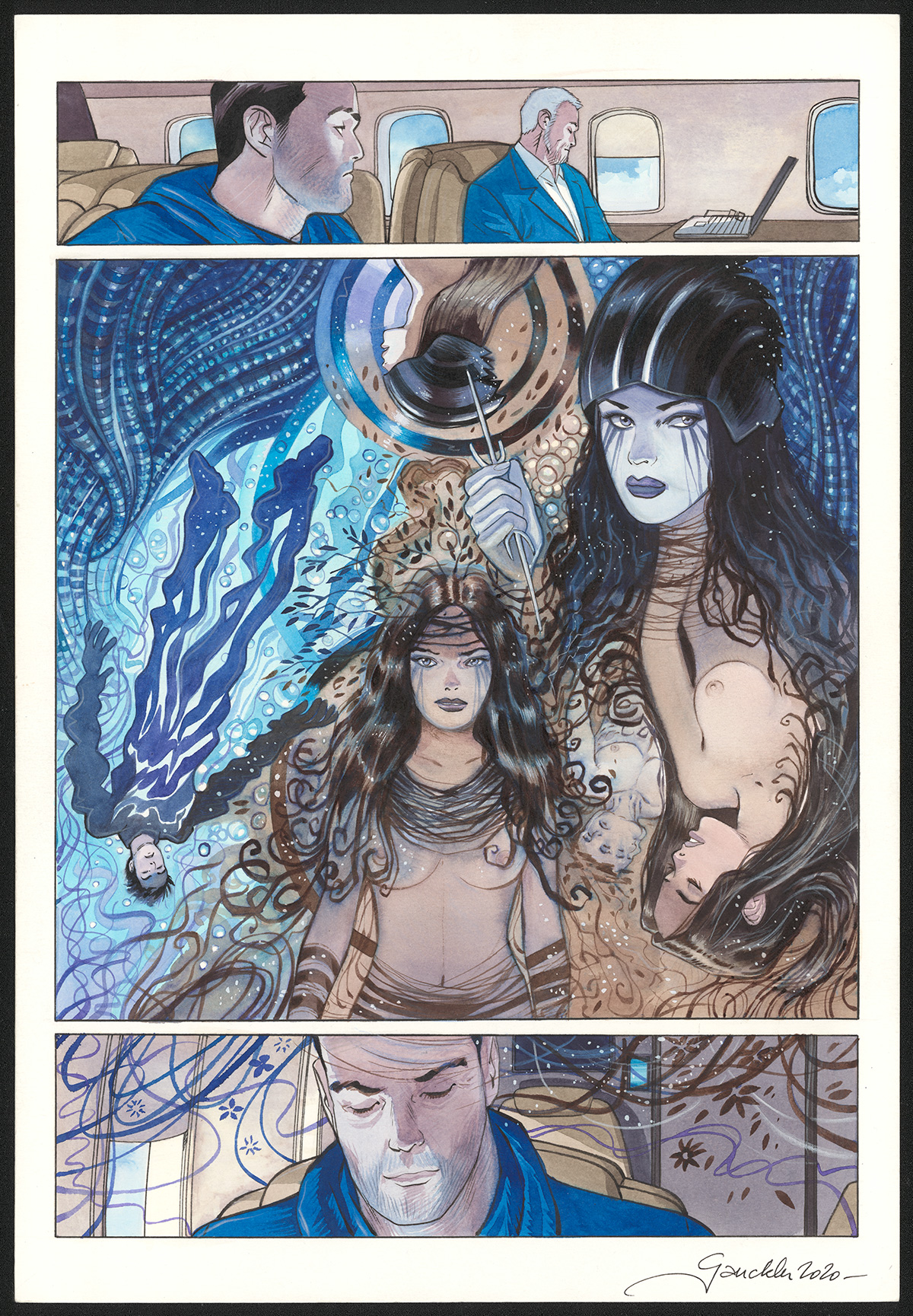
Whether it’s the vast snow-covered expanses of the Himalayas, a remote province in Quebec, realistic settings, or science-fiction worlds, Philippe Gauckler’s extremely refined and minimalist style beautifully enhances the landscapes where his stories unfold.
To ensure that your pages are kept in good condition, we recommend that you never expose them to direct light, as UV rays can damage the media used to produce them. Although Indian ink is a perennial material, the paper support may change when exposed to UV light. Note that watercolor plates require special attention, as this medium is particularly sensitive to light. Pieces containing pastel or charcoal require special care to avoid rubbing.
We advise you to display them away from windows, and to use frames made of pH-neutral conservation materials and “Museum” glass with anti-UV and anti-reflective treatment. If you prefer to keep your works unframed, we recommend storing them flat, in drawing cartons, with sheets of pH-neutral permanent paper in between. Keep them away from light and humidity.
Born in Lyon in 1960, Philippe Gauckler began his career in the 1980s after studying architecture and applied design. He made a name for himself in Métal Hurlant with the stories Suicide Commando, Duel, and the science fiction saga Blue. Alongside his comic art work, he pursued a successful career as an illustrator for Je Bouquine, Le Journal de Mickey, and several science fiction series. In 1990, he created the Convoi series with writer Thierry Smolderen. After a stint in advertising, he returned to comic art with Prince Lao, his first solo series, inspired by exotic landscapes and nature. He followed this with the thriller Koralovski (2015) and then the science-fiction series KEBEK (2019–2021), published by Daniel Maghen and rendered in direct color.