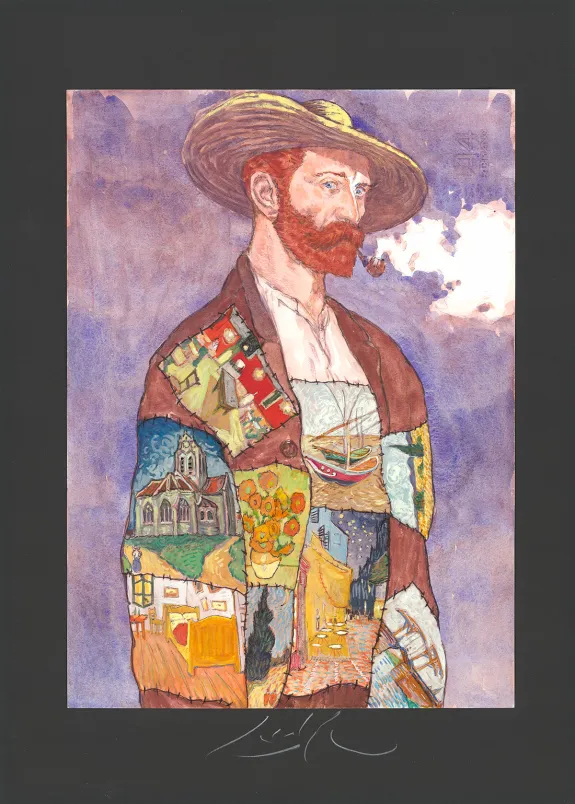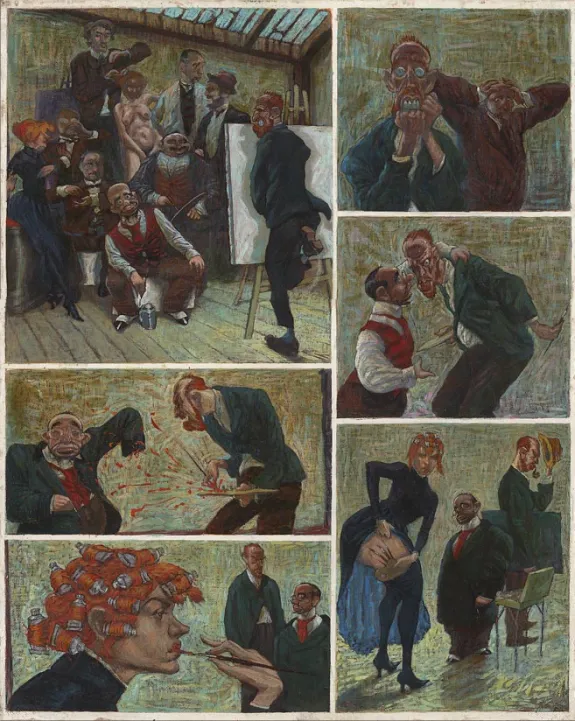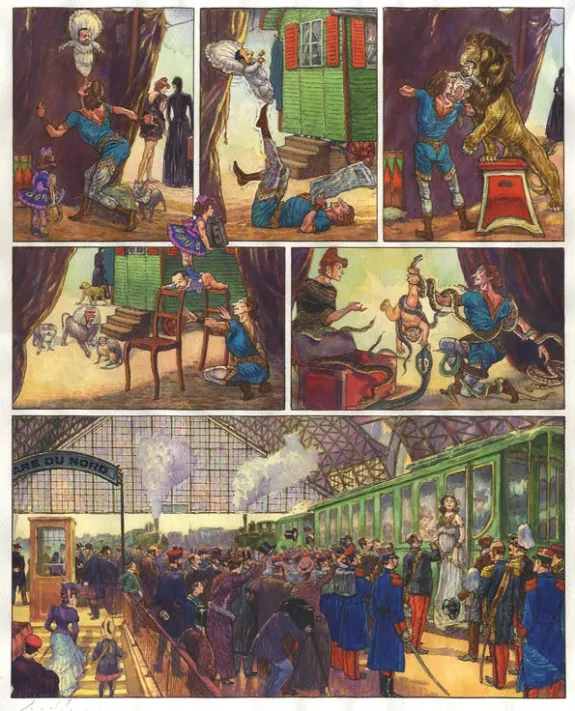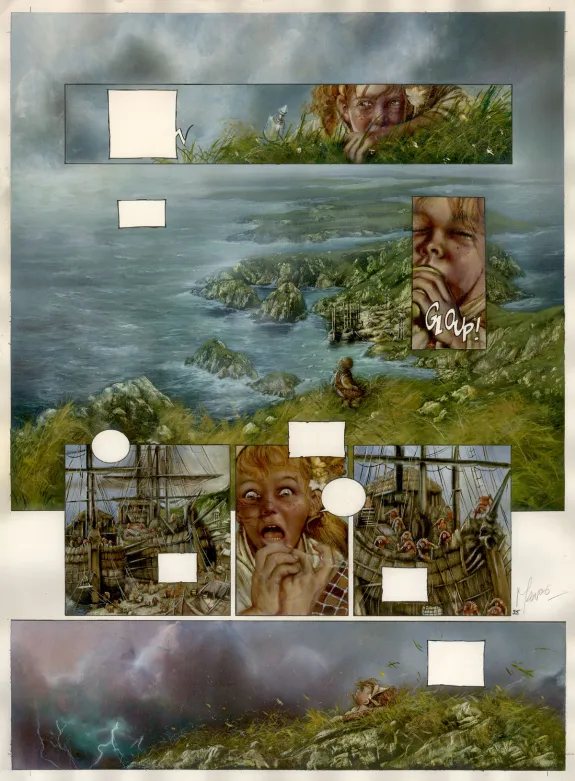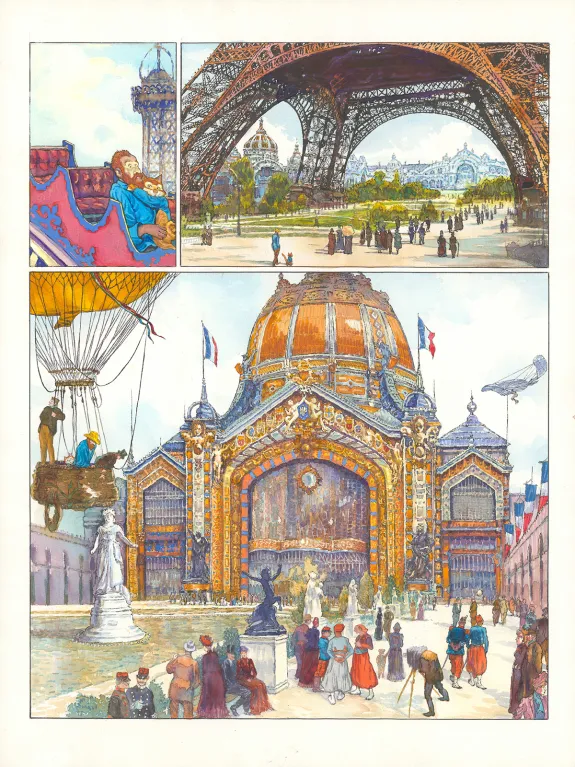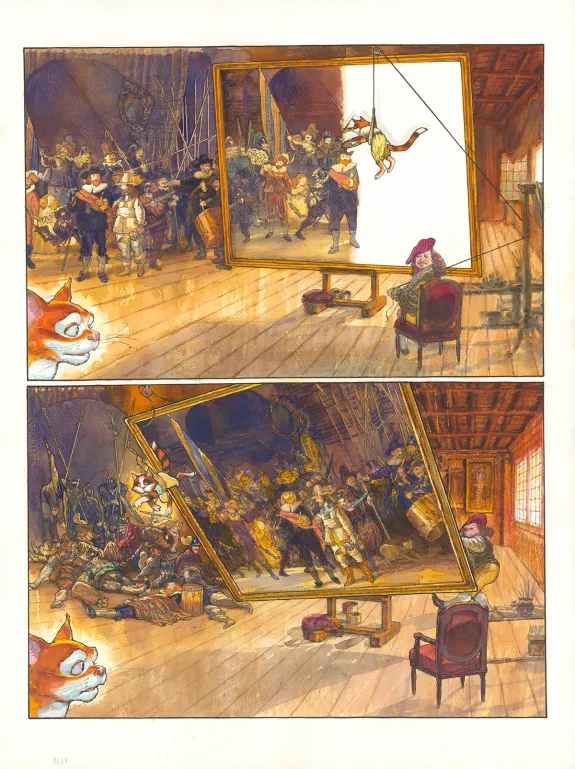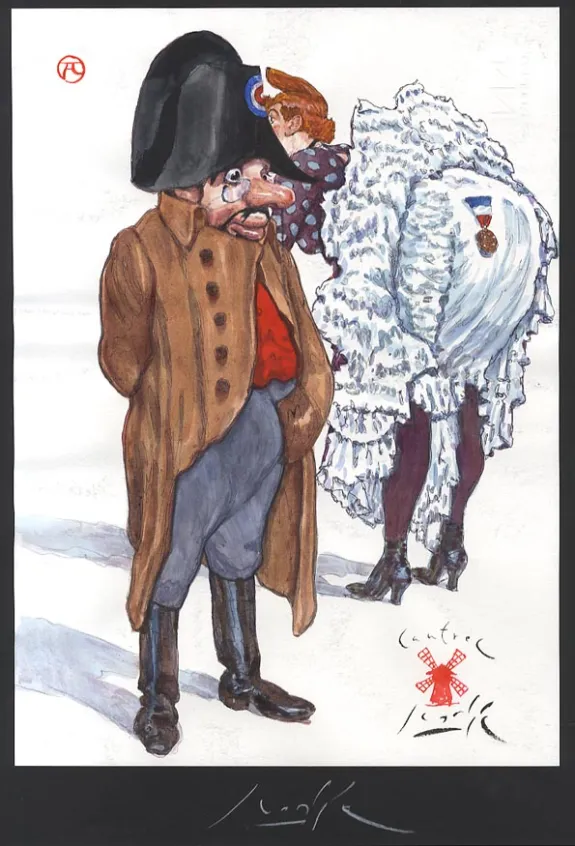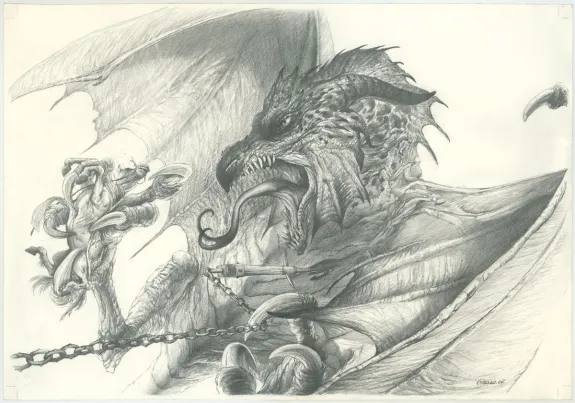
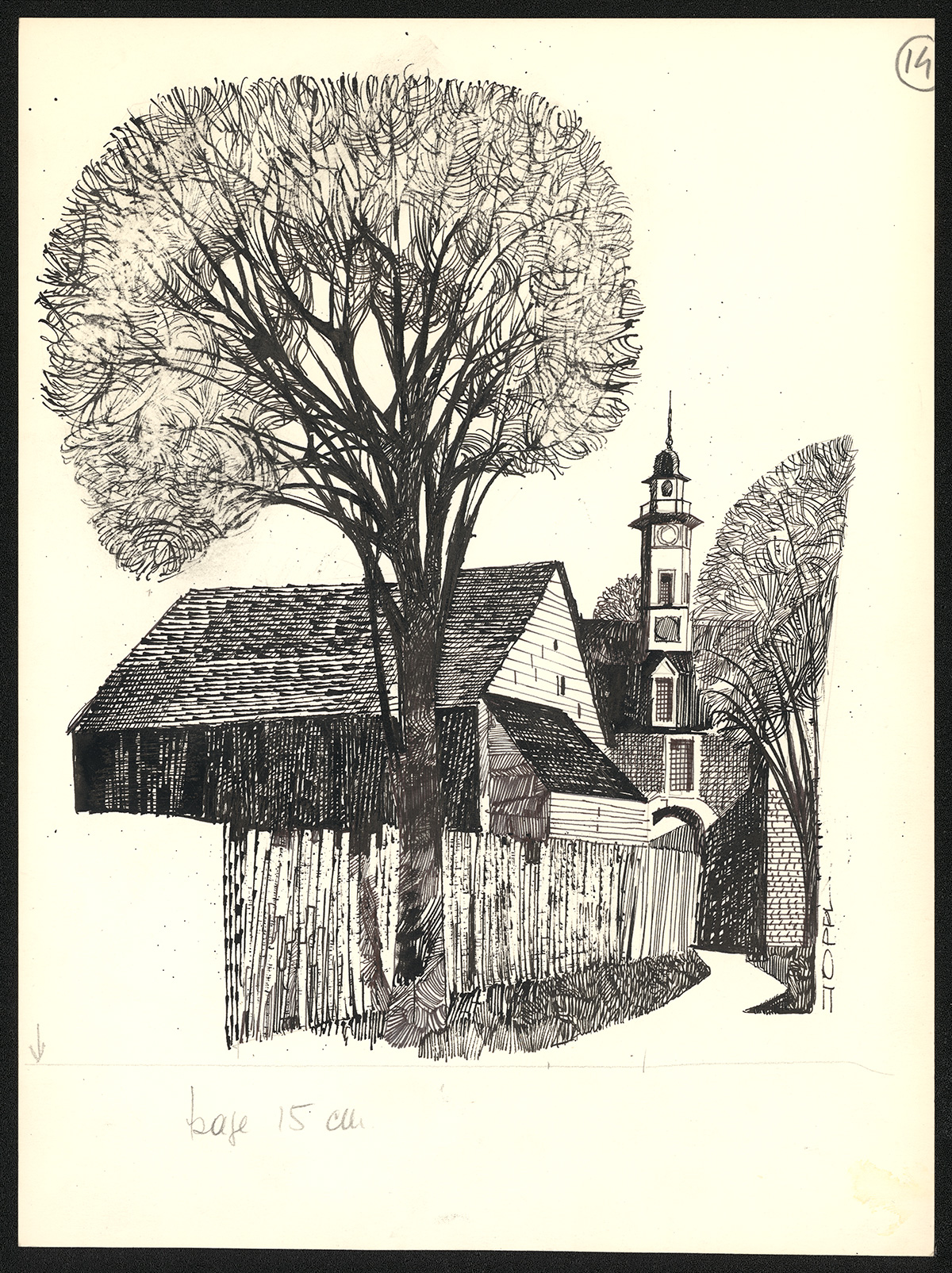
An Italian master of black and white, on par with Hugo Pratt and Guido Crepax, Sergio Toppi created compositions that break free from traditional comic book conventions. Driven by a sense of ornamentation, his liberated linework is adorned with hatching, plays with composition, and gives rise to splendid graphic effects. His is a captivating style, at times bordering on fine art, which has influenced an entire generation of artists. More than just a page or an illustration, each of Toppi’s creations is a visual artwork in its own right.
Highly sought after internationally, Sergio Toppi is a unique figure in Italian comic art. As true graphic masterpieces, his works are in high demand, particularly his large illustrations and pages with their compositions teeming with details. In 2025, a new world record was set for the cover of Collectionneur (The Collector) Vol. 2, which sold for€ 8,152 at Daniel Maghen Auctions.
To preserve your works on paper, we recommend that you never expose them to direct light, as UV rays can damage the mediums used. Paintings made with pastel or charcoal require special care to avoid rubbing. Works containing watercolor are particularly sensitive to light, unlike gouache and acrylic.
We advise you to display them away from windows, and to use frames made from pH-neutral conservation materials and “Museum” glass with anti-UV and anti-reflective treatment. If you prefer to keep your works unframed, we recommend storing them flat, in drawing cartons, with sheets of pH-neutral permanent paper in between. Keep them away from light and humidity.
Sergio Toppi (1932–2012) was a major figure in Italian comic art: a self-taught artist, he learned to draw by observing the world around him and did not turn to comics until his teenage years, when he discovered the dark work of Dino Battaglia—an artist who, along with Hugo Pratt, would become a friend and role model. He made his debut at Mondadori with the Enciclopedia dei ragazzi (Children's Encyclopedia, 1953), and later worked at the Pagot animation studios in Milan. His first comic strip, Il Mago Zurlì (Zurlì the Wizard), was published in 1960 in Il Corriere dei Piccoli. Complete biography.