

Breaking the Rules of Comic Art
Sergio Toppi (1932–2012) was a major figure in Italian comic art: a self-taught artist, he learned to draw by observing the world around him and did not turn to comics until his teenage years, when he discovered the dark work of Dino Battaglia—an artist who, along with Hugo Pratt, would become a friend and role model. He made his debut at Mondadori with the Enciclopedia dei ragazzi (Children's Encyclopedia, 1953), and later worked at the Pagot animation studios in Milan. His first comic strip, Il Mago Zurlì (Zurlì the Wizard), was published in 1960 in Il Corriere dei Piccoli.
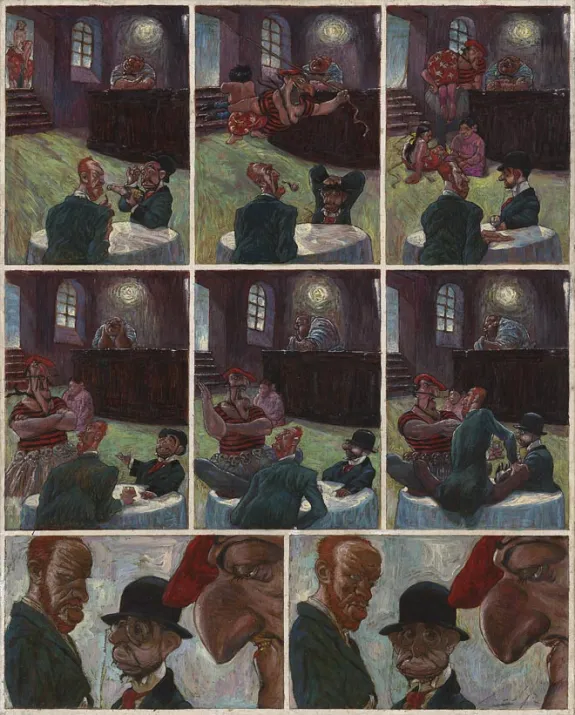
For years, he produced numerous works—adaptations of novels, stories about saints, and educational illustrations for Christian youth publications. But this work, though a means of making a living, did not satisfy him: it was in the new Italian magazines of the late 1960s and 1980s that he found true creative freedom (Linus, Alter Alter, Sgt. Kirk, Corto Maltese, Orient Express). Refusing to be constrained by the classic “waffle-iron” layout of comic strips, he developed, as early as the 1970s, a more fluid, entirely vertical narrative style, in which the single image takes precedence over a sequence of panels. These graphic experiments led him to develop a direct watercolor technique, through which he forged his signature color palette dominated by purple, blue, and green.
In France, he first gained attention through his contributions to L'Histoire de France en BD (The History of France in Comics) published by Larousse, and the Un homme, une aventure (A Man, an Adventure) series, before his work was published by Dargaud with titles like L'Homme du Nil (The Man from the Nile), L'Homme du Mexique (The Man from Mexico), L'Homme des marais (The Man from the Marshes) between 1978 and 1979.. But he owes his recognition in France to Michel Jans, the head of the small Grenoble-based studio Mosquito, who contacted him in the mid-1990s. This collaboration gave rise to his most celebrated works: the Collectionneur series (The Collector) from 1998 to 2000, followed by the monumental Sharaz-De in the fall of 2000, which was immediately reprinted after receiving unanimous critical acclaim.
In a testament to his legacy, his original pages were featured in the exhibition “The Masters of European Comics” at the National Library and later at the Angoulême Comics Museum, where a major retrospective was dedicated to him in 2008. An absolute master of black and white, he leaves behind a body of work in which each page can be contemplated as a graphic tapestry just as much as it can be read.
Sergio Toppi holds a unique place in Italian comic art, distinguished both for his free-flowing, decorative layout and by his pictorial style inspired by both medieval art and Art Nouveau. [...] With his musical and rhythmic penwork, Sergio Toppi remains a model of graphic audacity. In 1975, his work earned him the Yellow Kid Award, Italy’s highest honor for comic art.
Didier Pasamonik
Toppi in auctions

In 2025, a new world record was set for the cover of "Le Sceptre de Muiredeagh" (Vol. 2) from "Le Collectionneur".
SERGIO TOPPI
LE COLLECTIONNEUR
Le Sceptre de Muiredeagh (T.2), Mosquito 2004
Original cover for the reissue of the album. Signed.
Indian ink, coloured inks and highlights in white gouache on paper
Sold in 2025 : 8 152 €
Credits :
©Toppi, Mosquito (banner)
Pages and artworks from Sergio Toppi See all

You will also like...
-
-
-
-
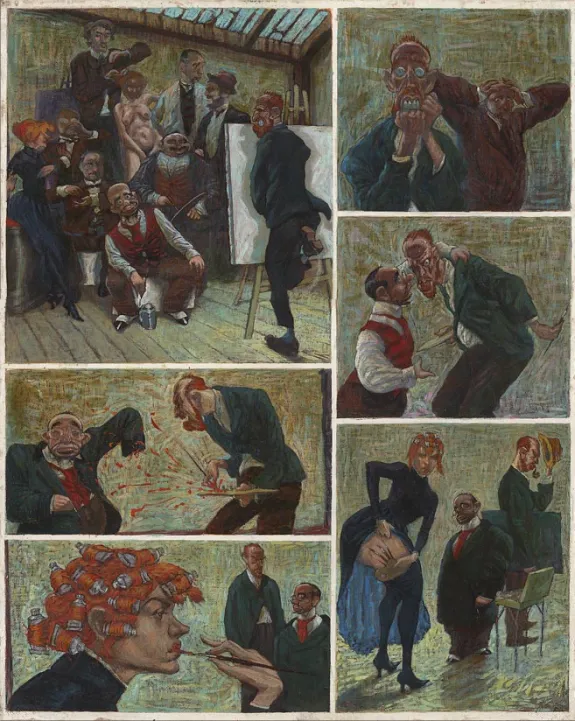
Unedited original page
1 500 € -
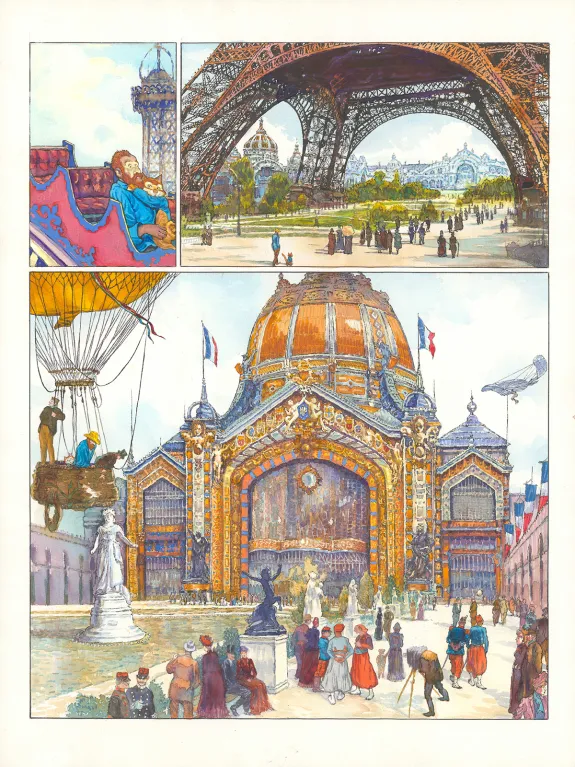
-
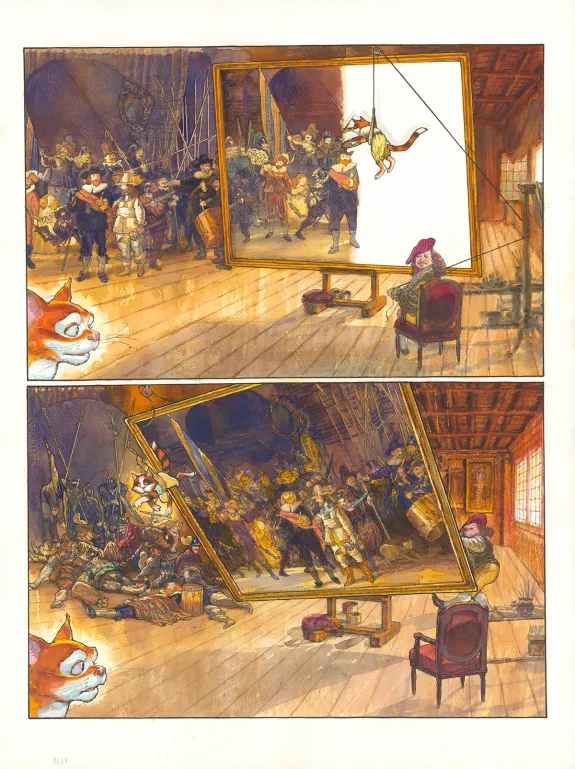
-
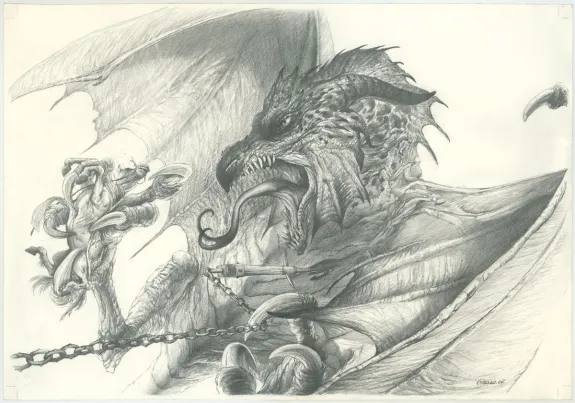
dragon + horse in its claws (tear on right edge)
800 € -
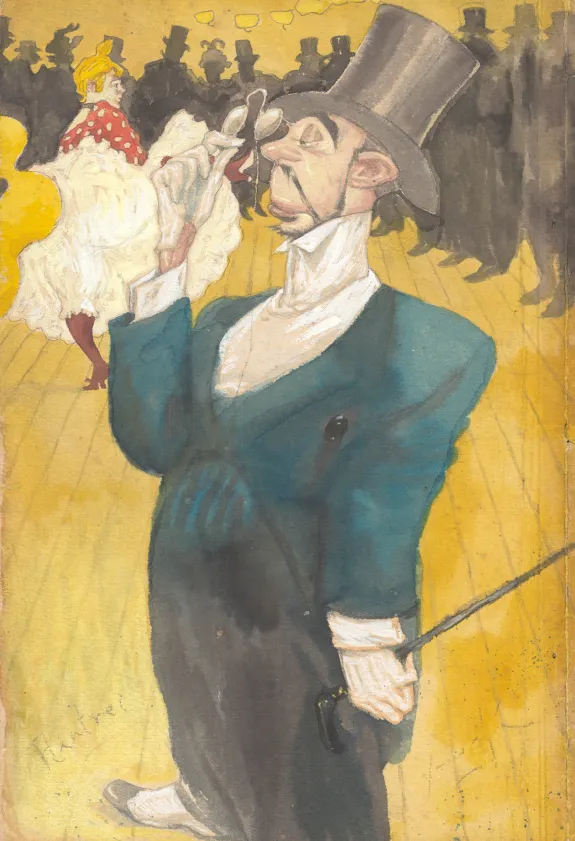
-
Unedited original page
1 070 €


