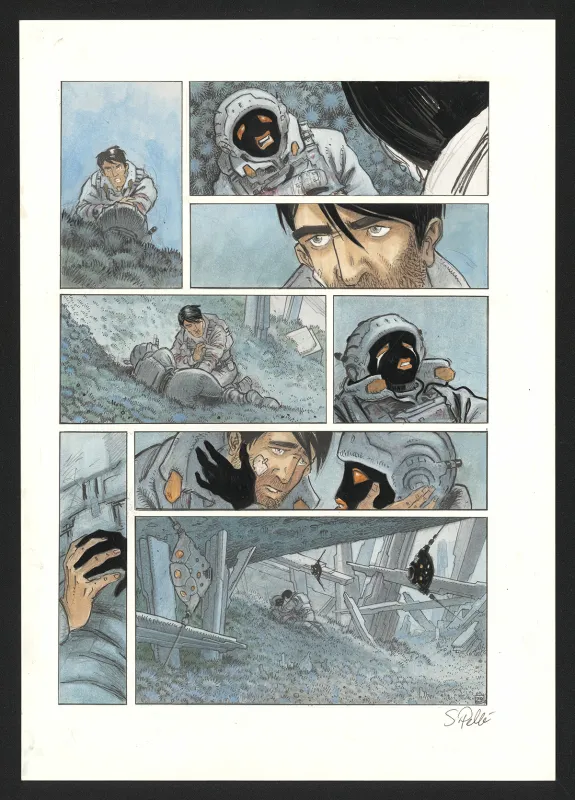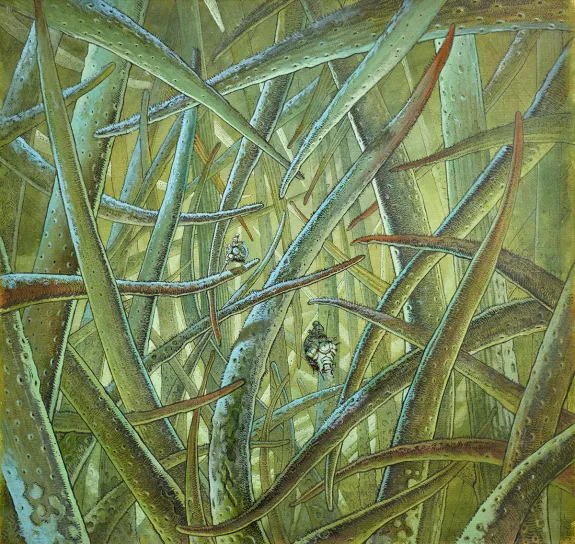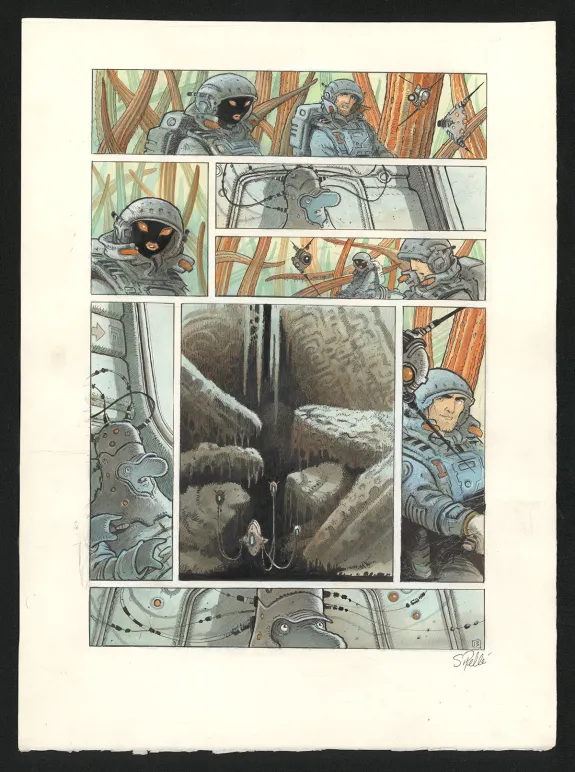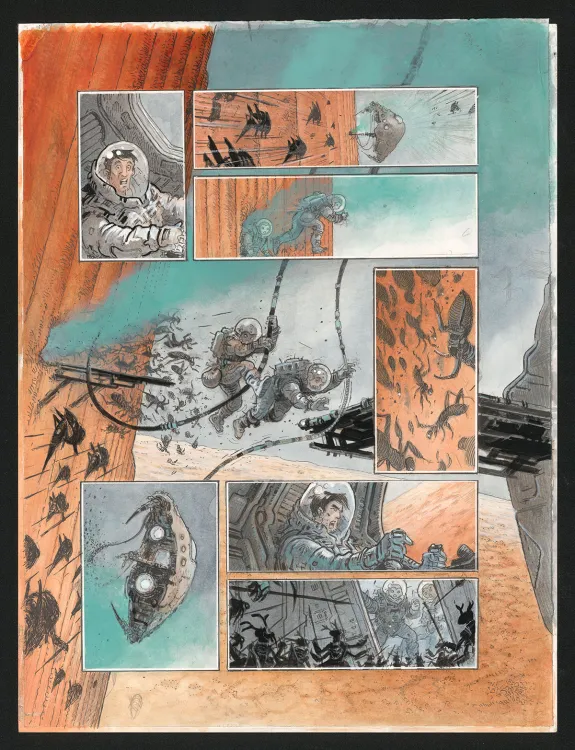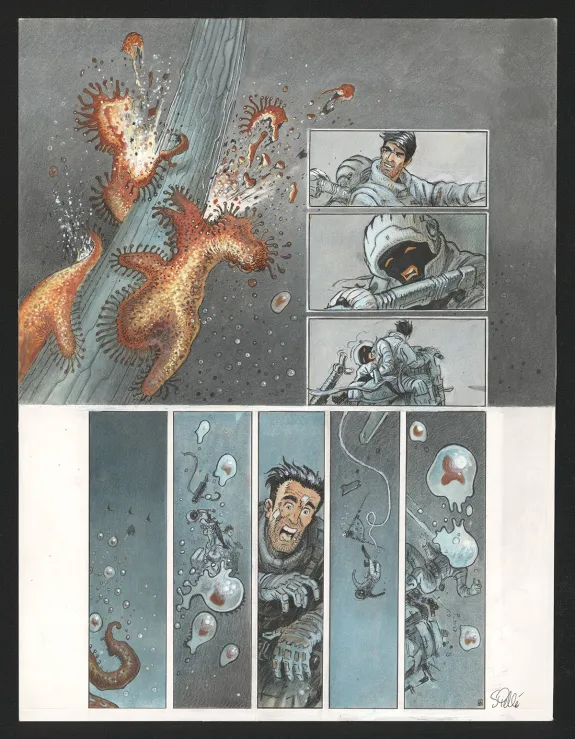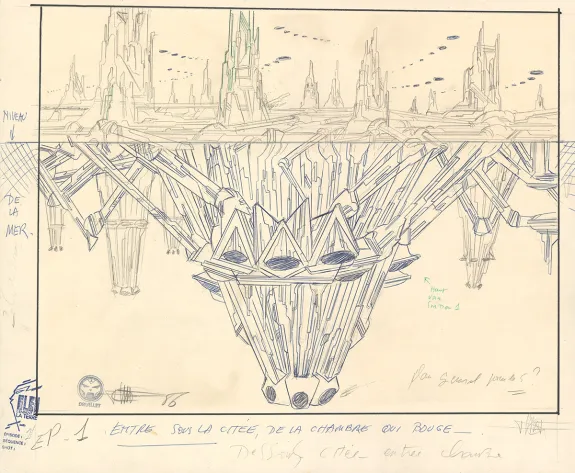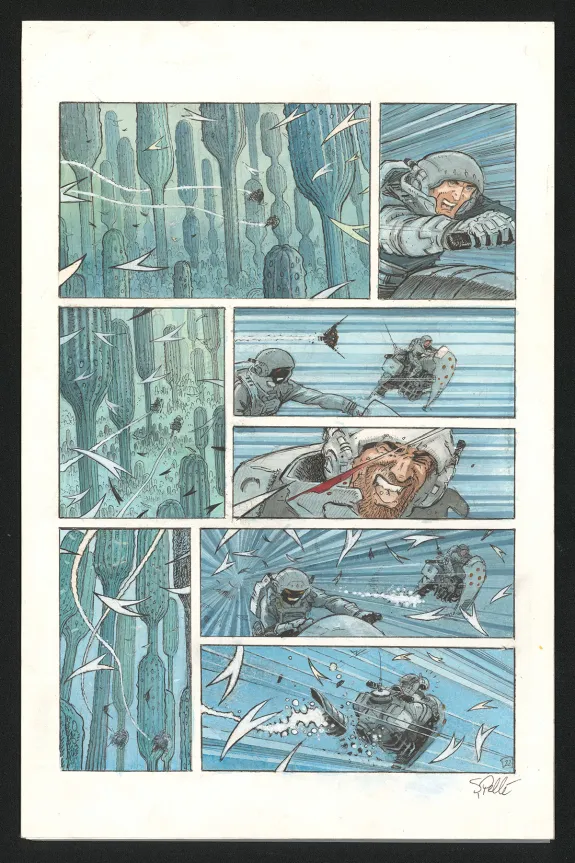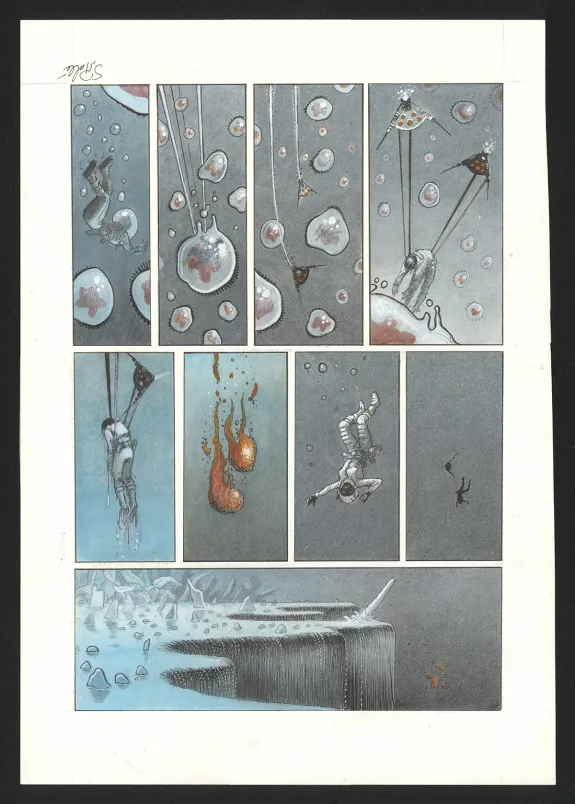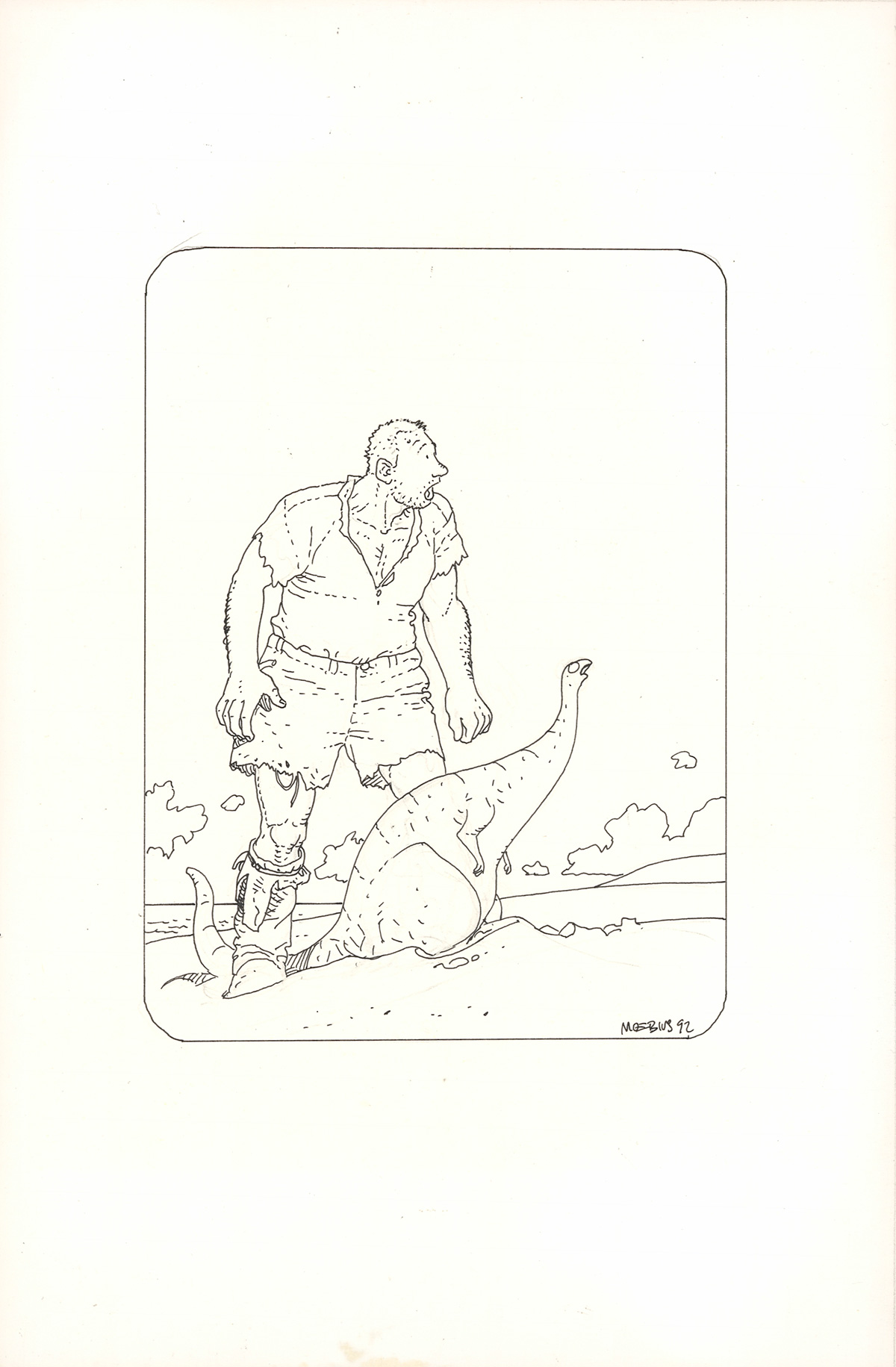
Masterful, iconic, unforgettable... No word seems able to accurately describe Moebius's impact on the world of comic art. He is a shifting, experimental creator, in perpetual change. His graphic grammar is the antithesis of conventional comic art: he does not explain, he evokes feeling; he does not compose, he lets himself be carried away by his imagination in a dreamlike and ethereal dance. One does not read Moebius, one experiences him, one explores him, often lost in a universe whose rules we do not grasp, but which captivates us and does not let us go. As Jacques Goimard wrote in the pages of Le Monde: "Major Fatal is too good to be true. You are never sure you can get into it. And yet you can no longer get out of it. A vicious circle. A drug!"
Moebius is one of the most valued creators in the history of comic art, alongside Hergé, Jacobs, and Franquin. His lasting impact on the landscape of the Ninth Art – which he largely helped mature and flourish into a more adult and experimental dimension – makes him a major historical figure. His original pages reach heights that are rarely equaled at auction: in 2015, the cover for Le Garage Hermétique was sold for the colossal price of €276,094, while the cover for L'Incal : Ce qui est en haut (The Incal: What is Above) reached €151,500. Collected worldwide, Moebius’s pages are particularly sought after because they embody the visual grammar that durably impacted Hollywood cinema (Tron, Abyss, The Fifth Element, among others). It is not uncommon to see the rare pages put up for sale soar to several tens of thousands of euros, such as page #16 from Le Garage hermétique de Jerry Cornelius (The Hermetic Garage of Jerry Cornelius), which sold for €67,000 in 2021 at Daniel Maghen Auctions.
To preserve your works on paper, we recommend that you never expose them to direct light, as UV rays can damage the mediums used. Paintings made with pastel or charcoal require special care to avoid rubbing.
We advise you to display them away from windows, and to use frames made from pH-neutral conservation materials and “Museum” glass with anti-UV and anti-reflective treatment. If you prefer to keep your works unframed, we recommend storing them flat, in drawing cartons, with sheets of pH-neutral permanent paper in between. Keep them away from light and humidity.
Entering the École des Arts Appliqués in Paris at the age of fifteen, Jean Giraud developed a consuming passion for science fiction very early on, in a post-war France where the genre was just beginning to find its place in youth press. His first comic strips appeared as early as 1956 in emblematic titles of the era — Far West, Fripounet et Marisette, Âmes vaillantes — before a decisive meeting in 1958 sealed his destiny as a realist author: that with Jijé, a leading figure of the Marcinelle school, who made Giraud his student and entrusted him with the creation of several pages for Jerry Spring. As Pilote magazine exploded, transforming into a laboratory for the comic art genre which was undergoing a sweeping change, Giraud created in 1963, alongside Jean-Michel Charlier, the series that would make his name: Fort Navajo, soon renamed Blueberry…Complete biography