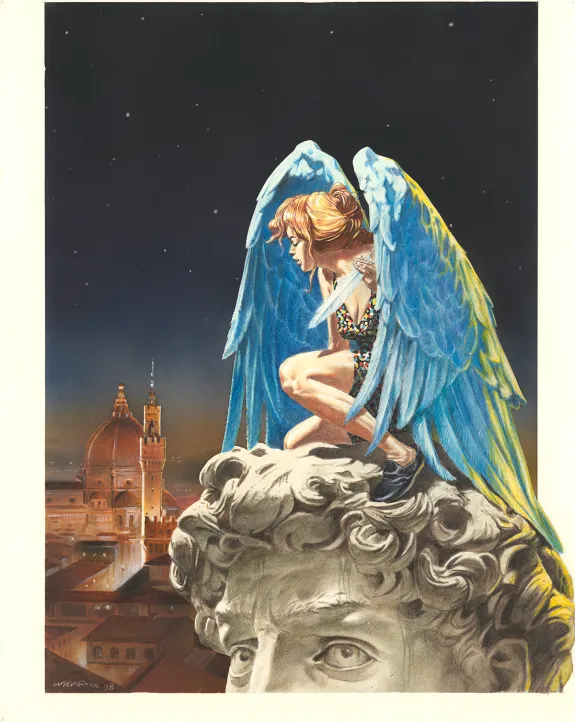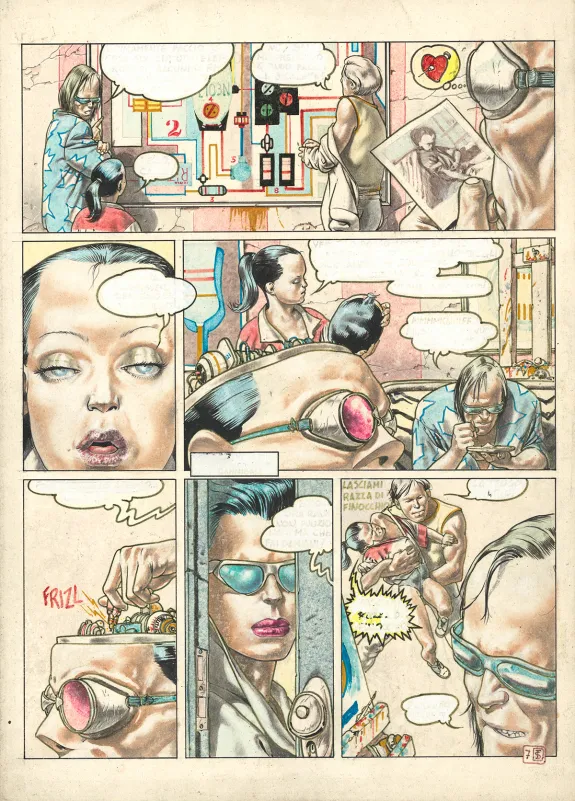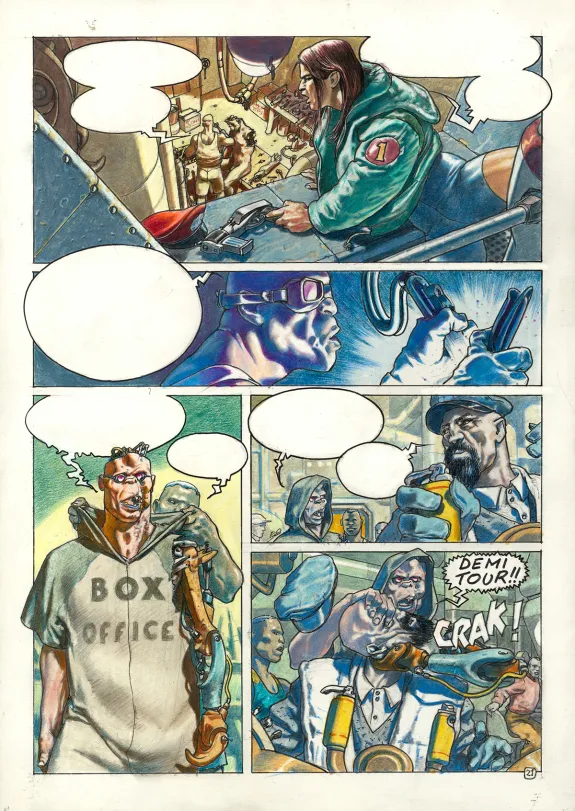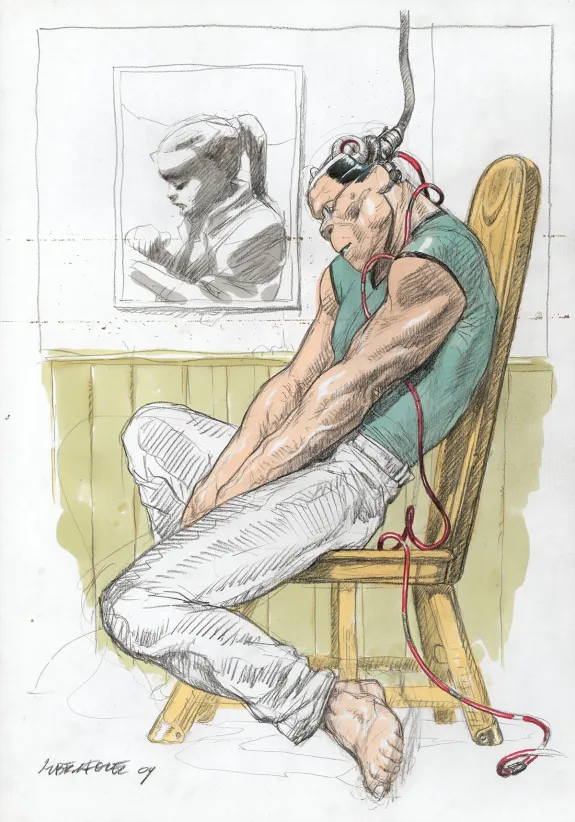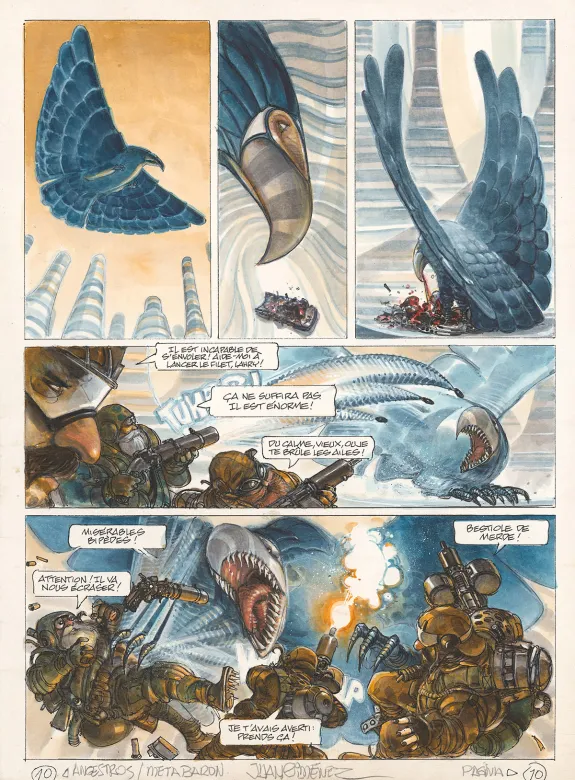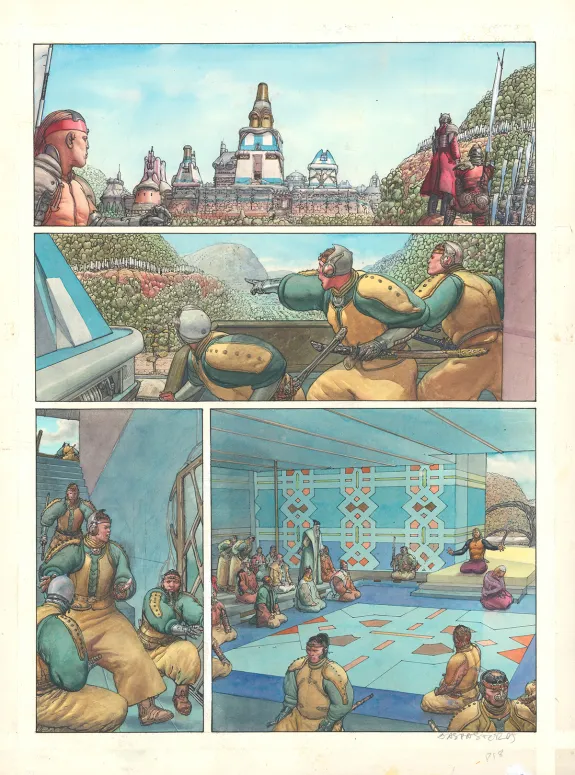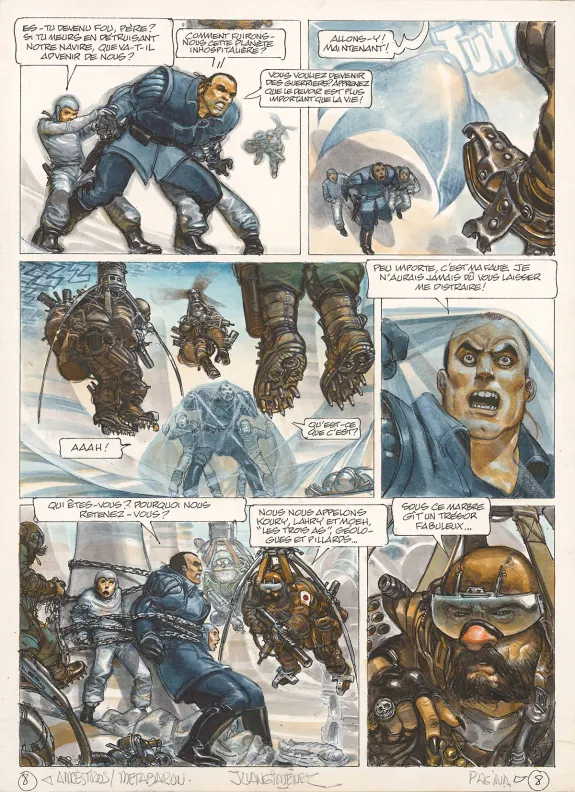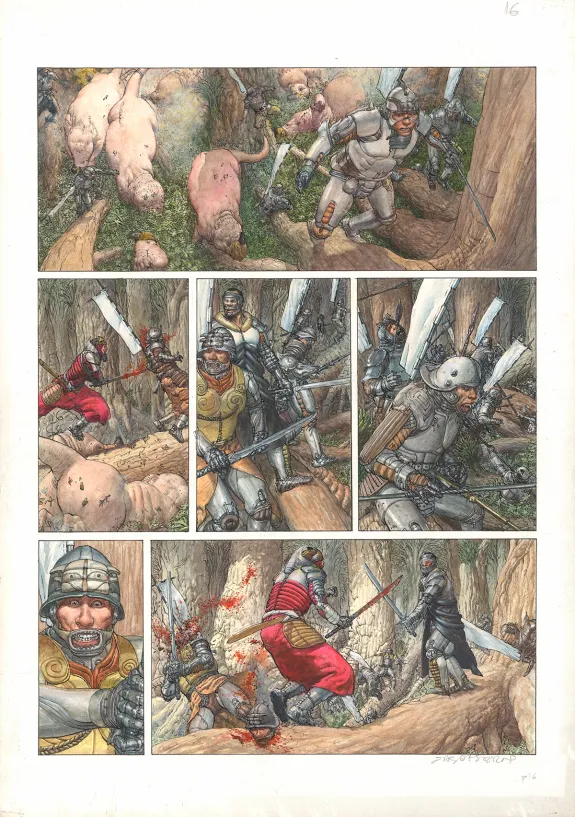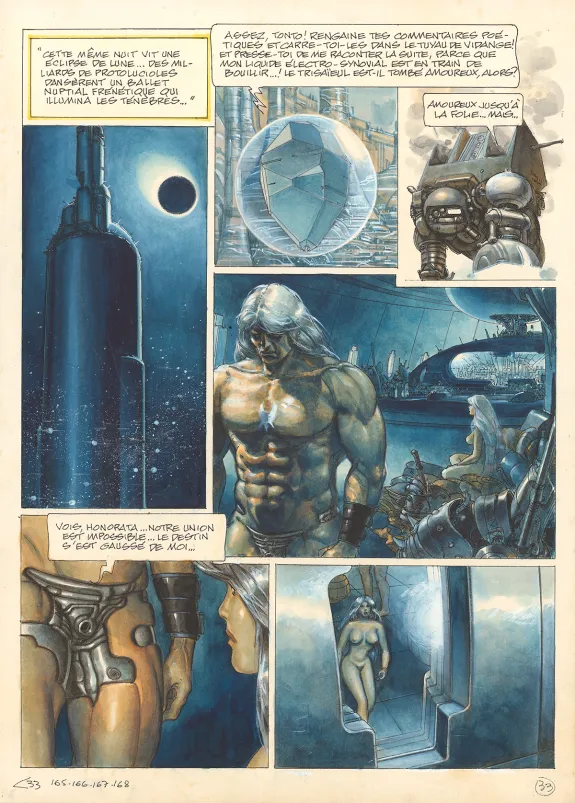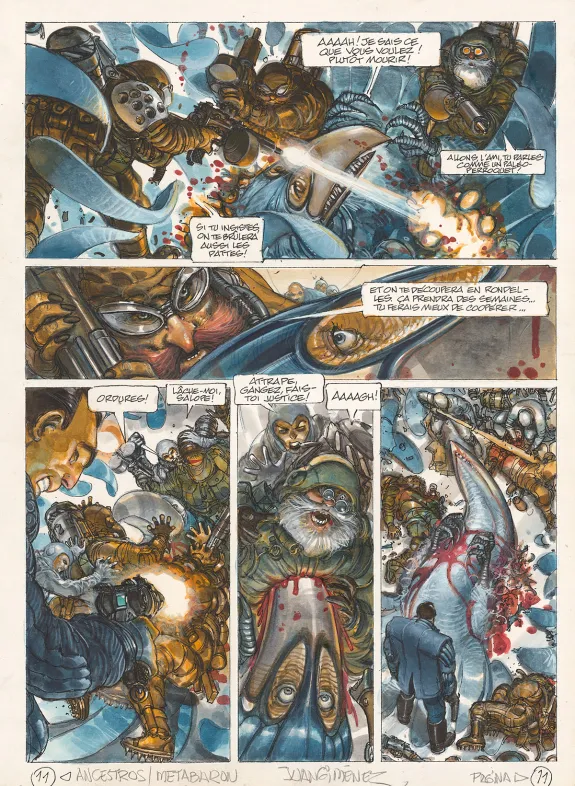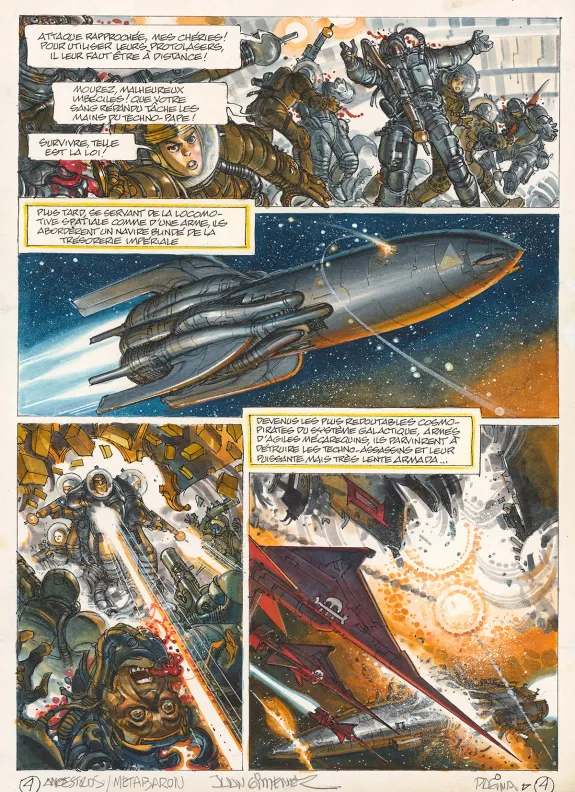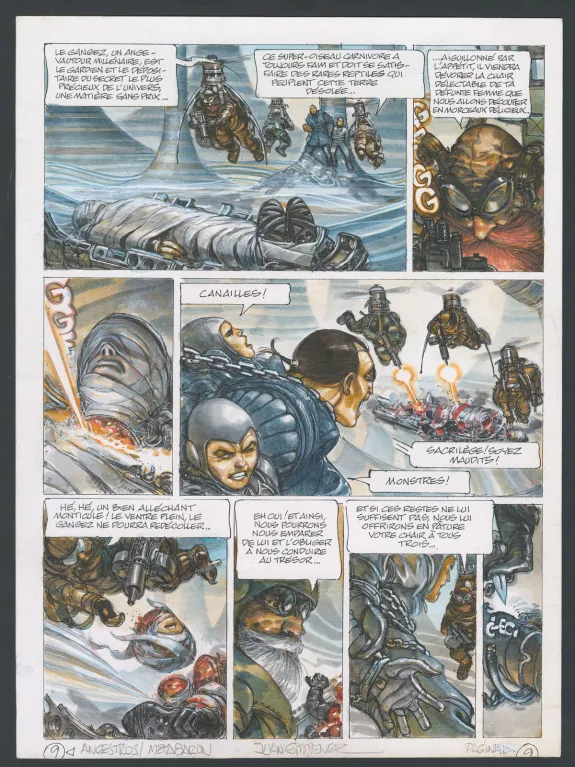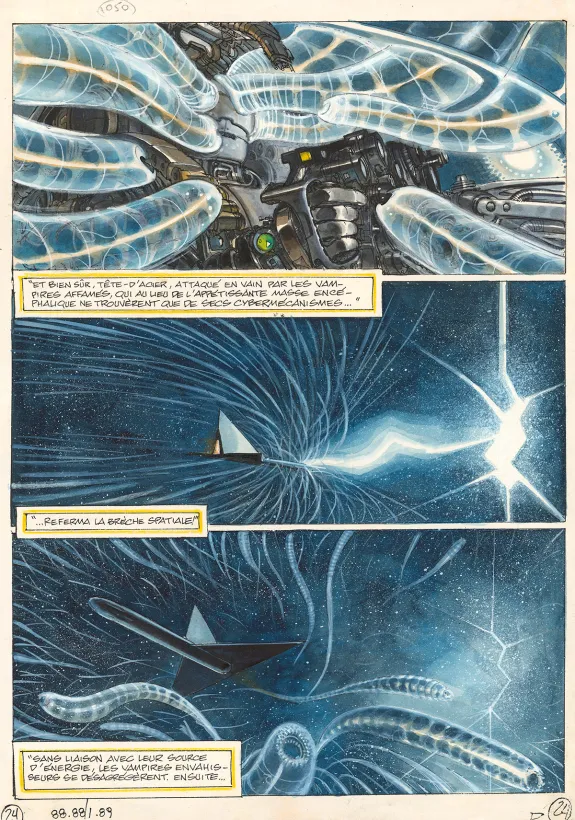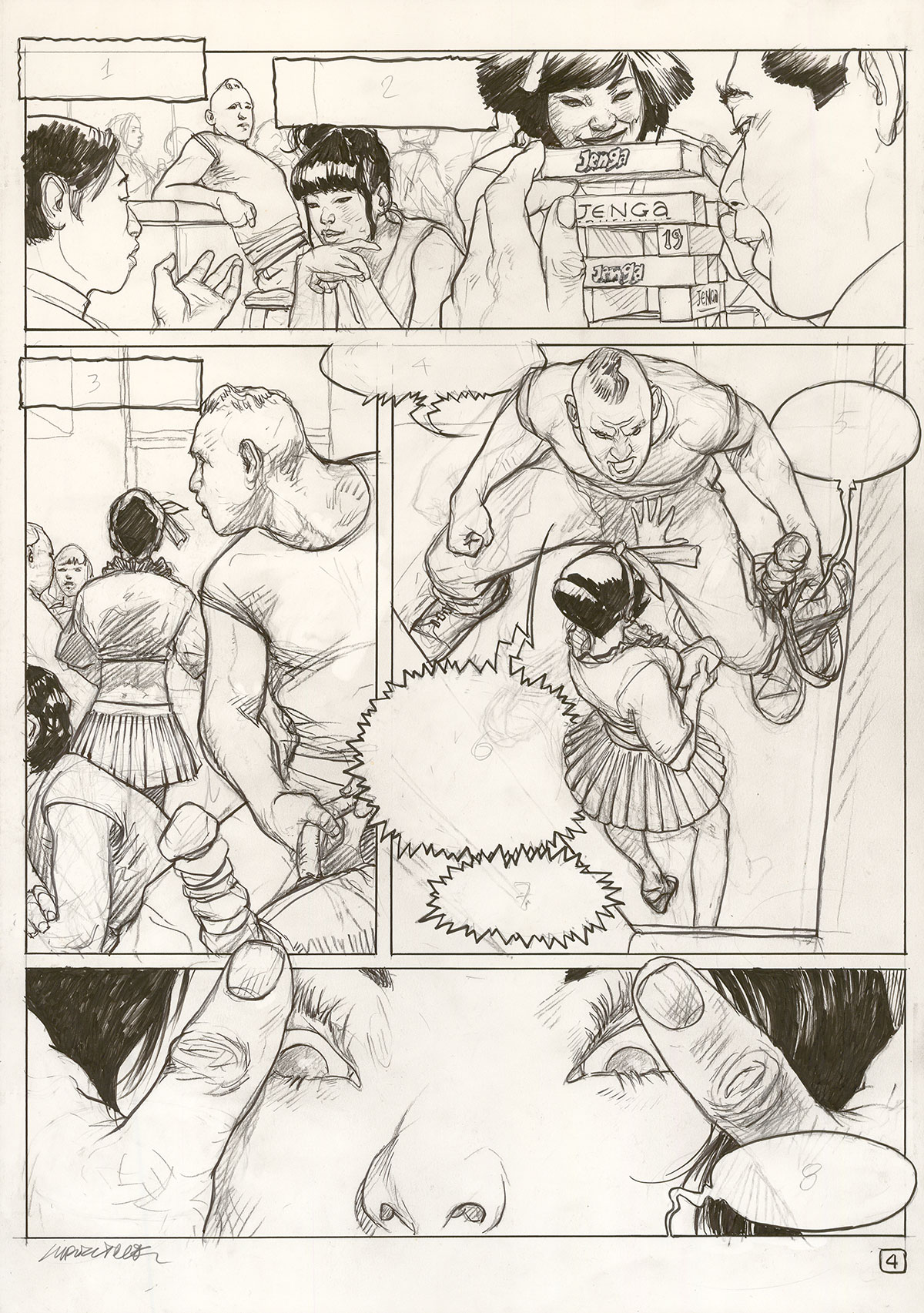
With his resolutely subversive style, Tanino Liberatore pushes hyperrealism to the extreme, where bright, acid-hued colors counterbalance the uninhibited violence of his pages. Culminating in Ranxerox, Liberatore’s style asserts itself through a trash aesthetic in which sexuality and the body - both female and mechanical - are displayed without restraint, in a skillful blend of fascination and unease.
Internationally recognized and sought after for his artwork on RanXerox, Liberatore’s original pieces can fetch prices that frequently exceed €10,000. In 2025, page 9 of the first volume of RanXerox sold for a record price of €17,663.
To ensure that your pages are kept in good condition, we recommend that you never expose them to direct light, as UV rays can damage the media used to produce them. Although Indian ink is a perennial material, the paper support may change when exposed to UV light. Note that watercolor plates require special attention, as this medium is particularly sensitive to light. Pieces containing pastel or charcoal require special care to avoid rubbing.
We advise you to display them away from windows, and to use frames made of pH-neutral conservation materials and “Museum” glass with anti-UV and anti-reflective treatment. If you prefer to keep your works unframed, we recommend storing them flat, in drawing cartons, with sheets of pH-neutral permanent paper in between. Keep them away from light and humidity
Trained at the Art School in Pescara and later at the Faculty of Architecture in Rome, Tanino Liberatore began his career in advertising before joining Tamburini in 1978, with whom he founded the comic magazine Frigidaire in 1980. There, he created Ranxerox, an ultra-violent android whose adventures left a lasting mark on European comic art. At the same time, he designed album covers, including the one for Frank Zappa’s The Man from Utopia, before moving to Paris to work in theater, film, and television, notably alongside Alain Chabat. He continued his exploration of provocative nudity with Lucy (2007), co-written with Yves Coppens, followed by Petites morts et autres fragments du chaos (Little Deaths and Other Fragments of Chaos, 2015).