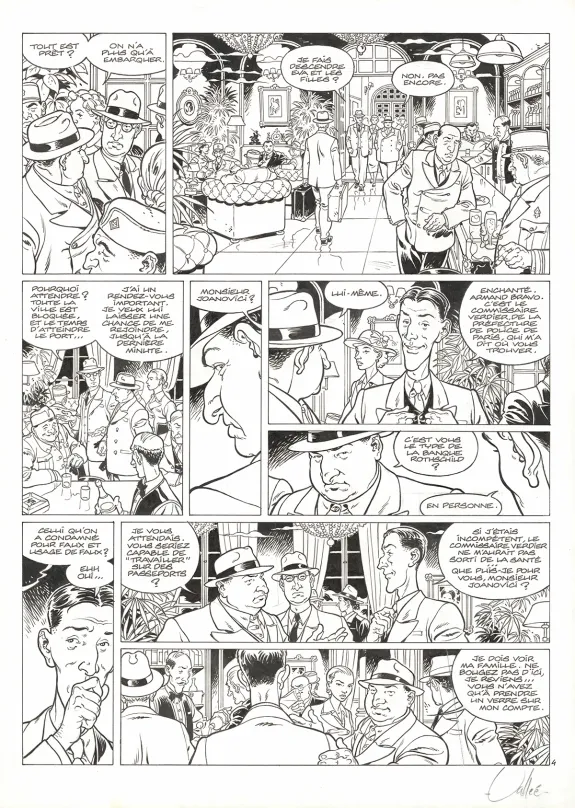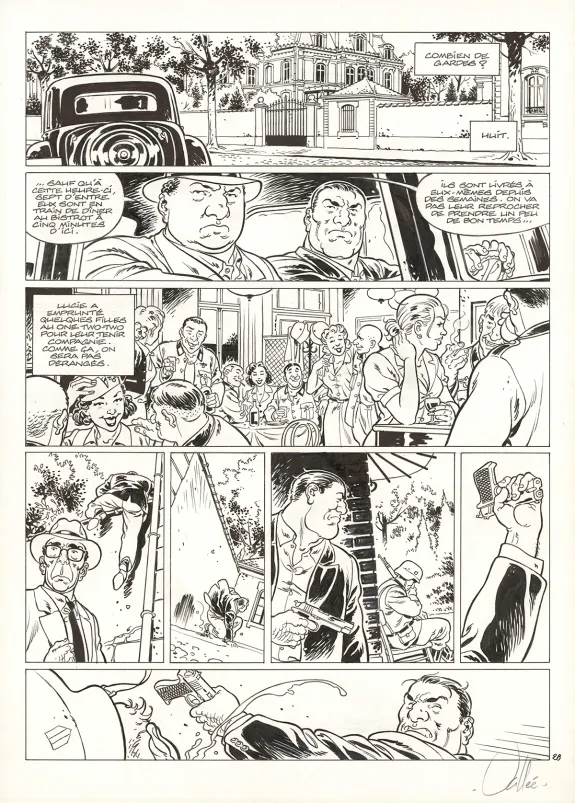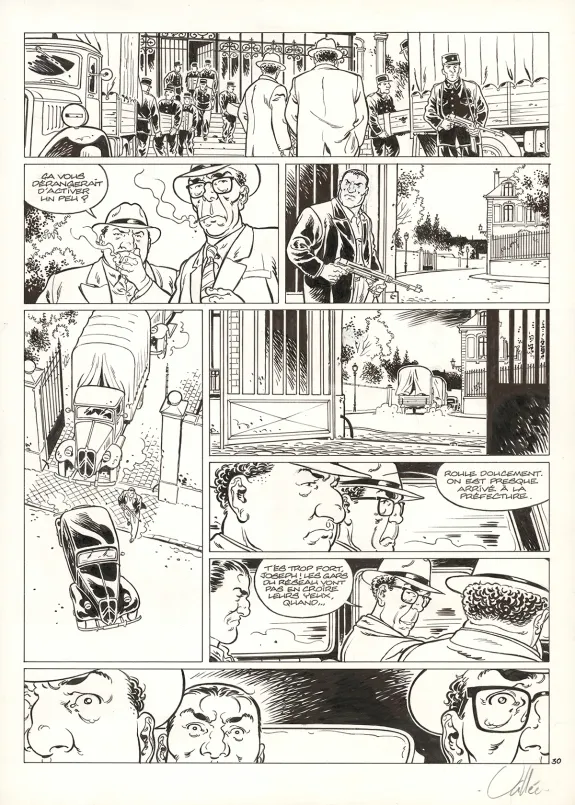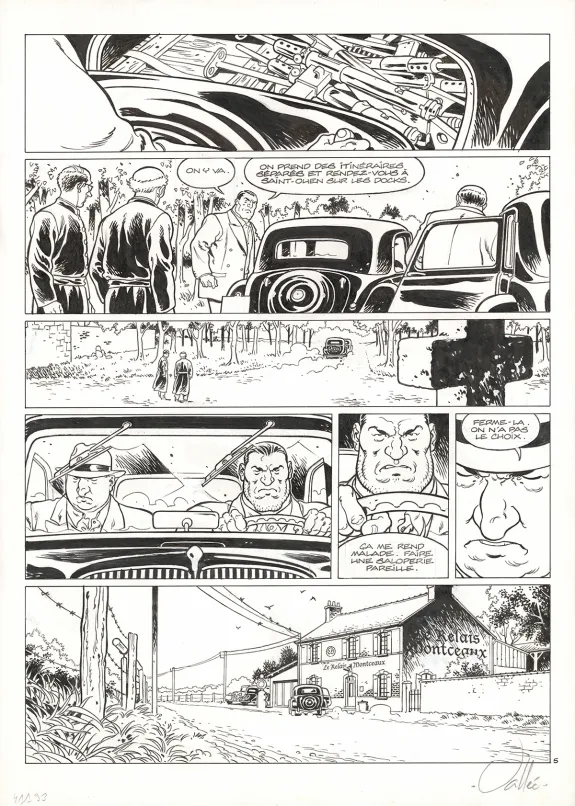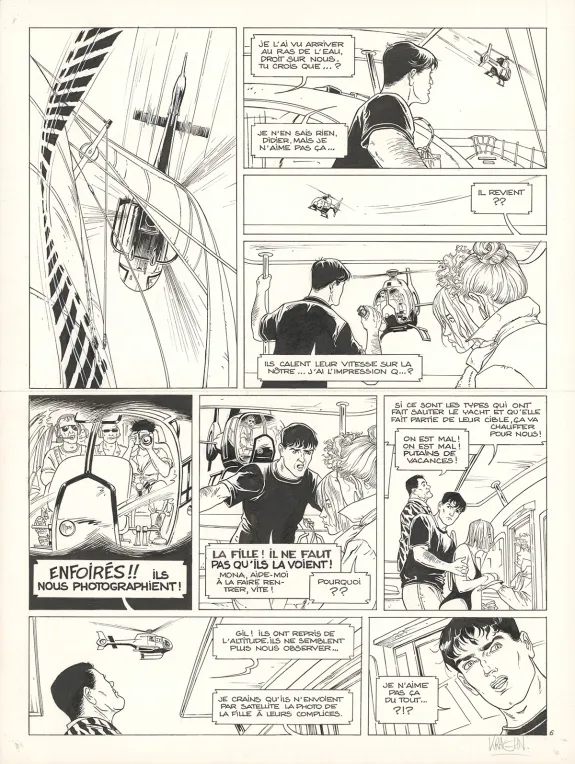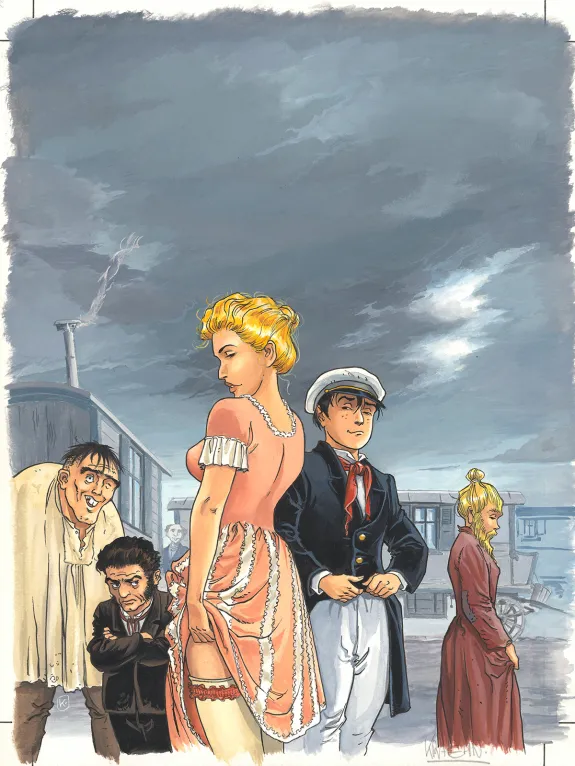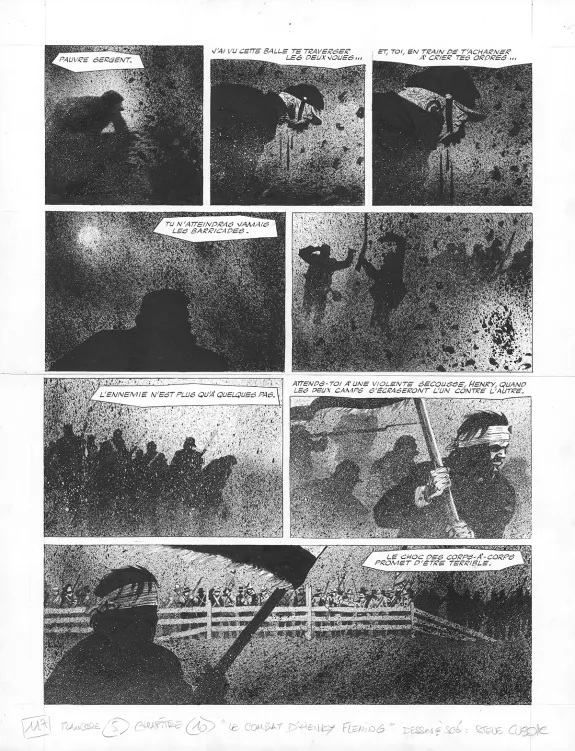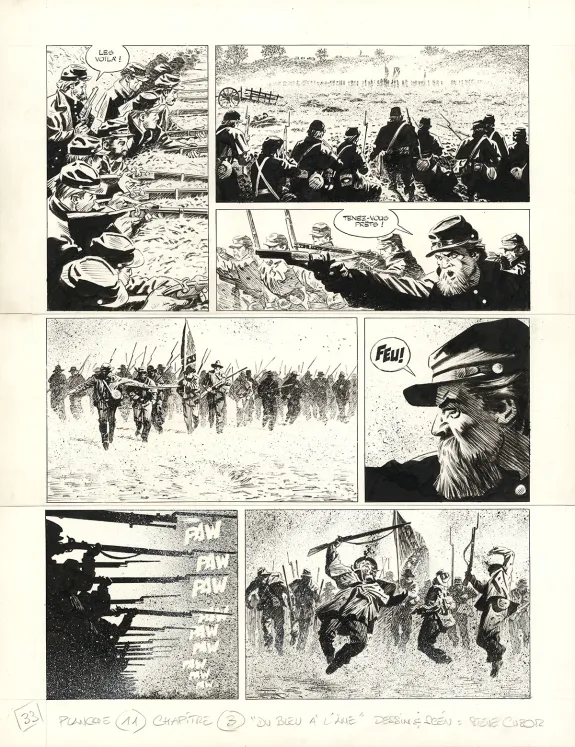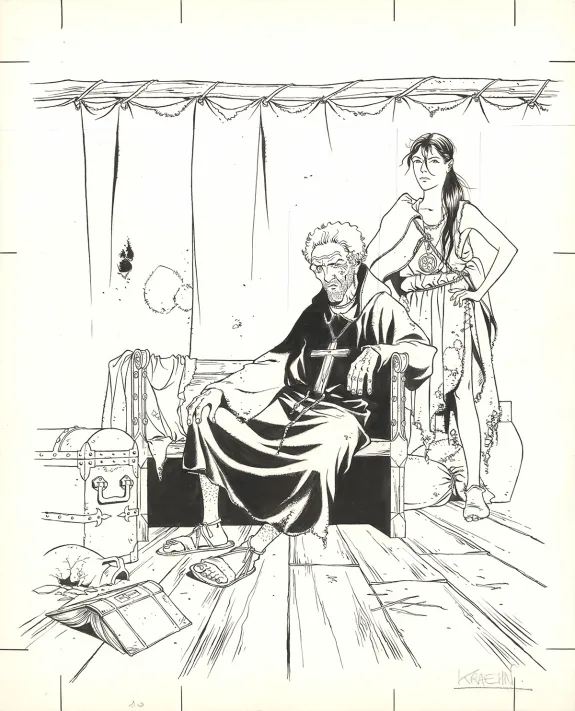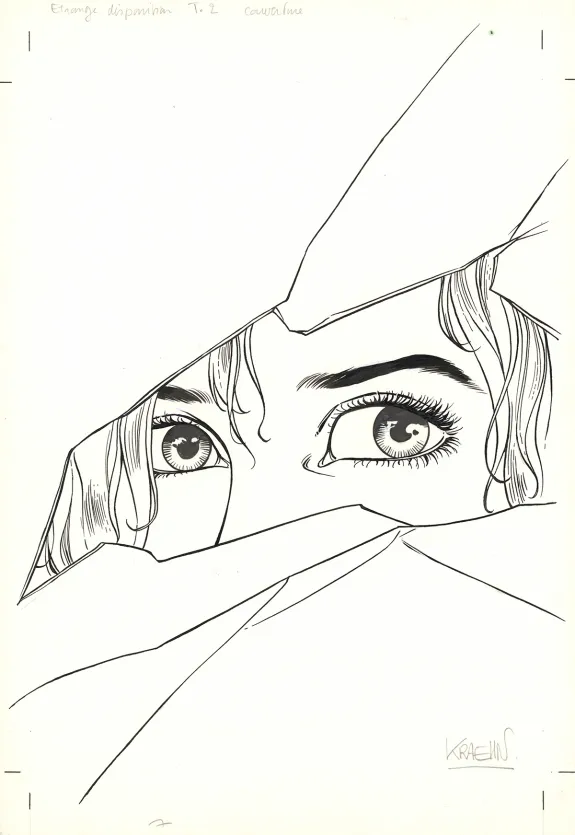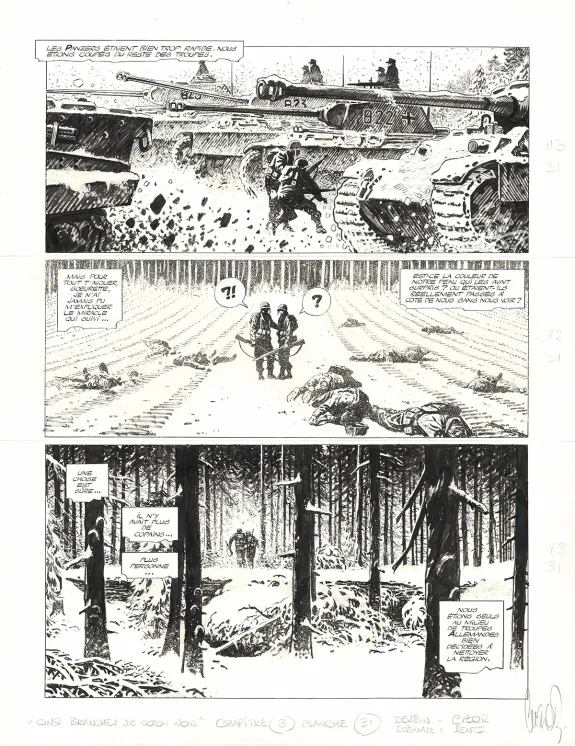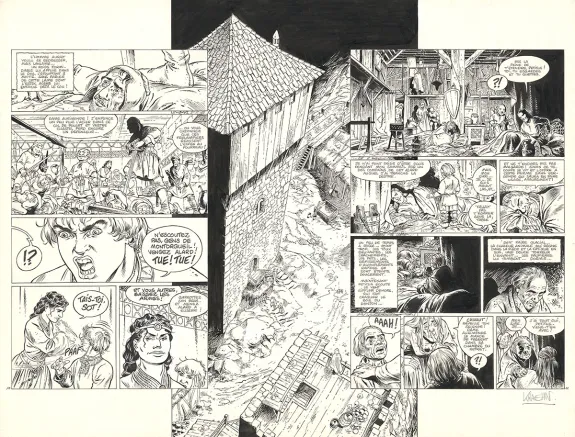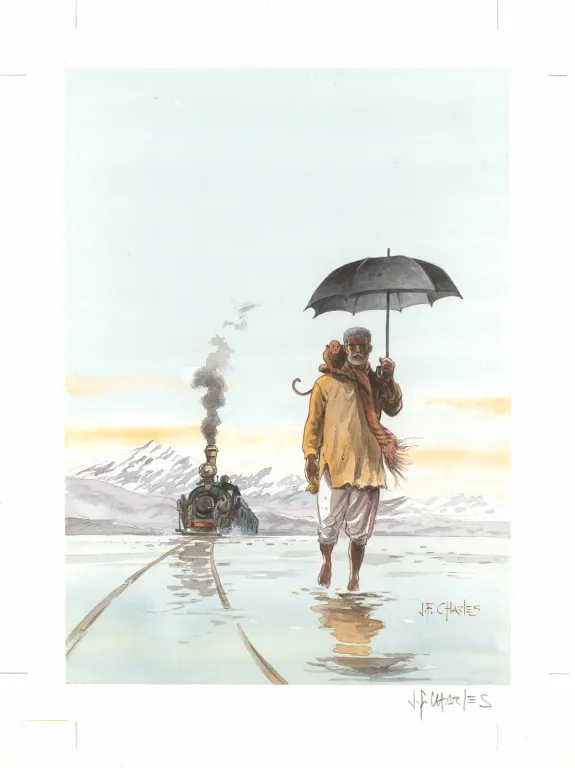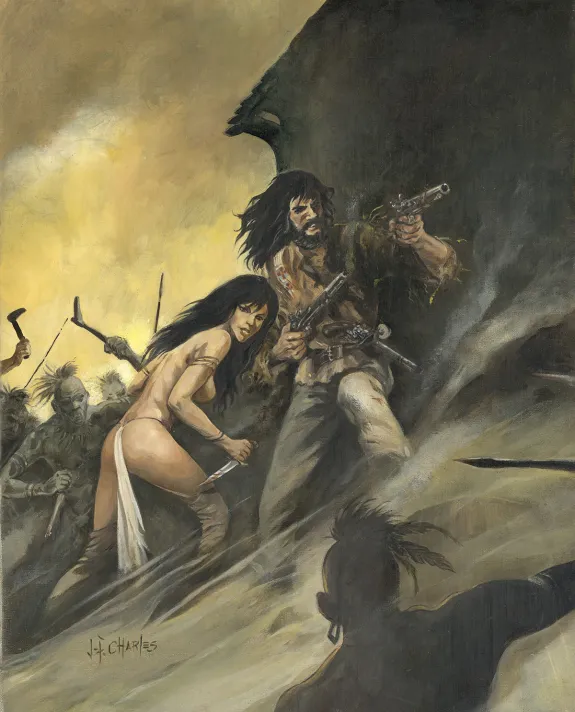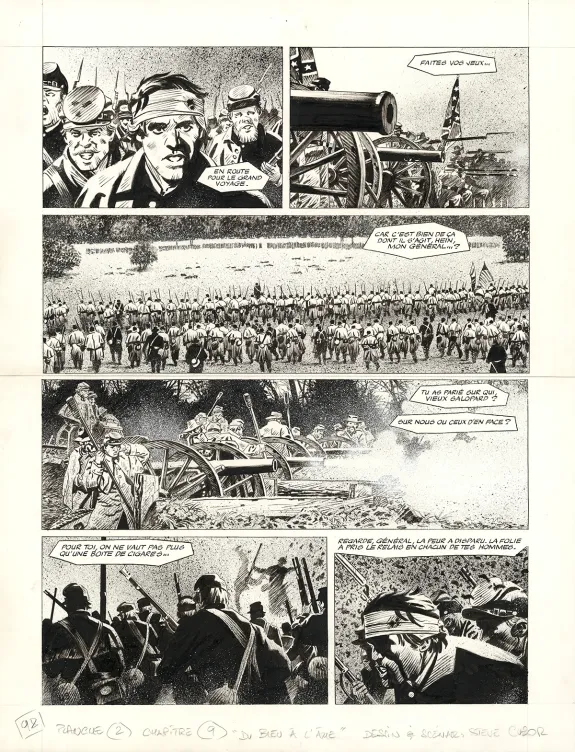
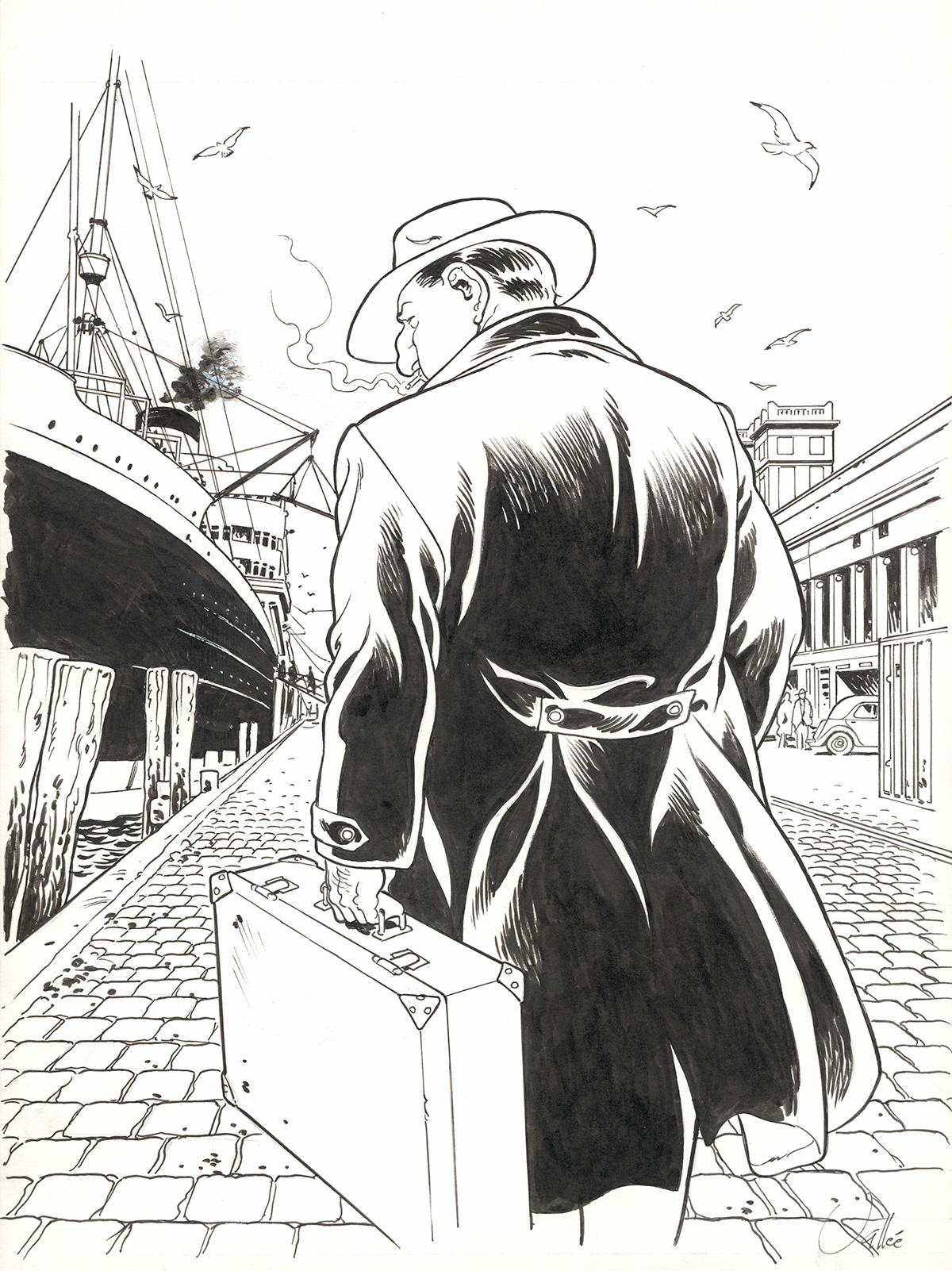
Sylvain Vallée possesses one of the most recognizable styles in contemporary realistic comic art: a clear, fluid, and tragic line that serves a cinematic narrative. His sense of framing, lighting, and atmosphere gives his pages a powerful narrative impact without ever sacrificing the depth of his characters. And what characters they are! Sylvain Vallée loves to portray eminently human figures—ever-changing, fluctuating, and fallible—souls to whom the reader becomes attached despite the horror of their actions. He is a resolutely modern classic, nourished by a rich culture of popular cinema.
A major figure in the contemporary comic art scene, Sylvain Vallée is particularly sought after for his work on Il Était une fois en France (Once Upon a Time in France), whose original pages can fetch several thousand euros.
To preserve your works on paper, we recommend that you never expose them to direct light, as UV rays can damage the mediums used. Paintings made with pastel or charcoal require special care to avoid rubbing.
We advise you to display them away from windows, and to use frames made from pH-neutral conservation materials and “Museum” glass with anti-UV and anti-reflective treatment. If you prefer to keep your works unframed, we recommend storing them flat, in drawing cartons, with sheets of pH-neutral permanent paper in between. Keep them away from light and humidity.
Sylvain Vallée began his career as a freelance illustrator after studying at the École Saint-Luc in Brussels. His first album, L'Écrin (The Jewel Case), a crime thriller tinged with dark humor, was published in 1997 by Éditions du Cycliste. It was already drawing critical acclaim, particularly for its atmosphere heavily inspired by cult films such as Les Tontons flingueurs (Crooks in Clover), Un taxi pour Tobrouk (Taxi for Tobruk), and La Traversée de Paris (The Trip to Paris). This love of crime fiction and popular French cinema would remain with him for good. He met Jean-Charles Kraehn that same year, who brought him on board for the Gil Saint-André series (published by Glénat): he took over the artwork starting with the third volume, gradually establishing his darker, more realistic style. Complete biography.