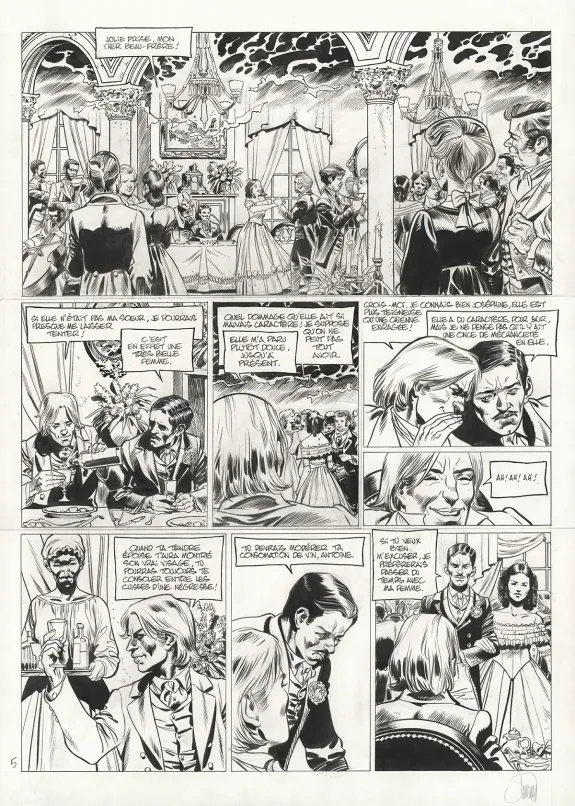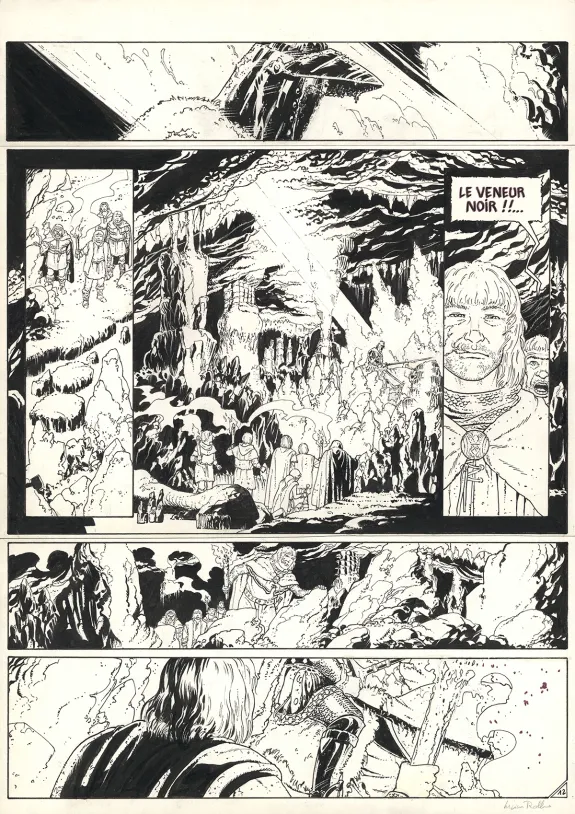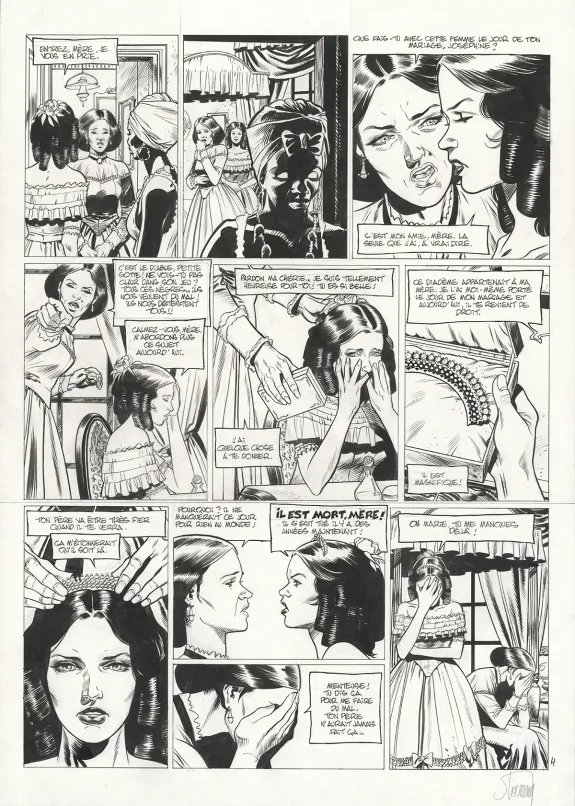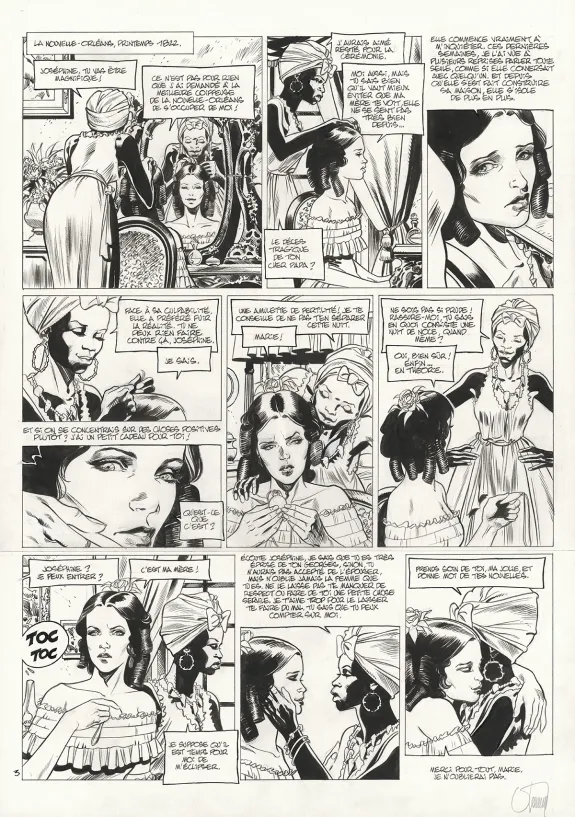
To ensure that your pages are kept in good condition, we recommend that you never expose them to direct light, as UV rays can damage the media used to produce them. Although Indian ink is a perennial material, the paper support may change when exposed to UV light. Note that watercolor plates require special attention, as this medium is particularly sensitive to light. Pieces containing pastel or charcoal require special care to avoid rubbing.
We advise you to display them away from windows, and to use frames made of pH-neutral conservation materials and “Museum” glass with anti-UV and anti-reflective treatment. If you prefer to keep your works unframed, we recommend storing them flat, in drawing cartons, with sheets of pH-neutral permanent paper in between. Keep them away from light and humidity
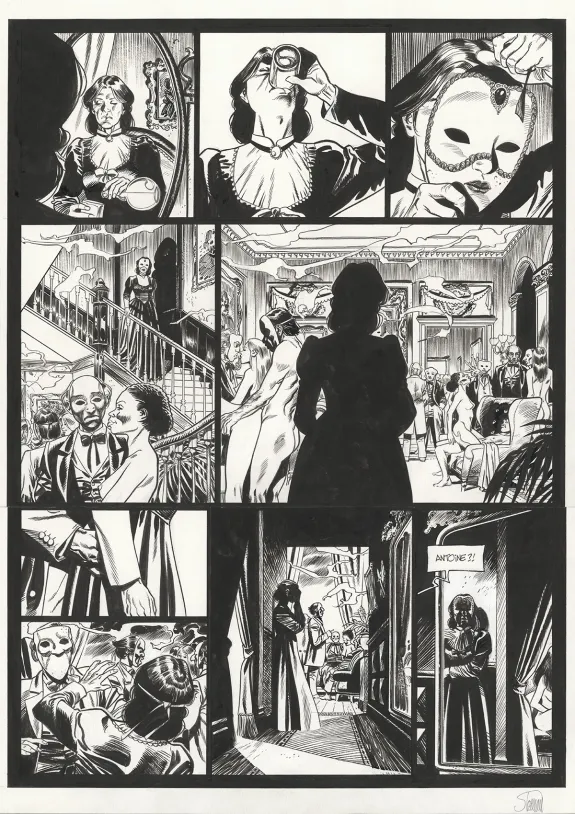
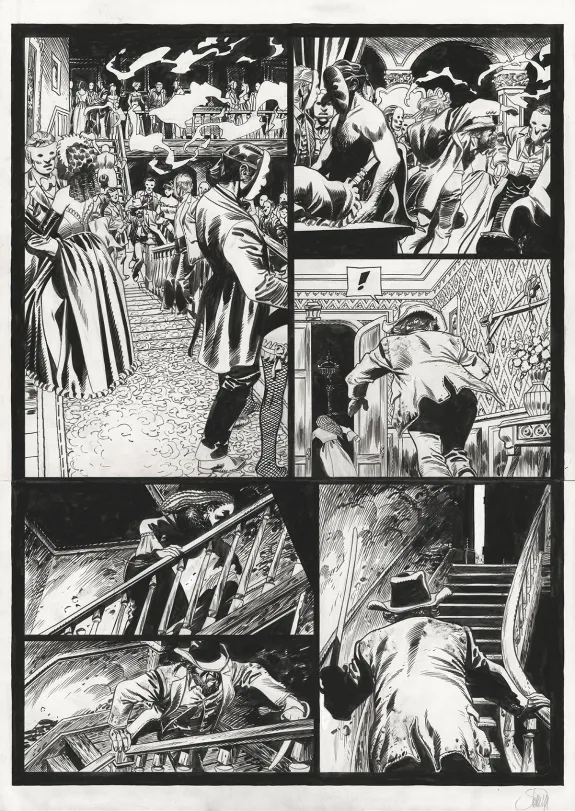
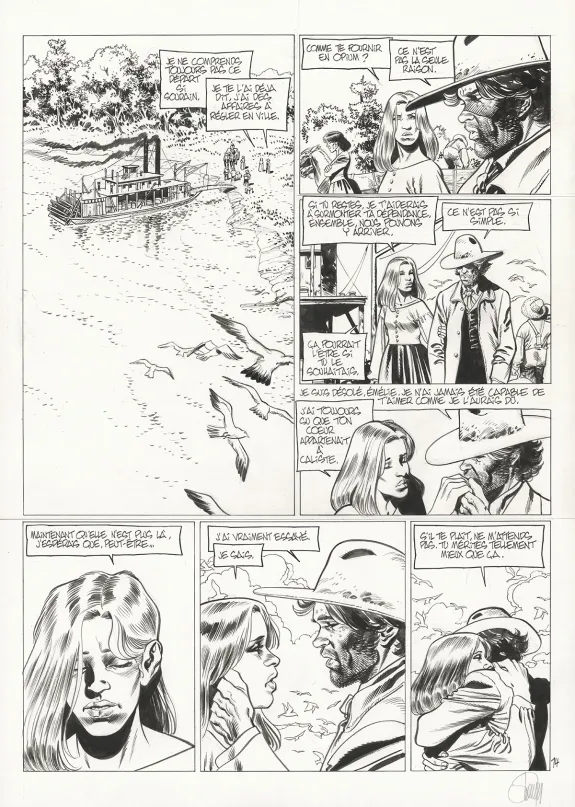
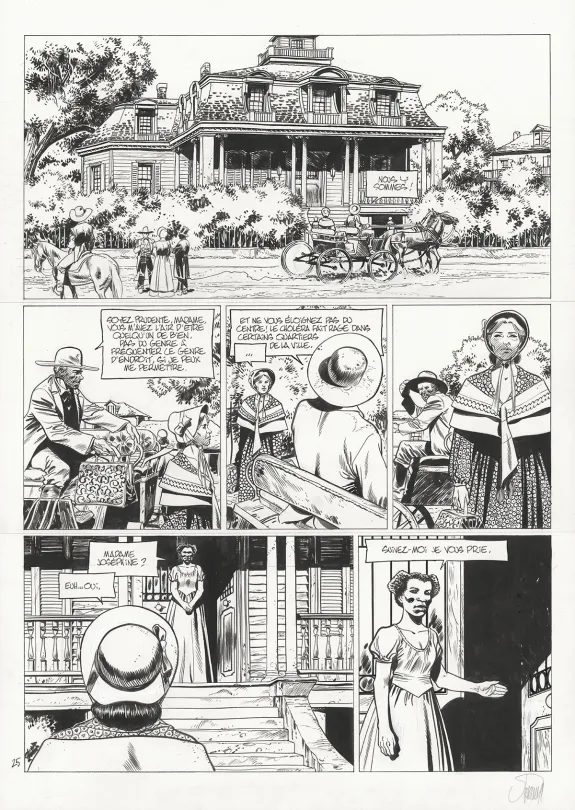
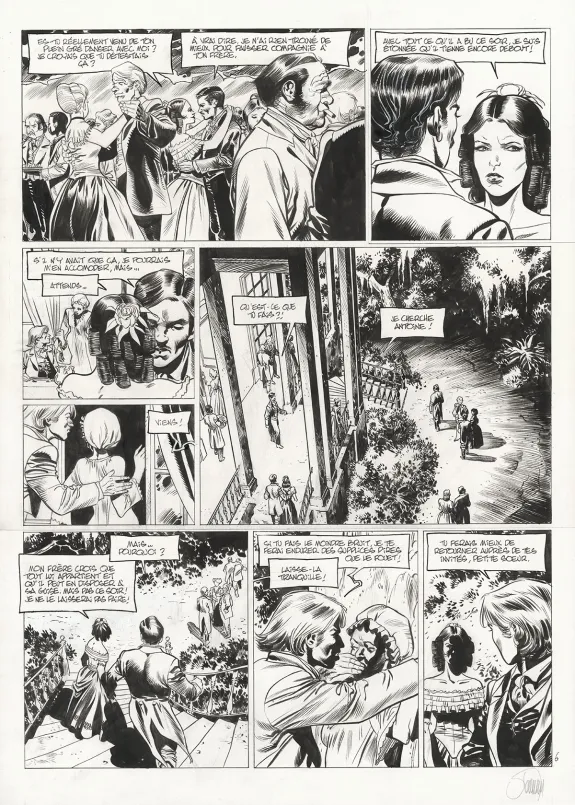
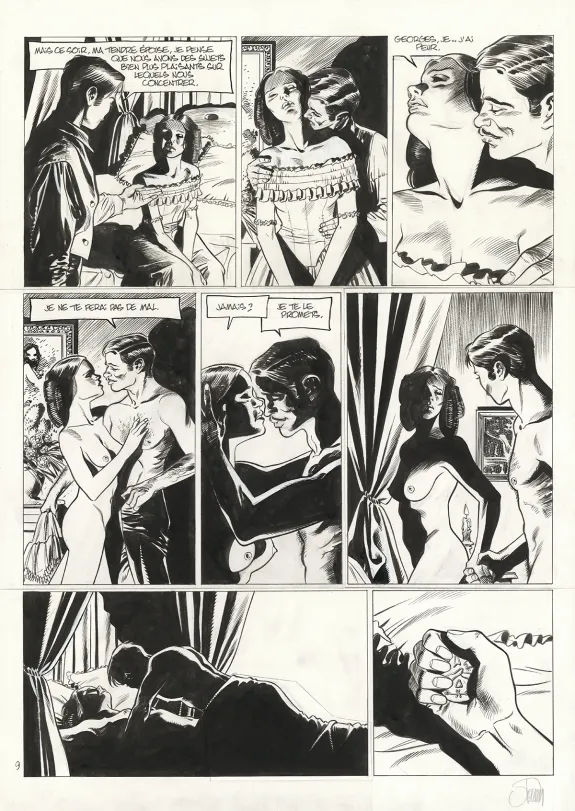
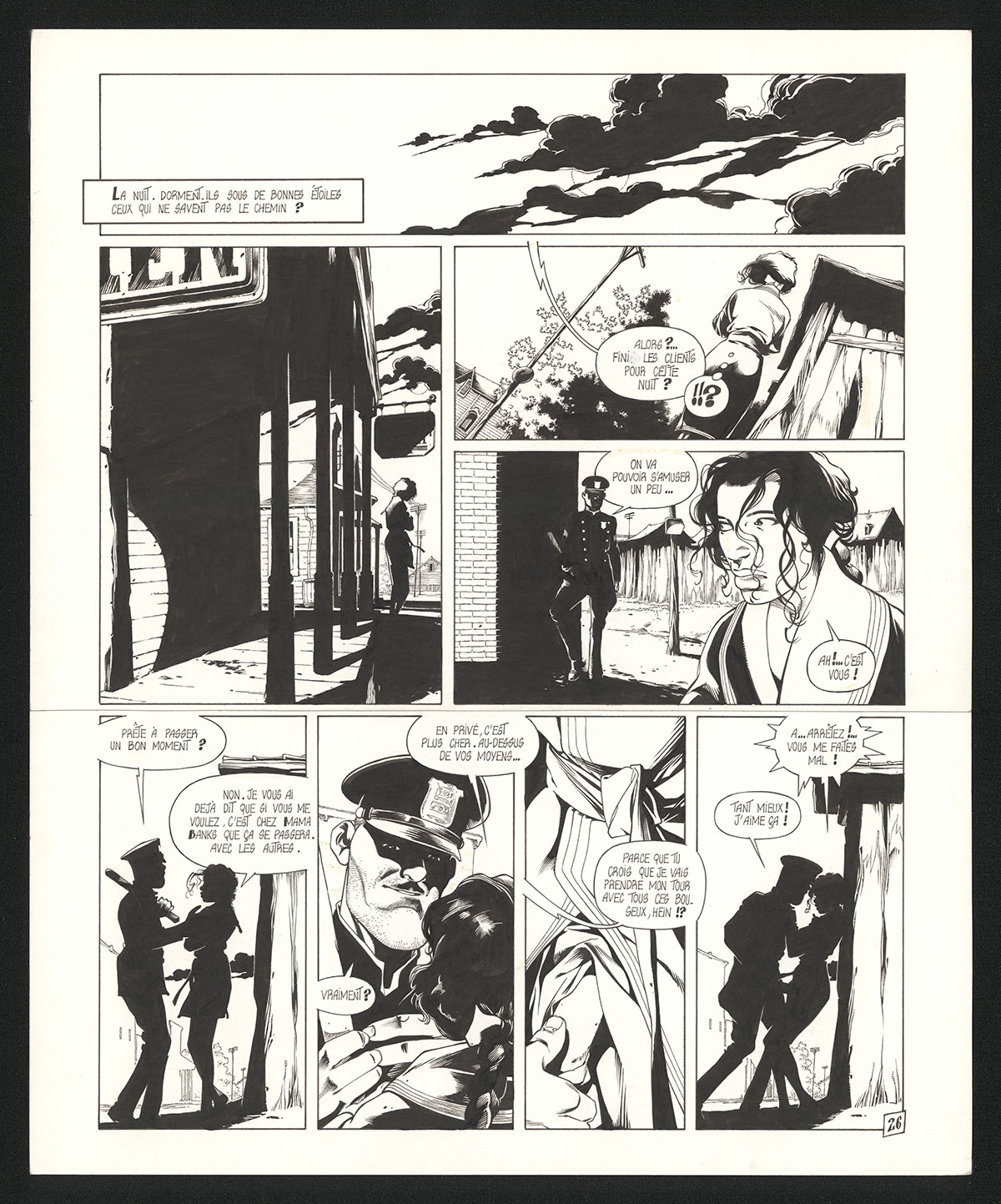
Hugues Labiano began his career at Glénat with Matador, published in 1992, a series written by Gani Jakupi. He then returned to his true passion, creating Dixie Road for Dargaud in 1997 with Jean Dufaux, and Mister George for Le Lombard in 2003 alongside Rodolphe and Serge Le Tendre. Between 2005 and 2010, he created Black OP, also published by Dargaud, a series centered on CIA agents whose work takes them from India to Afghanistan, via Russia. A second series was released in 2014. In 2012, Labiano created the two installments of Les Quatre coins du monde (The Four Corners of the World, Dargaud) on his own. In 2016, he resumed the L’Étoile du Désert (Desert Star) series alongside Stephen Desberg, with the publication of four volumes. In 2020, the two collaborators embarked on a new three-volume adventure: Le Lion de Judah (Dargaud). For the past two years, he has been contributing to the Western anthologies Go West and Indians, published by Grand Angle and written by Tiburce Oger. He lives in Toulouse.