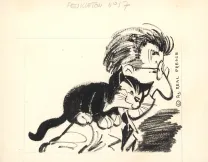
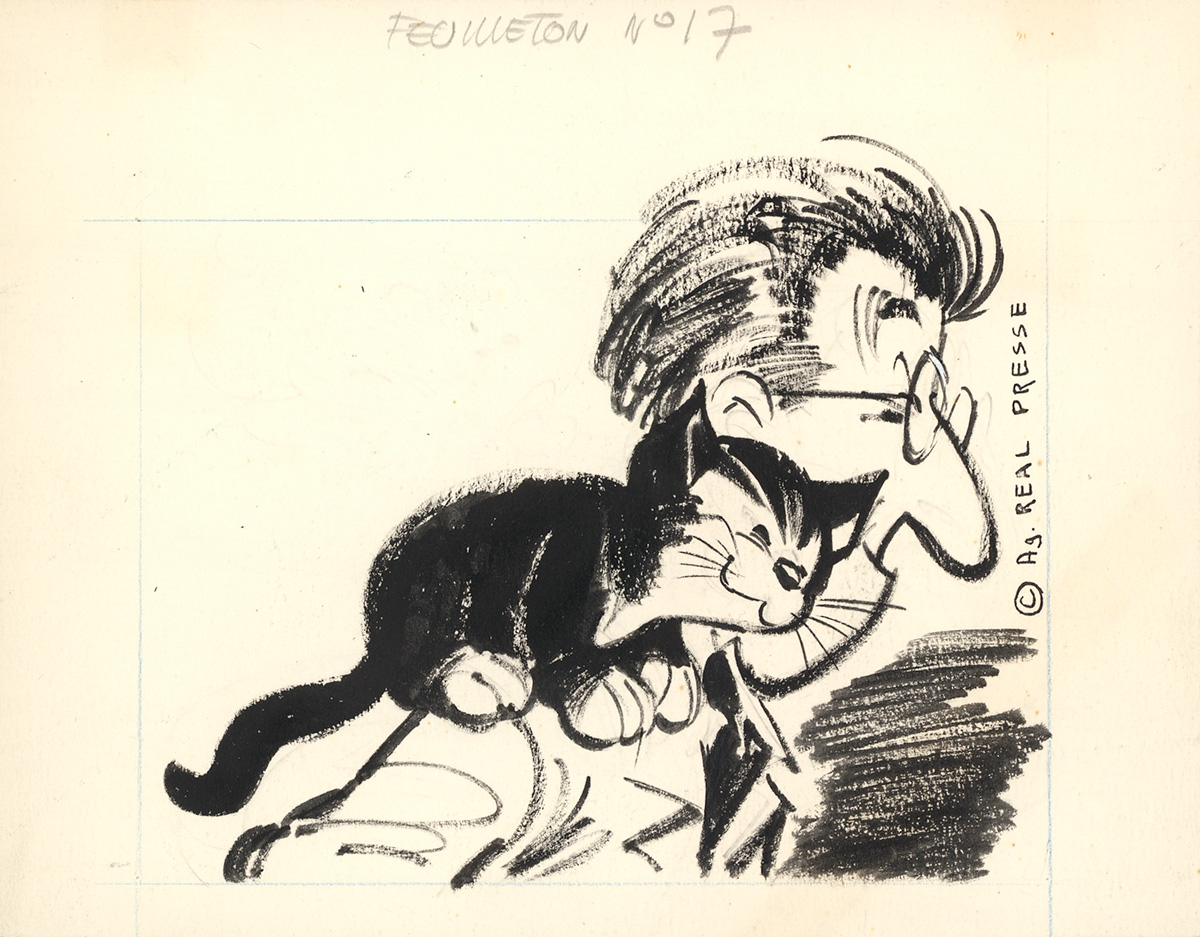
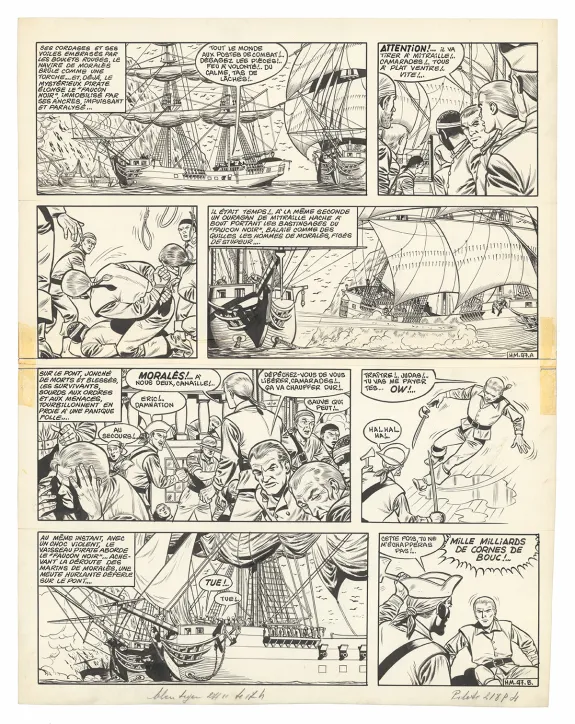
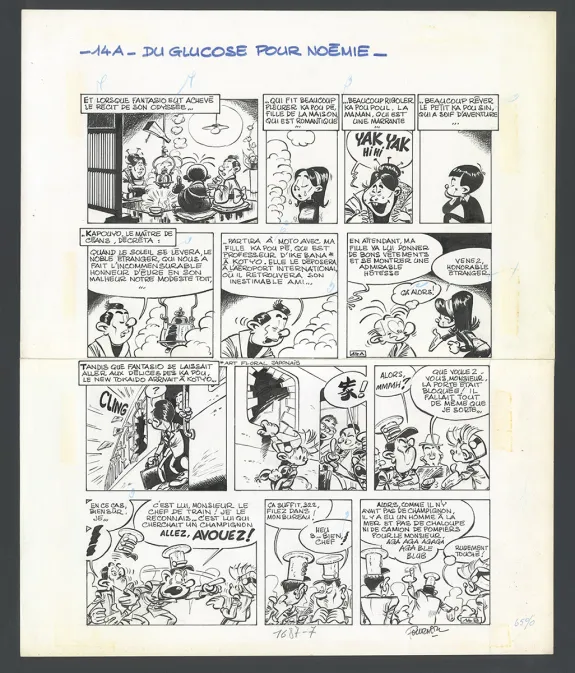
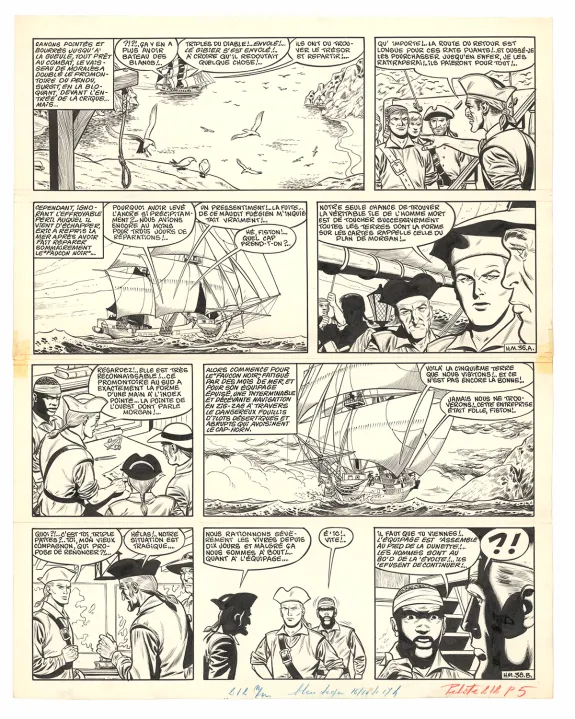
Having joined Dupuis thanks to Franquin, Roba quickly proved his worth by developing an incredibly clear drawing style, where every element—from the tiniest blade of grass to the typography—contributes to the narrative. Coming from the world of advertising, Roba always preferred a well-crafted, few-panel gag to long-form stories. It’s a craft he mastered to perfection. His rounded line is steeped in the everyday and the ordinary, from which he drew out a simple, naive, and oh-so-endearing poetry.
To preserve your works on paper, we recommend that you never expose them to direct light, as UV rays can damage the mediums used. Paintings made with pastel or charcoal require special care to avoid rubbing.
We advise you to display them away from windows, and to use frames made from pH-neutral conservation materials and “Museum” glass with anti-UV and anti-reflective treatment. If you prefer to keep your works unframed, we recommend storing them flat, in drawing cartons, with sheets of pH-neutral permanent paper in between. Keep them away from light and humidity.
As the head of an advertising studio, Jean Roba made the switch to comic art thanks to a fateful encounter with André Franquin at a party attended by Peyo. Introduced to Éditions Dupuis in 1957, he handled the backgrounds for three episodes of Spirou et Fantasio before creating, on December 24, 1959, with Maurice Rosy’s collaboration, Boule et Bill in Spirou magazine: a boy in blue overalls and his mischievous cocker spaniel, inspired by his son and his own dog. The series, conceived as a European Peanuts, became a staple on the cover of Spirou for more than twenty-five years and has now sold over twenty-five million albums. He won the Saint-Michel Prize in 1971 and the award for Best Foreign Comic Album at Angoulême in 1978 for Ras le Bill! (Sick of Bill!), before handing the reins over to Laurent Verron in 2003 after 28 albums. Complete biography.