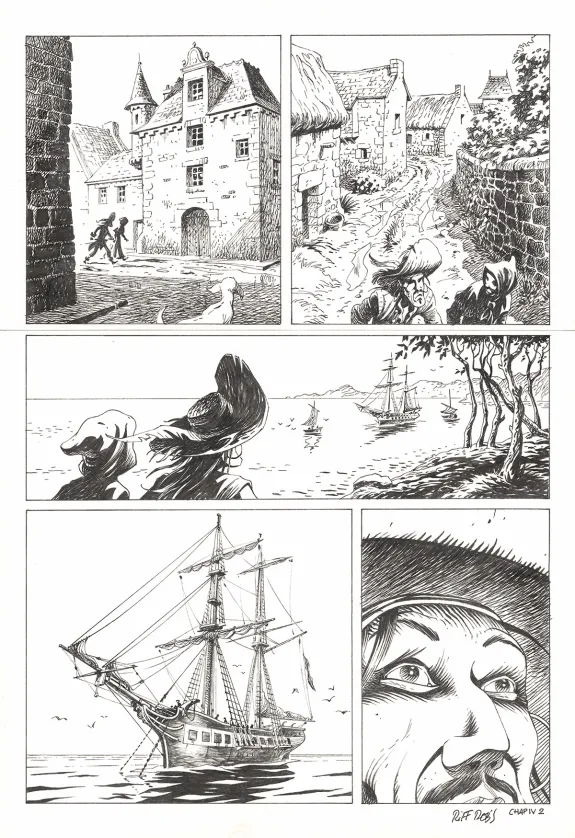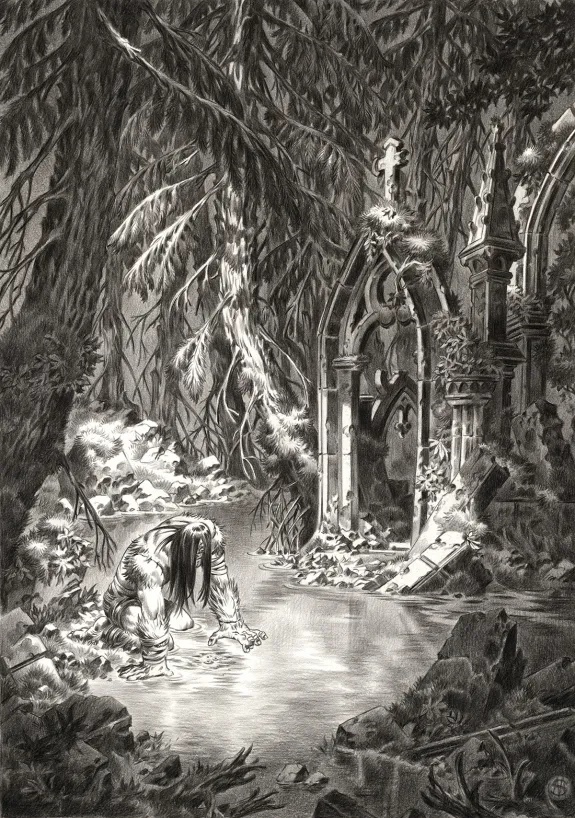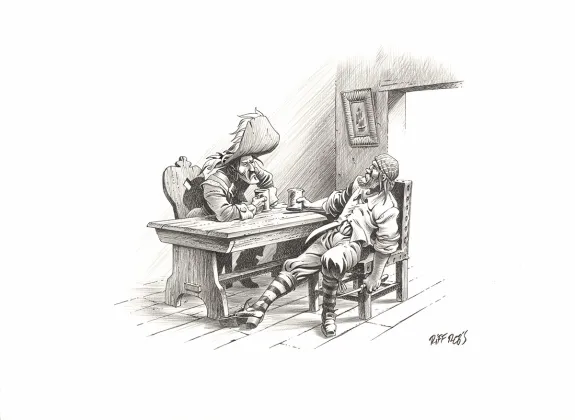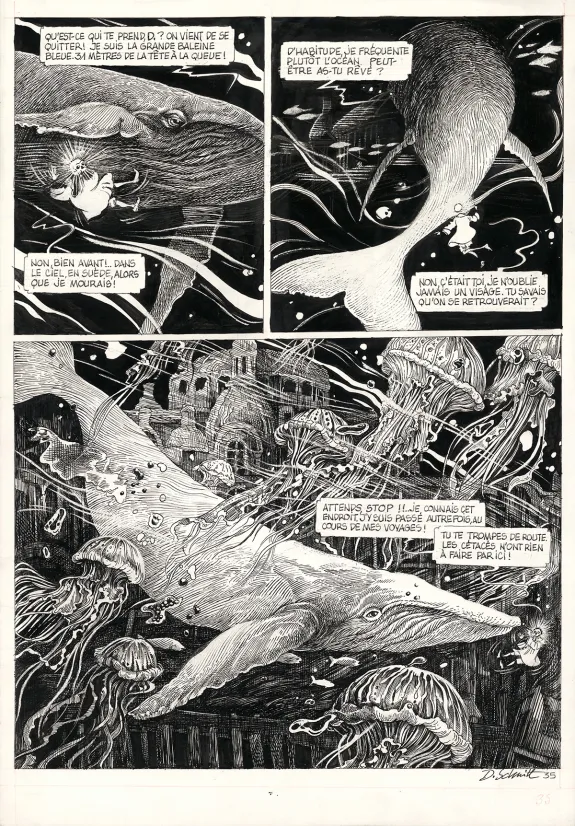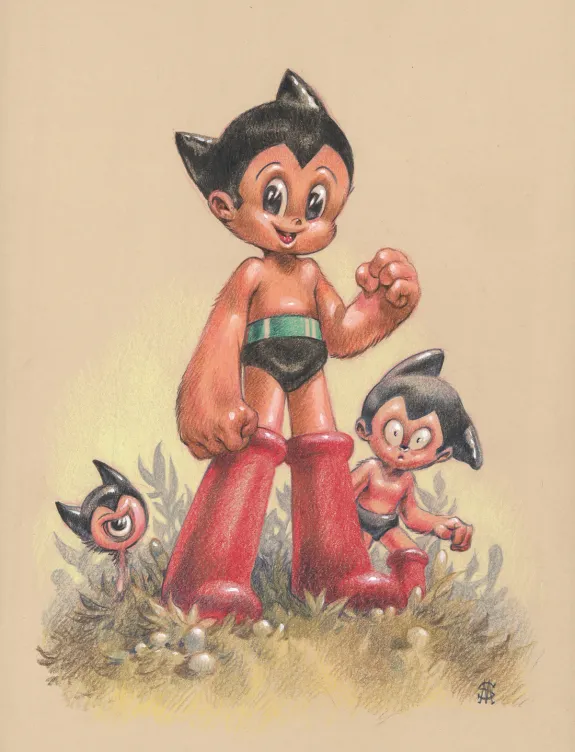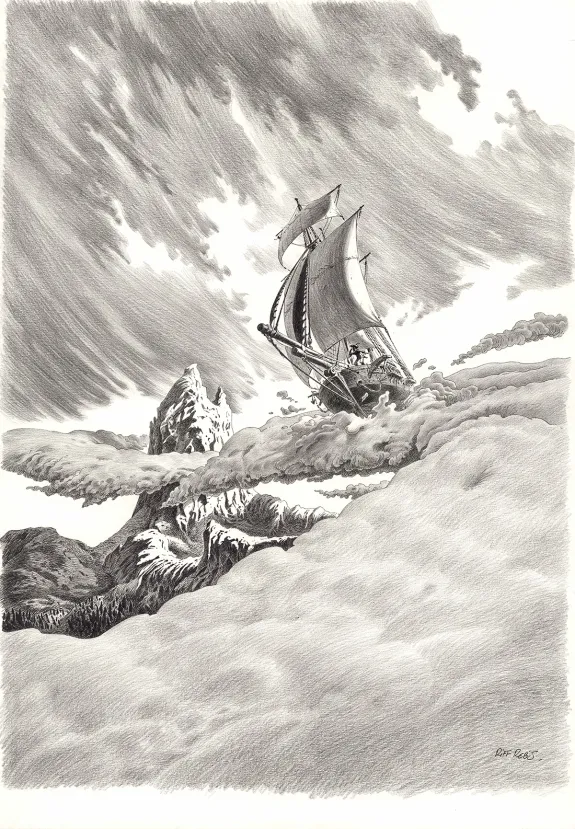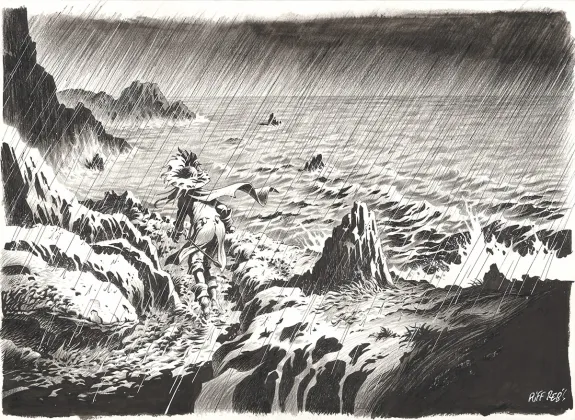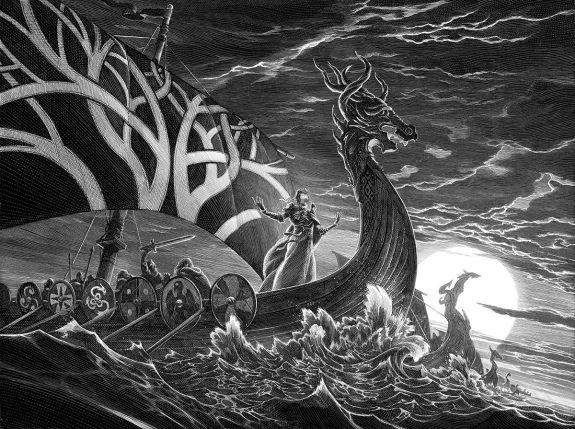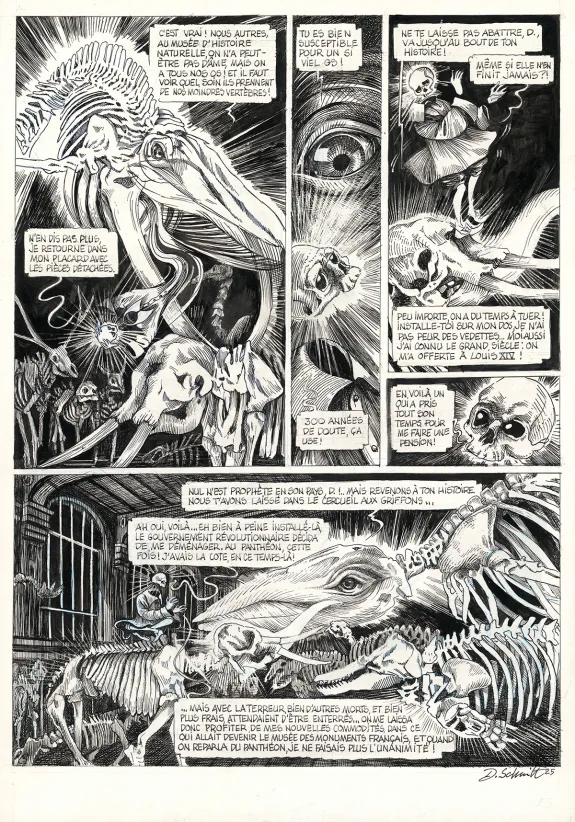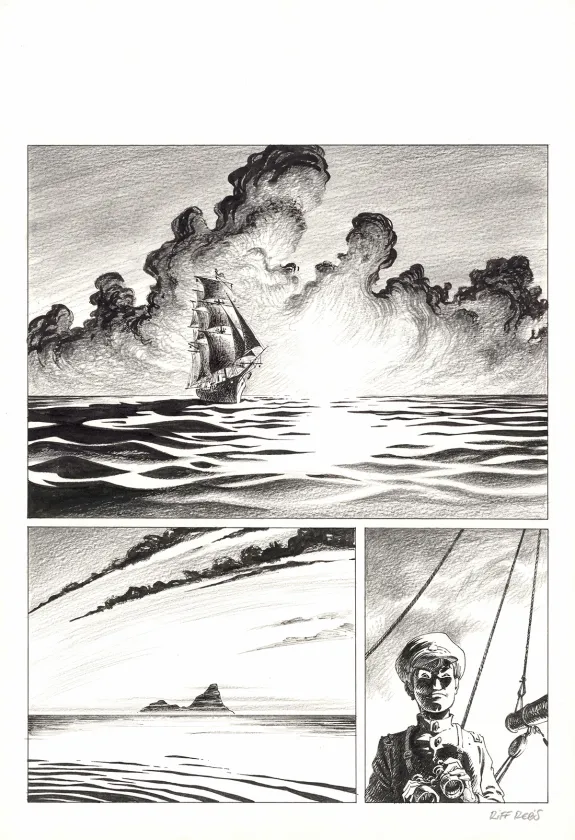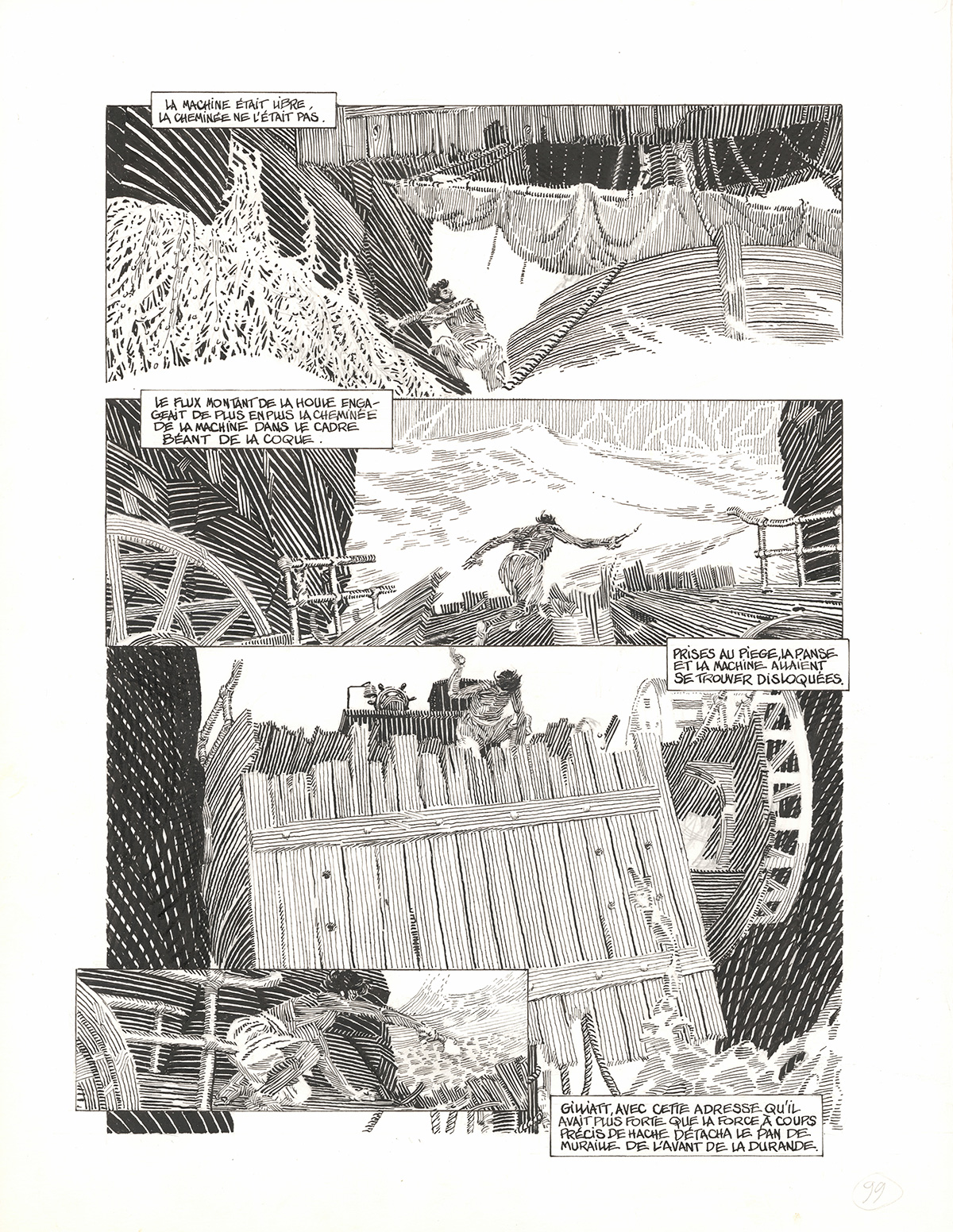
Drawn entirely with pen and ink, each page by Michel Durand is a masterpiece of precision, inspired by the techniques of nineteenth-century engravers such as Gustave Doré. Through the meticulous accumulation of countless fine lines, he builds volume and depth without relying on traditional outlines. The result is a remarkable graphic tour de force.
To ensure that your pages are kept in good condition, we recommend that you never expose them to direct light, as UV rays can damage the media used to produce them. Although Indian ink is a perennial material, the paper support may change when exposed to UV light. Note that watercolor plates require special attention, as this medium is particularly sensitive to light. Pieces containing pastel or charcoal require special care to avoid rubbing.
We advise you to display them away from windows, and to use frames made of pH-neutral conservation materials and “Museum” glass with anti-UV and anti-reflective treatment. If you prefer to keep your works unframed, we recommend storing them flat, in drawing cartons, with sheets of pH-neutral permanent paper in between. Keep them away from light and humidity
Michel Durand began his career at Fluide Glacial in 1979 before establishing himself through singular artworks such as Opération Chistera (written by René Durand), Cliff Burton (written by Rodolphe, Dargaud), Polar Extrême (written by Alejandro Jodorowsky, Les Humanoïdes Associés), and Richard Marazano's Cuervos series (Glénat). Between 2005 and 2007, he published the three Durandur albums with Carabas, before illustrating Génial for 12bis with Jean-Paul Krassinsky. In 2019, he released Espèce(s), a graphic novel exploring animal welfare, speciesism, and the limits of art as a catalyst for social awareness. In 2025, he published what is widely regarded as his masterpiece: an adaptation of Victor Hugo's The Toilers of the Sea, created using an engraving-inspired cross-hatching technique. The monumental project required five years of dedicated work. Complete biography