François Schuiten
Topics :
- Architecture
- Fantasy
- Science fiction
An Architect of Comic Art
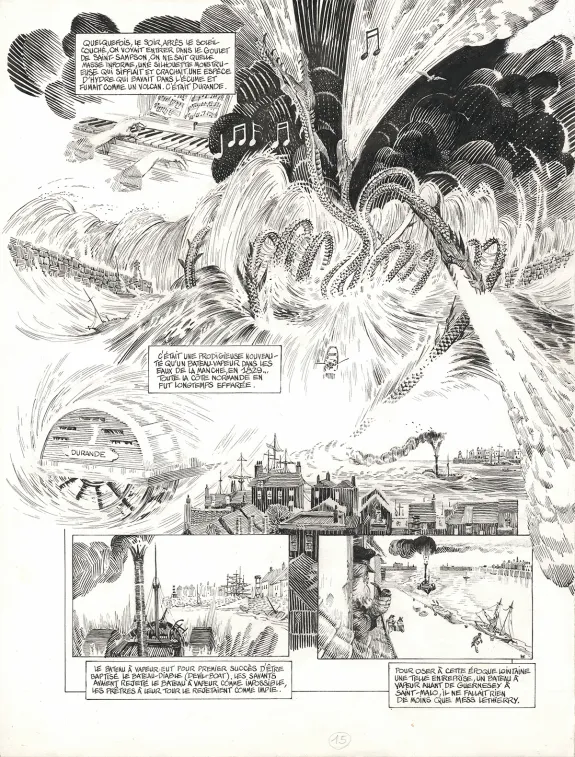
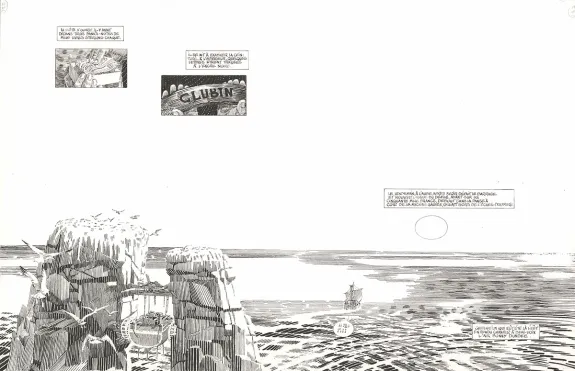
Architecture is the defining theme of François Schuiten’s (born in 1956) work. It was his father, Robert Schuiten—a Belgian painter and architect renowned in his home country—who inspired the young François’s calling as an artist and his affinity for architecture. At the age of 14, he published his first pages in the Belgian edition of Pilote. He completed his studies at the Institut Saint-Luc in Brussels, where Claude Renard had founded the famous “Atelier R.” Schuiten later formed a lasting partnership with the Mons-based artist. The year before graduating, Schuiten had already joined the Métal Hurlant team, publishing Carapaces there. His drawings now appeared alongside those of Druillet, Moebius, Gillon, Tardi, and others. Claude Renard joined him in this venture. Together they created two albums for Les Humanoïdes Associés: Aux Médianes de Cymbiola (1980) and Le Rail (1982), followed by the art book L’Express for Magic Strip. Previously, in 1978, Schuiten had briefly contributed to the magazine (À Suivre), where he published La Terre creuse on his own. Four years later, he teamed up with his childhood friend Benoît Peeters, who wrote Les Murailles de Samaris (1982) for him—the first in the Cités obscures series. The two authors developed a universe inspired by Jules Verne,M.C. Escher, Winsor McCay, Victor Horta, and Art Nouveau: La Fièvre d’Urbicande (Urbicand's Fever, 1985)—winner of the Alfred Award for Best Album at the Angoulême International Comics Festival—, The Archivist (The Archivist, 1987), The Tower (La Tour, 1987), Brüsel (1992) and L'enfant penchée (The Leaning Girl, 1995)…
Each work explores a different technical or narrative challenge, in which architecture plays a central role. The Invisible Frontier (The Invisible Frontier, 2002) kicks off a series of diptychs and a more political exploration that resurfaces in La Théorie du grain de sable (2007), which echoes the tragedy of September 11. In 2014, to mark the publication of Revoir Paris (Paris Revisited), Schuiten and Peeters held an exhibition at the Cité de l’architecture et du patrimoine.
Translated into a dozen languages, Les Cités obscures has won numerous awards, including the prestigious Grand Prix Manga at the Japan Media Arts Festival in 2013. The series constitutes a unique body of work that possesses, as Erik Orsenna wrote in an essay dedicated to the two artists, “that demonic flexibility of metamorphoses that belongs only to music.”
Schuiten has worked both in film - Gwendoline by Just Jaeckin (1984), Toto le Héro (Toto the Hero) by Jaco Van Dormael (1991), Taxandria by Raoul Servais (1994), The Golden Compass by Chris Weitz (2007), Mr. Nobody by Jaco Van Dormael (2009), and Mars et Avril by Martin Villeneuve (2012) - and as a set designer: La Ville imaginaire (The Imaginary City) for Cité-Ciné in Montreal, L’Évasion (The Escape) for the Grenoble Crime Fiction Festival, Le Musée des ombres (The Museum of Shadows) in Angoulême, Sierre, Brussels, and Paris; the Grand Duchy of Luxembourg Pavilion at the Seville World’s Fair; the Pavillon des Utopies (A Planet of Visions), a monumental installation at the Hanover World’s Fair (2000); the Belgian Pavilion at the Aichi World’s Fair (2005); Rossini’s opera, La Cenerentola, for the Théâtre Royal de la Monnaie in Brussels and the Opéra de Lyon, as well as a traveling horse show featuring performances by Mario Luraschi. In 1992, he designed the Arts & Métiers station on Line 11 of the Paris Métro, as well as the Porte de Hal station in Brussels. In 2005, he created a large mural evoking journeys around the world for the Maison de Jules Verne (Jules Verne's House) in Amiens, topping the building with an armillary sphere. In 2002, he received the Grand Prix de la Ville d’Angoulême and was subsequently ennobled and elevated to the rank of Baron by the King of the Belgians.
Credits :
©Schuiten, Casterman (banner)
Pages and artworks from François Schuiten
No artworks are available at this time. Log in or create an account to set up alerts and never miss a new release from your favorite artists or comics !
You will also like...
-
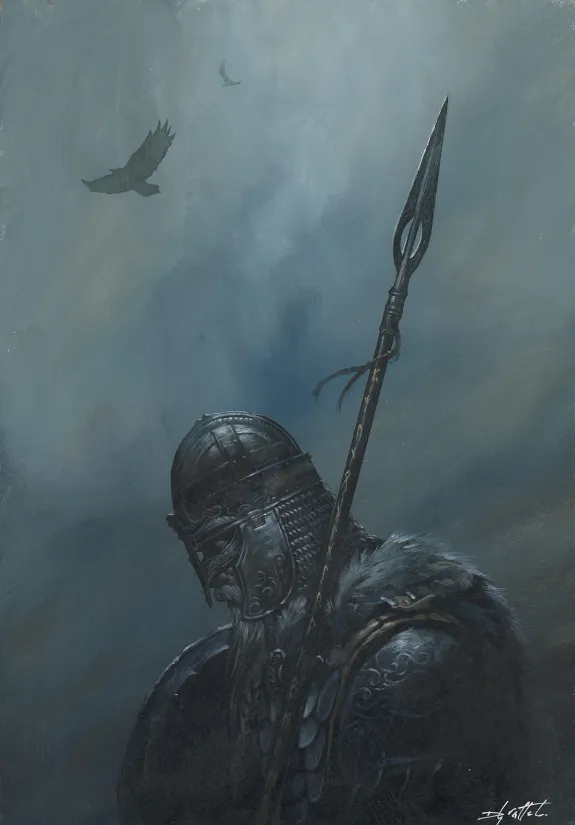
Original painting, interior illustration of "Gungir" Odin's spear
2 500 € -
-
-
-
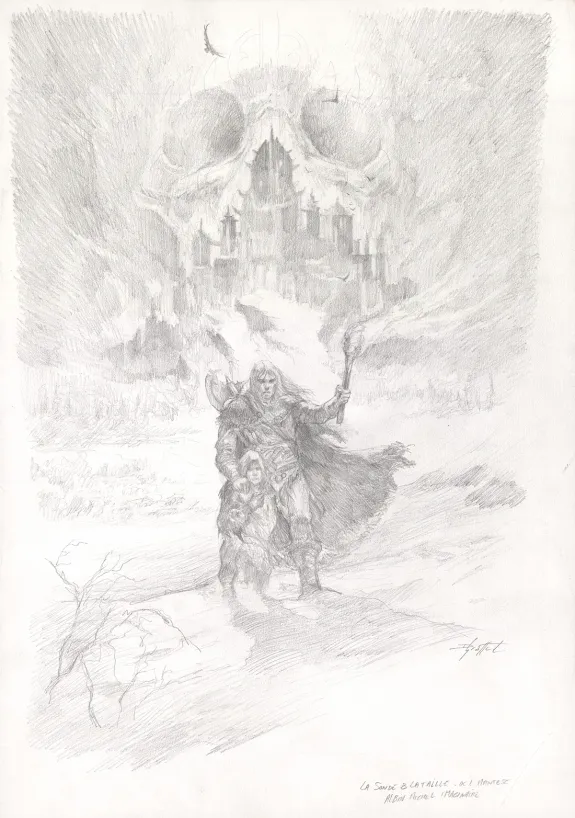
Sketch of the original cover for Laurent Mantese's novel "La Sonde et la Taille".
1 500 € -
-
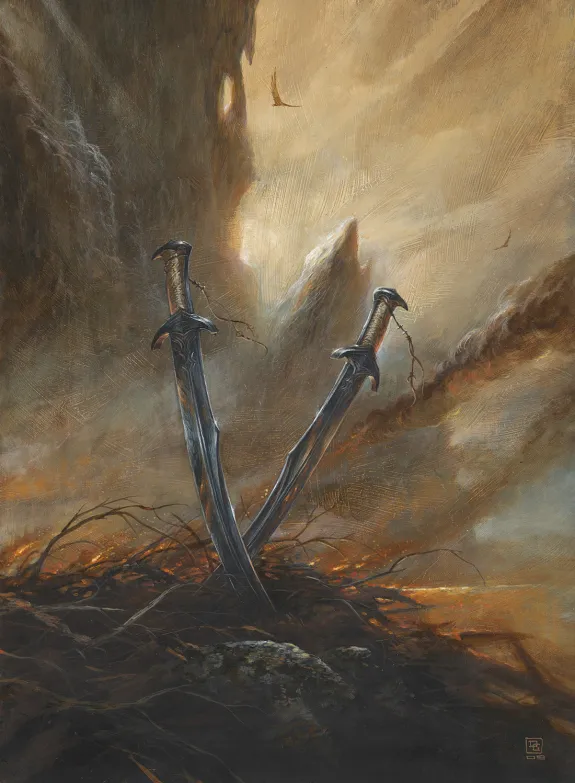
Original cover for the David Gemmel novel
3 000 € -
-
-
-
-