Claude Auclair
Topics :
- Classical
- Post apocalyptic
- Adventure
A work that is both environmentalist and utopian, imbued with a profound sense of humanism
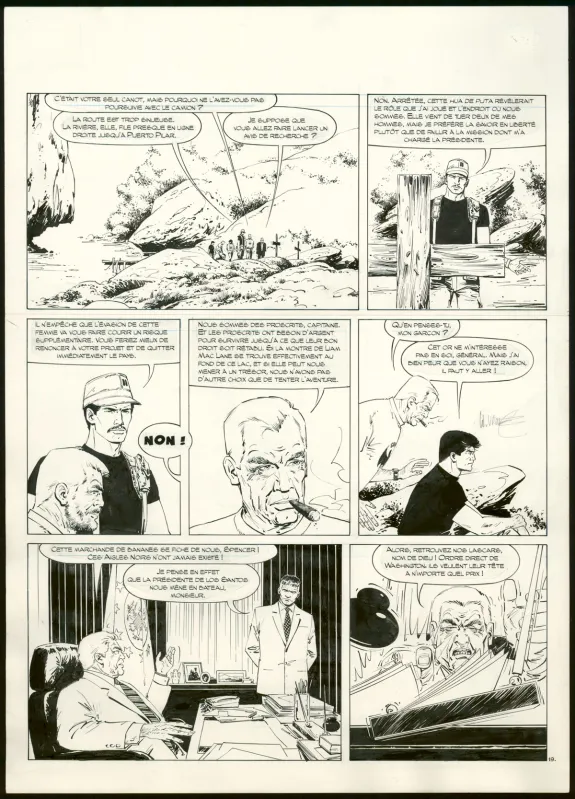
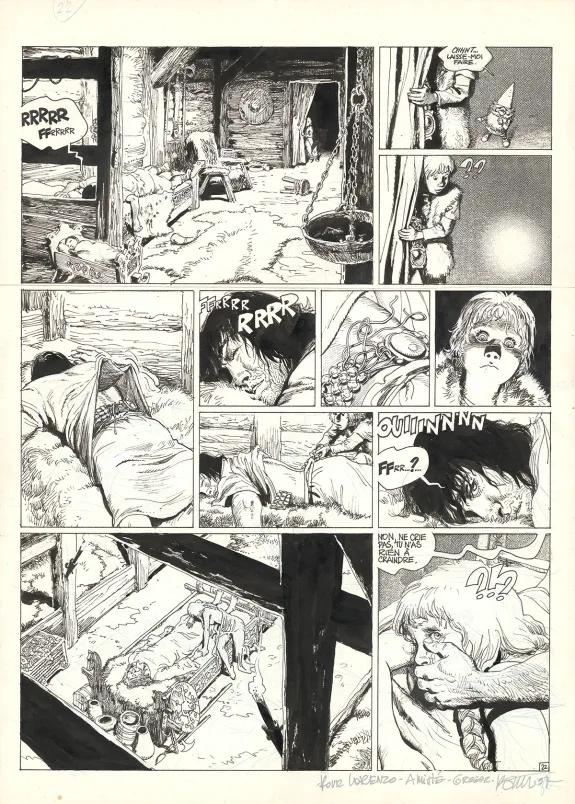
Claude Auclair (1943–1990) was one of the most significant realist comic-book creators of the 1970s and 1980s. His deeply humanistic body of work, infused with ecological and utopian ideals, established him as a major figure in French comics. Both writer and illustrator, Auclair began his career after studying at the Fine Arts School, publishing work in science-fiction magazines before joining the magazine Pilote. Between 1970 and 1972, he illustrated his famous post-apocalyptic series Jason Muller, written by Jean Giraud, Pierre Christin, and Auclair himself. The series was later collected in album form by Les Humanoïdes Associés in 1975. At the same time, he worked for Le Journal de Tintin, where he published Les Naufragés d’Arroyoka (written by Greg) and La Saga du Grizzli, both of which were reissued as albums in 1975 and 1976. In 1972, after Pilote declined to continue Jason Muller, Auclair left the magazine and turned to Record, where he published Catriona Mac Killigan (written by Jacques Acar), a story centered on the Scottish uprisings. In 1973, he launched Simon du Fleuve in Le Journal de Tintin, a landmark work that brought him widespread public recognition. Published by Le Lombard in nine volumes, the series became his most celebrated creation. Auclair wrote the scripts for the first six albums before passing the role on to Alain Riondet between 1988 and 1989. Continuing his collaboration with Tintin, he created Cité N.W. No. 3 in 1978. That same year, he contributed to the inaugural issue of the monthly magazine (À Suivre), where he developed more politically engaged stories. Through works such as Bran Ruz (1978–1981) and Tuan Mac Cairill (1982), written by Alain Deschamps, he championed oppressed minorities. He later denounced slavery in Sang flamboyant (written by François Migeat, 1984). Again collaborating with Alain Riondet, he published Celui-là in (À Suivre) in 1989. The second installment of the saga, Celui qui achève, was completed after his death by his friends Jacques Tardi and Jean-Claude Mézières.
Credits :
Riondet, Auclair © Casterman 2026 (banner)
Pages and artworks from Claude Auclair See all


You will also like...
-
-
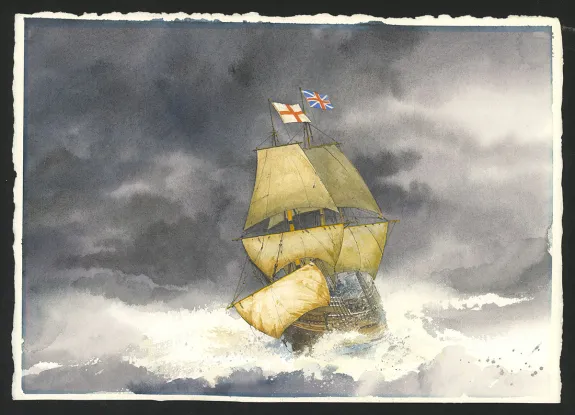
Original illustration used for cover design
6 000 € -
-
-
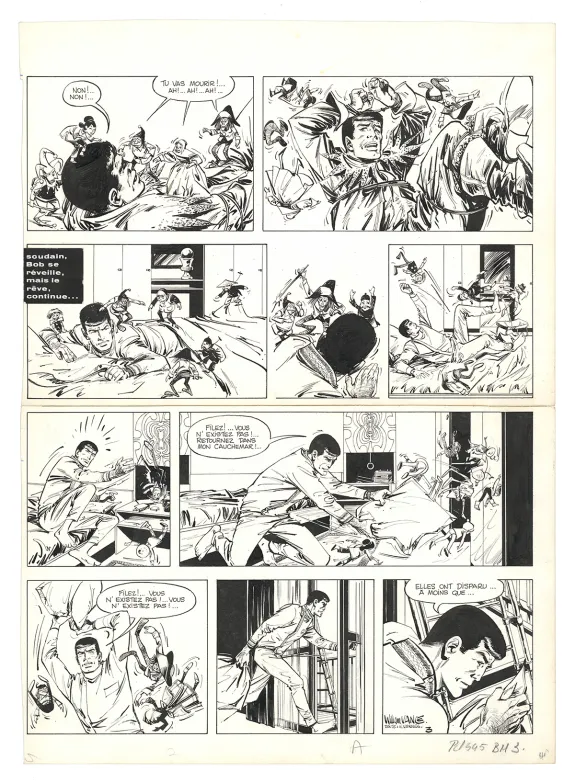
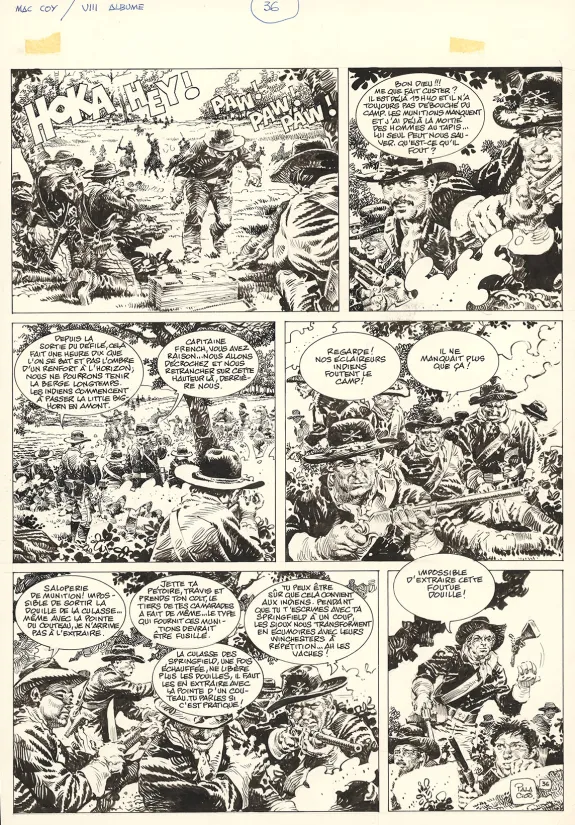
Original page n°3, published in Pilote n°545
2 000 € -
-
-
-
-
-

-